 Pin It
 There's something about a pot of black-eyed peas simmering on the stove that makes a kitchen feel like home, even if you've only just arrived. My neighbor brought over a container of this soup one February afternoon, and the smell that escaped when I opened the lid—bacon, thyme, something deeply comforting—made me forget I'd been planning to order takeout. I asked for the recipe that same day, and what struck me most wasn't the complexity but how the simplest ingredients could taste so deliberately thoughtful.
I made this for my partner on a particularly gray Wednesday when neither of us had spoken much all day. By the time the bacon was crisping, the whole apartment had transformed into somewhere warm and alive. He came into the kitchen without being called, just drawn by the smell, and we stood there stirring vegetables into rendered fat like it was the most natural thing in the world. That's when I knew this recipe deserved a permanent spot in rotation.
Ingredients
- Smoked bacon, 8 oz diced: Choose a good quality bacon if you can—the rendered fat becomes your flavor foundation, so it matters more than you'd think.
- Black-eyed peas, 2 cups dried (soaked) or 3 cans: Dried peas give deeper flavor and better texture, but canned work beautifully on nights when you forgot to plan ahead.
- Yellow onion, 1 medium finely chopped: The sweetness balances the smokiness; don't skip the mincing step or you'll end up with chunky surprises.
- Carrots, 2 medium diced: They soften into the broth and add natural sweetness that develops as everything simmers together.
- Celery, 2 stalks diced: This is the quiet flavor builder that makes people ask what makes the soup taste so complete.
- Garlic, 3 cloves minced: Add it after the softer vegetables so it doesn't burn and turn bitter in the bacon fat.
- Low-sodium chicken broth, 6 cups: Low-sodium lets you control the salt and prevents the soup from tasting aggressively salty by the end.
- Bay leaf, 1: Remove it before serving or your spoon will find it—I learned this the clumsy way.
- Dried thyme, 1/2 tsp: The earthiness here bridges the gap between smoky and savory beautifully.
- Smoked paprika, 1/2 tsp: This is the secret ingredient that makes people think you simmered this for hours.
- Black pepper, 1/4 tsp freshly ground: Fresh ground makes a noticeable difference in the final taste.
- Salt to taste: Always taste at the end; the broth and bacon already contribute salt.
- Fresh parsley, 2 tbsp chopped (optional garnish): It adds a brightness that cuts through the richness and makes the bowls look intentional.
Tired of Takeout? 🥡
Get 10 meals you can make faster than delivery arrives. Seriously.
One email. No spam. Unsubscribe anytime.
Instructions
- Crisp the bacon foundation:
- Dice your bacon and let it cook slowly in a large soup pot over medium heat until the edges are deeply golden and the kitchen smells like breakfast met dinner. This takes about six to eight minutes, and you'll know it's done when the fat has rendered but the pieces still have texture.
- Build the aromatic base:
- Pour off all but a tablespoon of bacon fat if there's excessive grease, then add your chopped onion, carrots, and celery directly to that golden fat. Let them soften for five to six minutes, stirring occasionally, until the onions turn translucent and everything smells like the beginning of something good.
- Awaken the garlic:
- Stir in your minced garlic and cook for just one minute—you want it fragrant and mellow, not brown or harsh. This is when the whole kitchen gets that warm, savory-sweet smell.
- Bring everything together:
- Add your drained black-eyed peas, pour in the chicken broth, then scatter in the bay leaf, thyme, smoked paprika, and black pepper. Stir it all gently and let it come to a boil, which usually takes about five to seven minutes.
- Let it simmer and soften:
- Lower the heat, cover the pot, and let everything bubble gently for thirty to thirty-five minutes if you're using soaked dried peas, or just twenty minutes if you went the canned route. The peas should be completely tender and the broth should have taken on a slightly deeper color.
- Season and taste:
- Fish out the bay leaf carefully, then taste the soup and add salt as needed—remember that the bacon and broth already contributed their own saltiness. This is your moment to adjust everything to your preference.
- Serve with intention:
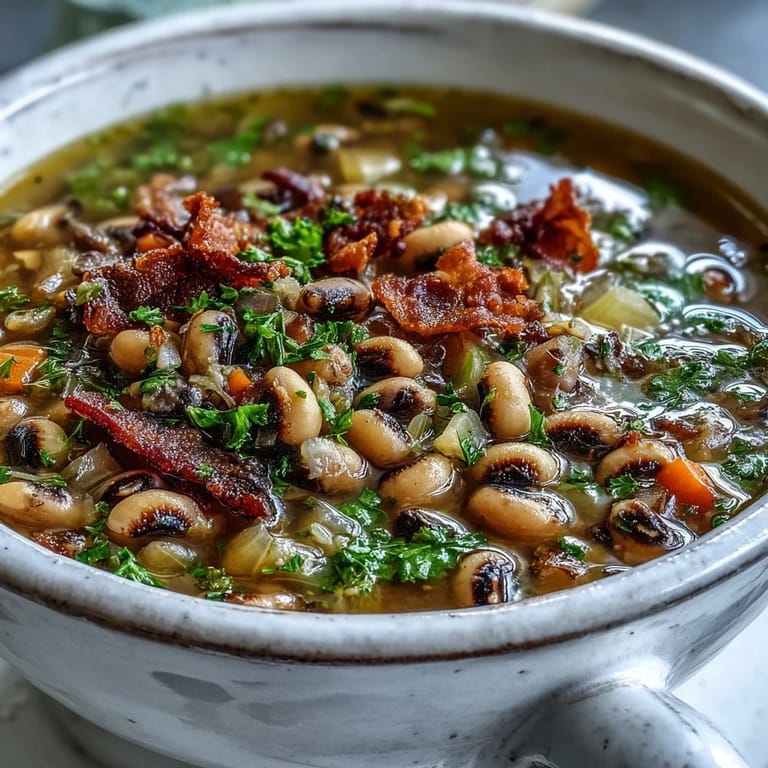
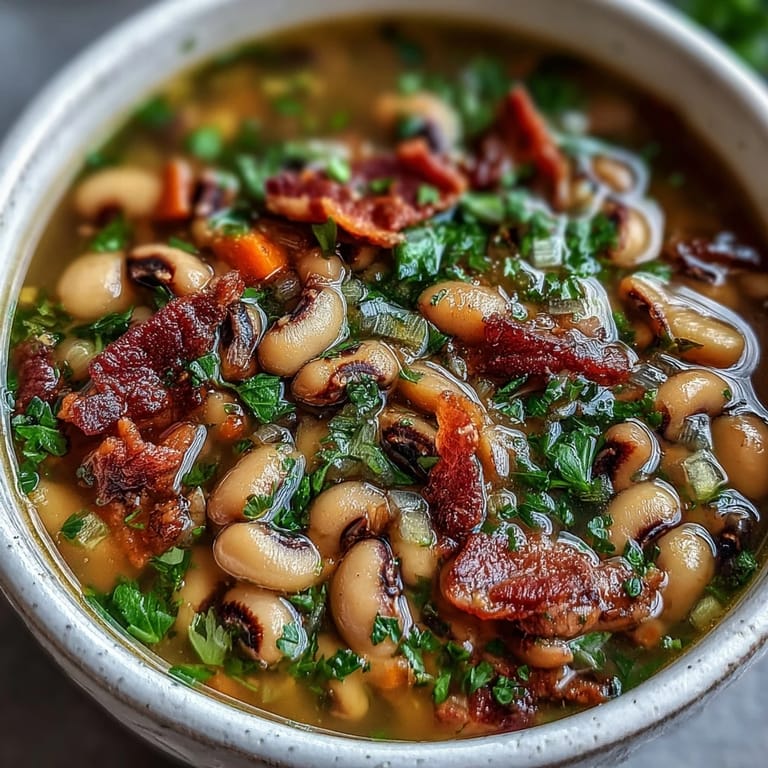
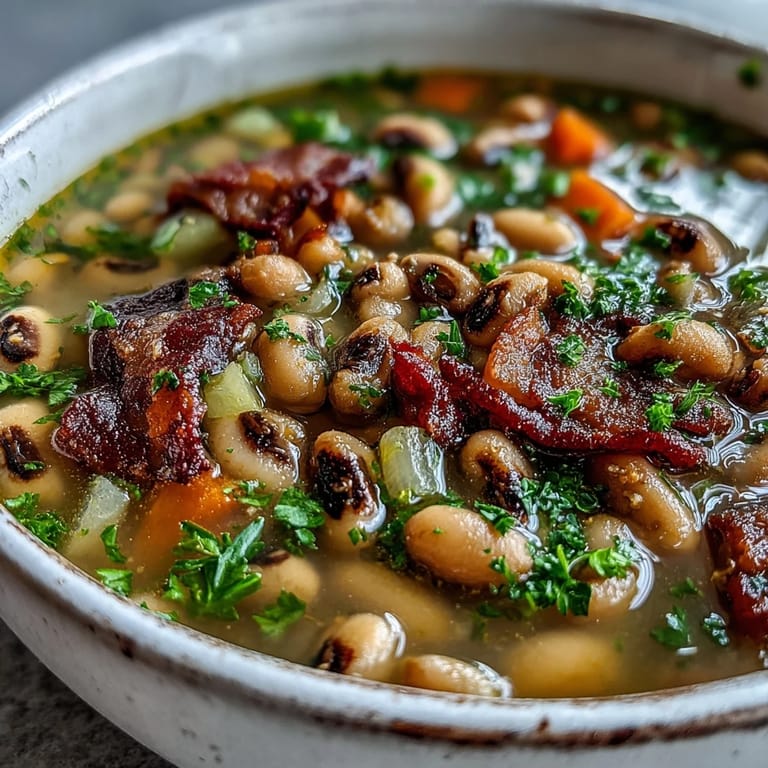
- Ladle the soup into bowls, then top each one with some of that crispy bacon you set aside and a scatter of fresh parsley if you have it. The contrast of warm soup with that bacon crunch is where the real magic happens.
 Pin It
 There was a moment, maybe halfway through that first bowl, when my partner looked up and said this tasted like something his grandmother used to make, which meant everything because he almost never talks about her cooking. The soup had somehow become part of a memory that wasn't mine, but felt like it was. That's the quiet power of this dish—it brings people together without asking questions.
When to Make This Soup
This soup lives in that beautiful space between seasons—hearty enough for cold months but light enough that you won't feel weighed down on an early spring afternoon. I find myself making it in February when the pantry is running low and I need something that feels substantive but not heavy. It's also the kind of soup that tastes even better as leftovers, so it rewards batch cooking and rewarms beautifully on the stovetop.
Make It Your Own
One of the best things about this soup is how forgiving and customizable it is without losing its essential character. The skeleton of bacon, peas, and broth stays the same, but the add-ons are where you can let your kitchen instincts take over. I've added collard greens in the last ten minutes, thrown in diced sweet potato, experimented with different stocks—and every version has felt true to the original spirit.
Stretching It Further
If you need to feed more people than expected or want leftovers that last, this soup stretches gracefully without becoming watery or losing flavor. I've added extra broth, thrown in diced potatoes for texture, even stirred in a handful of grains near the end. For a vegetarian version, omit the bacon entirely and use vegetable broth instead, but add a teaspoon of liquid smoke toward the end to capture that smoky depth that makes the soup feel intentional.
- Serve alongside cornbread or crusty bread to soak up every last bit of broth.
- Leftovers keep for four days in the fridge and freeze beautifully for up to three months.
- Add any greens, grains, or extra vegetables in the last ten to fifteen minutes so they don't fall apart into mush.
 Pin It
 This soup has become one of those recipes I return to without thinking, the way some people reach for comfort without question. It's proof that the best food doesn't need to be complicated—just thoughtful, warm, and made with ingredients you actually want to eat.
Questions & Answers
- → Can I use canned black-eyed peas instead of dried?
Yes, you can substitute 3 cans (15 oz each) of rinsed and drained black-eyed peas. Reduce the simmering time to 20 minutes since canned peas are already tender.
- → How do I make this vegetarian?
Omit the bacon and use vegetable broth instead of chicken broth. Add a dash of liquid smoke to maintain the smoky flavor profile that bacon typically provides.
- → Can I add greens to this soup?
Absolutely! Add chopped collard greens or kale during the last 10 minutes of simmering. They'll wilt nicely and add extra nutrition and color to the bowl.
- → What should I serve with this soup?
Cornbread or crusty bread make perfect accompaniments. The bread helps soak up the flavorful broth and complements the Southern character of the dish.
- → How long does this soup keep in the refrigerator?
Stored in an airtight container, this soup will keep for 4-5 days in the refrigerator. The flavors often develop and improve after a day or two. Reheat gently on the stovetop.