 Pin It
 The kitchen window was fogged with steam the afternoon I threw together my first pot of cabbage soup, mostly because I had half a head of cabbage wilting in the crisper and no real plan for dinner. I expected something bland and forgettable, the kind of thing you eat out of obligation. Instead, the house filled with this deep, sweet-savory smell that pulled my neighbor to the door asking what I was making. That soup taught me that the simplest ingredients can surprise you if you let them simmer long enough.
I made this soup for a friend recovering from a cold, and she called it liquid comfort. We sat at her kitchen table with thick slices of rye bread, dunking and slurping while the rain drummed against the windows. She went back for seconds, then thirds, and admitted she hadnt felt hungry in days. Watching her enjoy something so simple reminded me that food doesnt need to be fancy to feel like care.
Ingredients
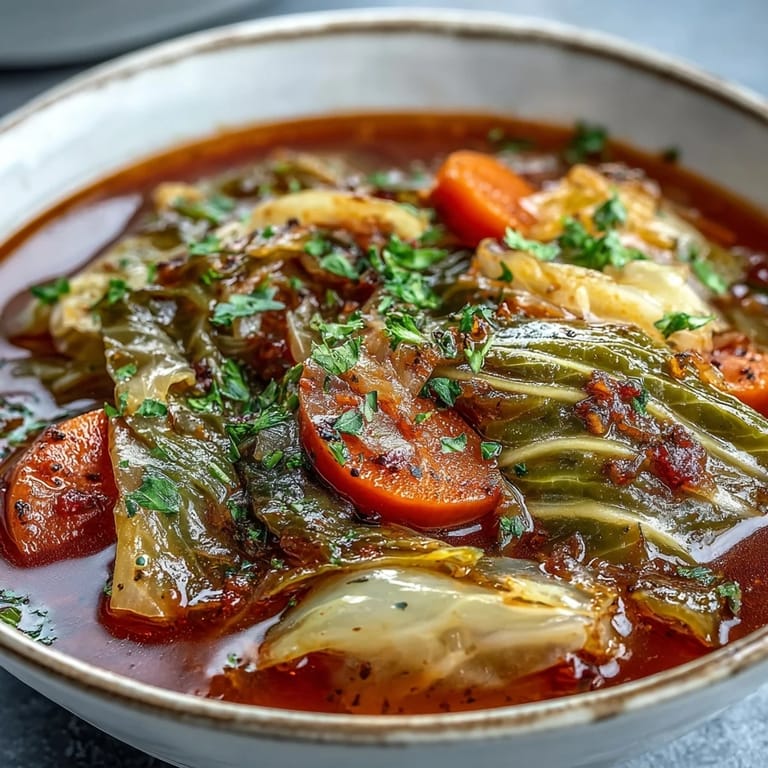
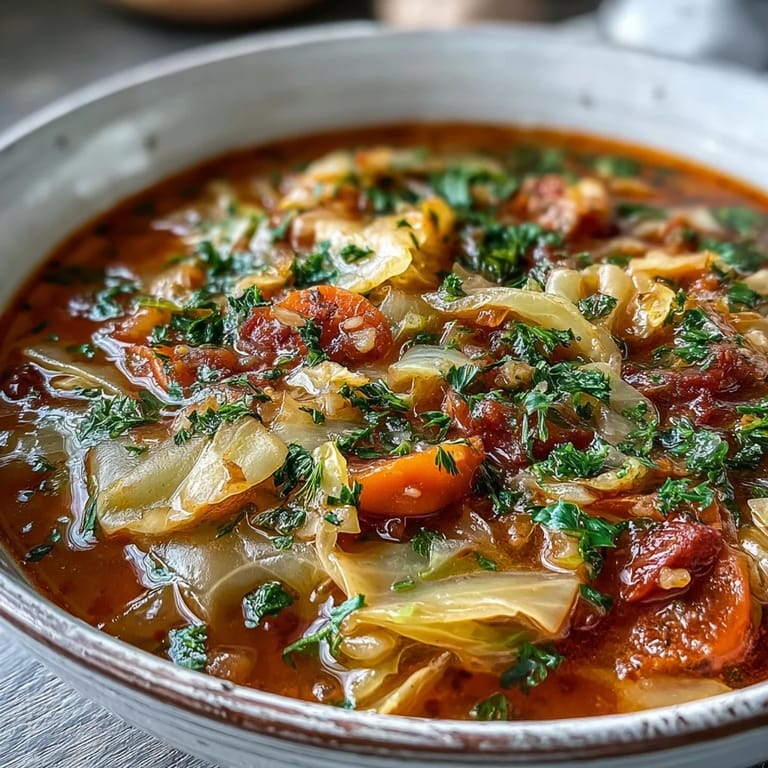
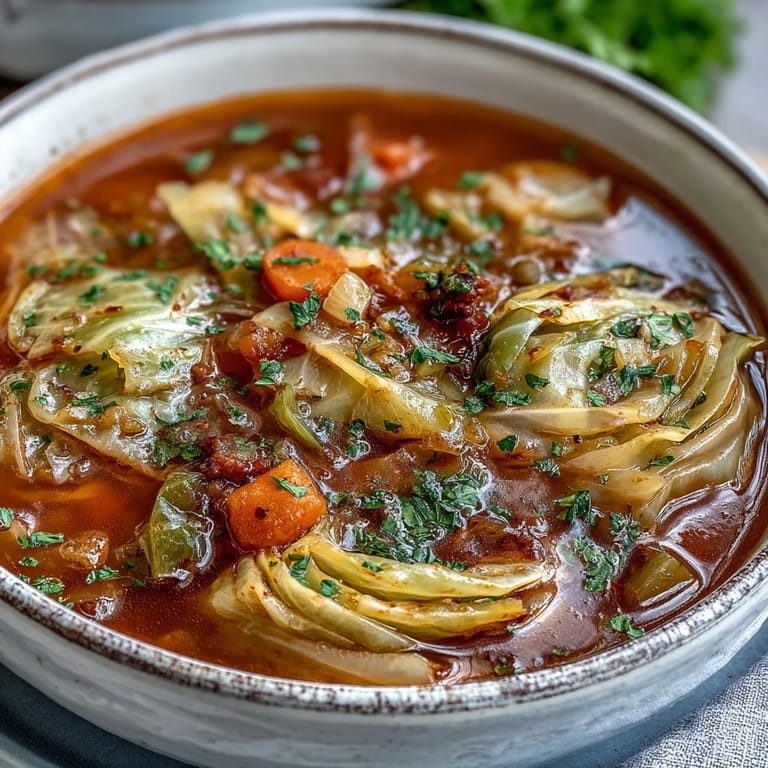
- Green cabbage: The star of the pot, it softens into tender, sweet ribbons that soak up all the tomato and herb flavors, so dont skimp on the simmer time.
- Carrots and celery: These bring a gentle sweetness and earthy backbone that balance the acidity of the tomatoes beautifully.
- Yellow onion: Sautéing it first coaxes out a natural sweetness that becomes the foundation of the entire broth.
- Garlic: Just two cloves add a quiet warmth without overpowering the delicate vegetable flavors.
- Diced tomatoes: Use the kind with juice included, it adds body and a slight tang that brightens every spoonful.
- Tomato paste: Cooking it briefly before adding liquid deepens the color and concentrates the tomato flavor in a way that canned tomatoes alone cant achieve.
- Vegetable broth: The liquid that ties everything together, so use a good quality broth or homemade stock if you have it.
- Dried thyme and bay leaf: These herbs add a subtle earthiness that makes the soup taste like its been simmering in a countryside kitchen.
- Smoked paprika: Optional but magical, it adds a whisper of smokiness that makes people ask what your secret ingredient is.
- Fresh parsley: A handful of green at the end brings brightness and makes each bowl feel freshly finished.
Tired of Takeout? 🥡
Get 10 meals you can make faster than delivery arrives. Seriously.
One email. No spam. Unsubscribe anytime.
Instructions
- Start with the aromatics:
- Heat your pot over medium heat with a splash of oil, then add the onion, carrot, and celery, stirring occasionally until they soften and smell sweet, about five minutes. This step builds the flavor foundation, so dont rush it.
- Wake up the garlic:
- Toss in the minced garlic and stir for just a minute until the kitchen smells incredible and the garlic turns fragrant. Be careful not to let it brown or it will taste bitter.
- Wilt the cabbage:
- Add all that chopped cabbage and stir it around for a few minutes until it starts to shrink and soften. It might look like too much at first, but it will cook down beautifully.
- Bloom the tomato paste:
- Stir in the tomato paste and let it cook for about a minute, coating the vegetables. This quick step concentrates the tomato flavor and adds a deeper color to your broth.
- Build the broth:
- Pour in the diced tomatoes with their juice, the vegetable broth, thyme, bay leaf, smoked paprika if using, and a generous pinch of salt and pepper. Stir everything together and bring it to a lively boil.
- Simmer until tender:
- Lower the heat, cover the pot, and let it simmer gently for 25 to 30 minutes until the cabbage is melt-in-your-mouth tender. The longer it simmers, the more the flavors marry and deepen.
- Finish and serve:
- Fish out the bay leaf, taste the broth, and adjust the salt and pepper as needed. Ladle into bowls and top with a sprinkle of fresh parsley for a pop of color and freshness.
 Pin It
 One winter evening, I ladled this soup into mismatched bowls for a group of friends who showed up unannounced. We gathered around the table with crusty bread and butter, and the conversation stretched long into the night. Nobody wanted to leave, and I realized it wasnt just the soup keeping them there, it was the feeling that something warm and nourishing was being shared.
Making It Heartier
If you want to turn this into a more filling meal, stir in diced potatoes during the simmering stage or add a can of drained white beans in the last ten minutes. Both additions soak up the tomato broth and make the soup substantial enough to stand alone as dinner. I love adding potatoes when Im serving it to kids or anyone who needs a little extra fuel on a cold day.
Storing and Reheating
This soup keeps beautifully in the fridge for up to five days and actually tastes better the next day after the flavors have had time to meld. I store it in glass jars and reheat individual portions on the stove or in the microwave, adding a splash of broth or water if it thickens up. It also freezes well for up to three months, so I sometimes make a double batch and tuck half away for a future busy week.
Pairing and Serving Ideas
I almost always serve this soup with a thick slice of rye bread or a crusty roll for dipping, and sometimes I set out a small dish of sour cream for those who want a creamy swirl on top. A simple green salad with a tangy vinaigrette balances the richness of the broth, and a glass of crisp white wine or sparkling water with lemon feels just right. This soup is humble enough for a weeknight but impressive enough to serve to guests without any fuss.
- Serve with rye bread, sourdough, or any crusty roll for dipping and soaking up the broth.
- Offer sour cream or a dollop of Greek yogurt on the side for those who enjoy a creamy contrast.
- Pair with a simple green salad dressed in lemon vinaigrette to keep the meal light and balanced.
 Pin It
 This soup has become my go-to when I need something easy, nourishing, and deeply satisfying without a lot of fuss. I hope it fills your kitchen with the same warmth and comfort it brings to mine.
Questions & Answers
- → Can I make this cabbage soup ahead of time?
Yes, this soup stores beautifully in the refrigerator for up to 5 days. The flavors actually deepen and improve after a day. Reheat gently on the stovetop or in the microwave, adding a splash of broth if needed to thin the consistency.
- → What type of cabbage works best?
Green cabbage is traditional and recommended for its mild, sweet flavor and tender texture when cooked. You can substitute with savoy cabbage for a more delicate texture, though red cabbage will change the color and add a slightly earthier taste.
- → How can I make this soup more filling?
Add diced potatoes during step 5 for heartiness, or stir in cooked white beans, chickpeas, or lentils near the end of cooking. You can also serve with crusty bread or add cooked grains like barley or rice directly to the pot.
- → Can I freeze cabbage soup?
Absolutely. Let the soup cool completely, then transfer to freezer-safe containers leaving an inch of headspace. Freeze for up to 3 months. Thaw overnight in the refrigerator and reheat on the stovetop, stirring occasionally.
- → Why is my cabbage soup bitter?
Cabbage can turn bitter if overcooked or if the core wasn't fully removed. Make sure to core the cabbage completely and avoid cooking beyond 30 minutes. A pinch of sugar or extra tomato paste can help balance any bitterness.
- → What can I substitute for vegetable broth?
Use chicken broth for a non-vegetarian version, or make a simple broth by simmering water with bouillon cubes, herbs, and a splash of soy sauce or miso paste for umami depth. Even plain water with extra seasonings works in a pinch.