 Pin It
 The first time I made cold sesame noodles was on a sweltering August afternoon when my air conditioning had just broken. I had a box of wheat noodles and a jar of tahini staring back at me from the pantry, and instead of ordering delivery for the third time that week, something clicked. An hour later, I was standing over a bowl of silky, chilled noodles draped in a sauce that tasted like it had been whispered in Mandarin, and the heat suddenly didn't matter anymore. That dish saved my summer, and it's been my secret weapon ever since.
I made this for a potluck once where everyone brought something complicated and fussy, and I showed up with cold noodles in a glass container. One bite and suddenly that bowl was empty while the fancy dishes sat untouched. My coworker actually asked for the recipe, and now she makes it every week for her kids. That's when I knew this wasn't just food—it was the kind of thing that sticks with people.
Ingredients
- Wheat noodles or spaghetti (350 g): The backbone here—I use regular wheat noodles if I can find them, but spaghetti works beautifully when you need it to.
- Sesame oil (1 tbsp for tossing): This isn't the toasted kind; it's the neutral, light sesame oil that keeps the noodles from clumping into a sad brick.
- Tahini or Chinese sesame paste (4 tbsp): The real star, creamy and earthy—it's what transforms this from just noodles into something worth remembering.
- Smooth peanut butter (2 tbsp): A touch of richness that rounds out all those sharp flavors and makes the sauce taste rounder and fuller.
- Low-sodium soy sauce (3 tbsp): The salt backbone that ties everything together without overpowering the delicate sesame notes.
- Rice vinegar (2 tbsp): Brightness and lift—this is what keeps the sauce from feeling heavy on a hot day.
- Honey (1 tbsp): Just enough sweetness to balance the heat and vinegar, though maple syrup works if you're keeping it vegan.
- Toasted sesame oil (1 tbsp): This is different from the regular sesame oil, darker and more perfumed, and it's the final touch that makes people ask what you did differently.
- Garlic and ginger (2 cloves and 1 tbsp, grated): Fresh if possible—they wake up your palate and make the sauce taste alive.
- Chili oil (1–2 tsp, optional): Only if you like heat, but I usually add it because something about the warmth cuts through the richness perfectly.
- Cold water (3–5 tbsp): The secret to sauce consistency—add it gradually and you'll find the perfect creamy-but-pourable texture.
- Cucumber, carrots, spring onions (julienned and sliced): The crunch that keeps this from being one-note, and they stay crisp even hours later.
- Sesame seeds, cilantro, peanuts (for topping): These aren't decoration—they're what your tongue is actually waiting for with each forkful.
Tired of Takeout? 🥡
Get 10 meals you can make faster than delivery arrives. Seriously.
One email. No spam. Unsubscribe anytime.
Instructions
- Cook and cool the noodles:
- Boil according to the package, then drain and rinse under cold water while running your hands through them to cool them quickly. The tossing with that neutral sesame oil is crucial—it keeps them from turning into a tangled knot.
- Build the sauce:
- Whisk tahini, peanut butter, soy sauce, rice vinegar, honey, and toasted sesame oil together in a bowl. Add the garlic and ginger, then the chili oil if you're feeling bold. Slowly pour in the cold water while whisking, watching the sauce transform from thick paste into something silky and pourable.
- Marry noodles and sauce:
- Dump the cooled noodles into a large bowl and pour that gorgeous sauce over them, then toss like you mean it. Every strand should be coated, glistening.
- Plate and garnish:
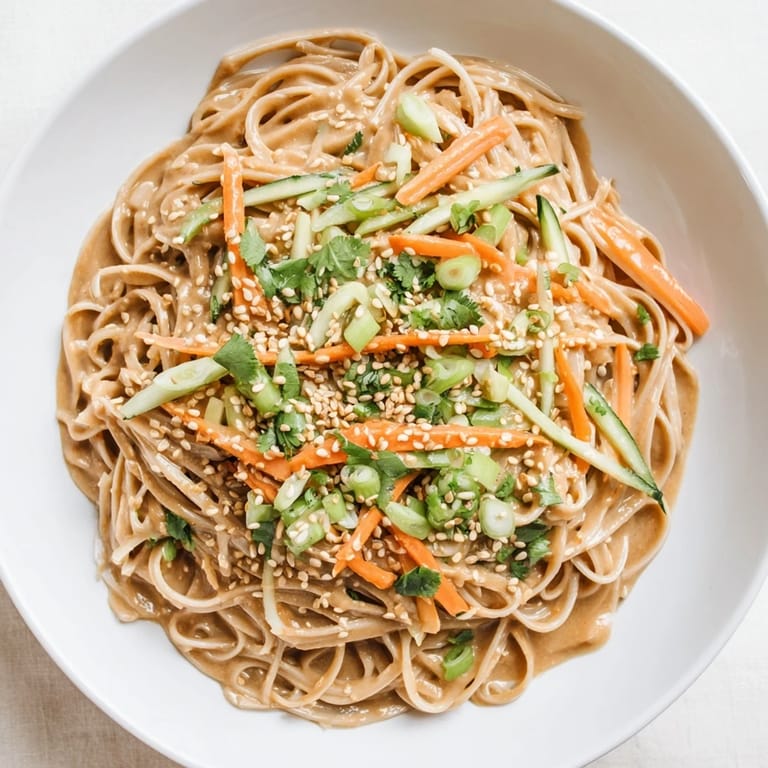
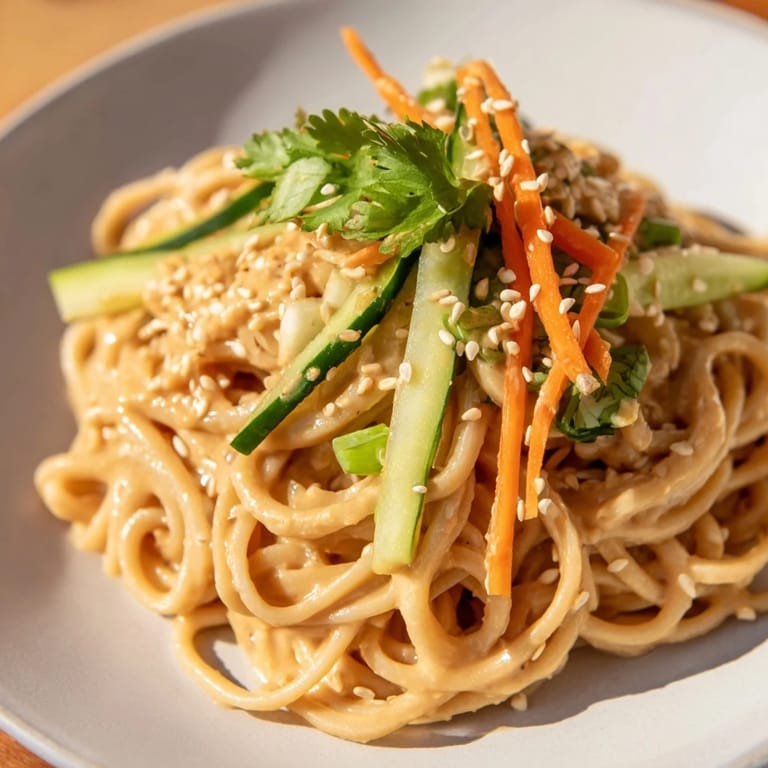
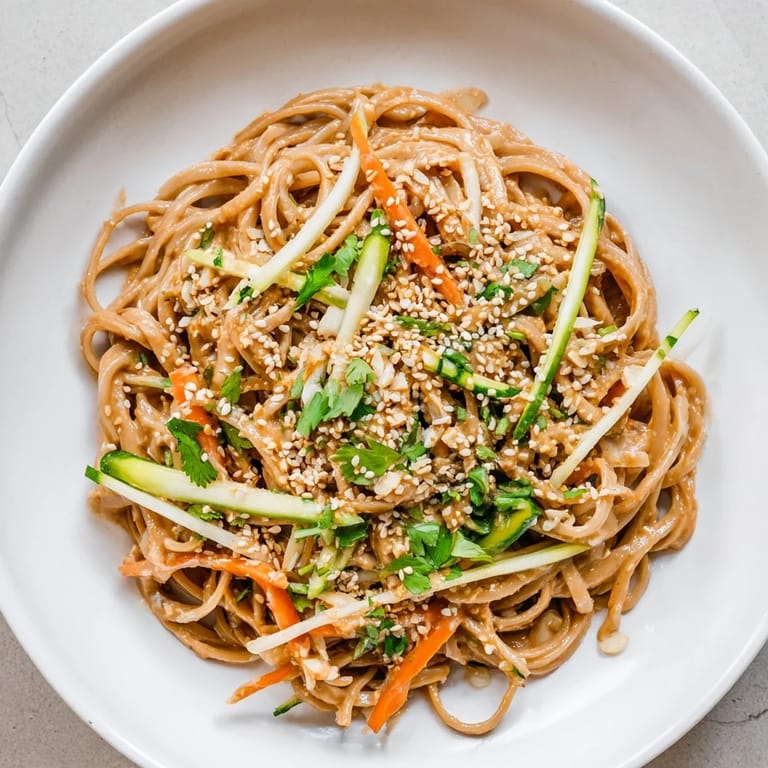
- Twirl noodles into serving bowls and crown them with cucumber, carrots, spring onions, sesame seeds, and cilantro. The peanuts and lime wedges go on the side so everyone can adjust the crunch and brightness to their taste.
- Chill or serve:
- If you have time, let it sit for 10–15 minutes in the fridge so all those flavors can get to know each other better. But honestly, it's good hot out of the bowl too.
 Pin It
 My neighbor came over one evening and we ended up eating these noodles straight from the bowl on my porch, watching the sun drop behind the buildings. She didn't say much, just kept going back for more, and we sat there in comfortable silence until the bowl was gone. Sometimes the simplest food creates the easiest moments with people.
Why This Sauce Works
The magic of this sauce is that it's not trying to be one thing—it's a conversation between tahini's earthiness, peanut butter's warmth, soy sauce's salt, rice vinegar's bright snap, and sesame oil's floral depth. The honey rounds it all into something that tastes complex without being fussy. When you taste it on its own, before the noodles go in, it should make you pause and say 'wow,' because that's the sign you've balanced it right.
Making It Your Own
I've made this about fifty different ways depending on what's in my fridge or what mood I'm in. Sometimes I add shredded rotisserie chicken because I'm hungry, sometimes shrimp because I'm feeling fancy, sometimes just extra tofu because I want it vegetarian. I've also learned that you can make a double batch of just the sauce and keep it in the fridge for a week—suddenly you have a fast dinner waiting whenever you need it.
Storage and Serving Suggestions
This dish keeps beautifully for 3–4 days in the fridge, though I usually eat it the first day because I can't help myself. If you're meal prepping, keep the sauce and noodles separate from the fresh vegetables and add them right before eating so everything stays crisp and bright. Serve it cold on hot days, or at room temperature if you pulled it from the fridge and life got in the way.
- Pair it with iced green tea or a crisp white wine if you're feeling civilized.
- Double the recipe without thinking twice—this is one of those dishes that disappears faster than you expect.
- If the sauce thickens as it sits, just whisk in a touch more water and it comes right back to life.
 Pin It
 Cold sesame noodles have become the kind of dish I turn to when I want to feel like I've cooked something thoughtful without stressing about it. It's reliable, it's delicious, and it never fails to make someone ask for the recipe.
Questions & Answers
- → What type of noodles work best for this dish?
Wheat noodles or spaghetti are ideal as they cook quickly and hold the sauce well. For gluten-free needs, use gluten-free noodles.
- → How can the sauce consistency be adjusted?
Gradually add cold water to the sesame mixture until it becomes smooth and pourable without being too thin.
- → Can this be served warm instead of cold?
While traditionally served chilled for a refreshing taste, slightly warmed noodles can be used but may alter the overall flavor experience.
- → Are there protein additions that complement this dish?
Shredded cooked chicken, tofu, or shrimp can be added for extra protein without overwhelming the delicate sesame flavors.
- → What are good beverage pairings?
Chilled white wine or iced green tea harmonize well, enhancing the light and nutty notes.
- → How to make it vegan-friendly?
Replace honey with maple syrup and ensure all ingredients like soy sauce are vegan-certified.