 Pin It
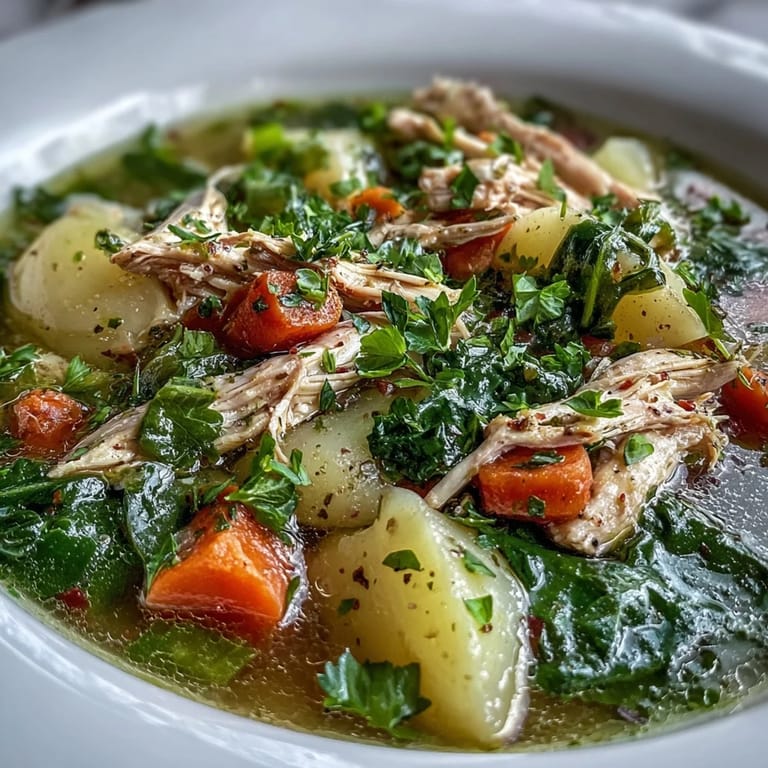
 There's something about a pot of collard greens and chicken soup that makes a kitchen feel like home, even when you're cooking in unfamiliar territory. I stumbled onto this version while reorganizing my spice cabinet one rainy afternoon, realizing I had smoked paprika, fresh collards from the market, and chicken breasts that needed using. What started as a practical decision turned into something I found myself making weekly, each time tweaking it slightly based on what was in the crisper drawer.
I made this for my neighbor Sarah one winter when she mentioned she'd been living on takeout for weeks, and watching her face light up at the first spoonful felt like I'd done something genuinely useful. She asked for the recipe twice, and now her version includes white beans because she remembered I'd mentioned that swap. That's when I knew it wasn't just a soup recipe anymore, it was something shareable.
Ingredients
- Boneless, skinless chicken breasts (about 400 g): Two medium breasts give you enough protein without making the broth cloudy, and they shred beautifully once cooked through.
- Collard greens (about 300 g, stems removed and leaves chopped): Removing the stems saves cooking time and prevents that fibrous texture that can sneak up on you; the leaves alone tender perfectly in just 10 minutes.
- Yukon Gold potatoes (2 medium, peeled and diced): These hold their shape and add a creamy sweetness that white potatoes simply don't deliver in the same way.
- Carrots (2, peeled and sliced): Slicing them thinly means they soften evenly and don't dominate the bowl.
- Celery stalks (2, diced): This is your quiet flavor builder, the foundation that makes everything else taste more like itself.
- Onion (1 medium, diced): The first vegetable that hits the hot oil, creating that sweet, deep base that holds the whole soup together.
- Garlic cloves (3, minced): Adding garlic after the onion softens prevents it from burning and turning bitter, a lesson learned from one too many scorched pots.
- Low-sodium chicken broth (1.5 liters or 6 cups): Low-sodium lets you taste every other ingredient instead of fighting salt, and it gives you room to adjust seasoning as you go.
- Bay leaf (1): This single leaf adds an earthy undertone that you might not notice consciously but absolutely would miss if it weren't there.
- Dried thyme (1 teaspoon): Thyme plays nicely with the smoked paprika and prevents the soup from tasting generic.
- Smoked paprika (1 teaspoon): This is the secret handshake, the reason someone will ask what makes your soup taste different from everyone else's.
- Black pepper and salt (½ teaspoon pepper, 1 teaspoon salt): Taste as you go because every broth is different, and aggressive seasoning at the end is better than underseasoning throughout.
- Olive oil (2 tablespoons): Good oil matters here since it's one of the few fats doing the work; don't skimp on this one ingredient.
- Lemon juice (from ½ lemon): Squeezed in at the very end, this brightens everything and prevents the soup from tasting heavy or one-note.
- Fresh parsley (optional garnish): A small handful makes it feel intentional and restaurant-like, even though it took you no more effort than chopping.
Tired of Takeout? 🥡
Get 10 meals you can make faster than delivery arrives. Seriously.
One email. No spam. Unsubscribe anytime.
Instructions
- Build your flavor base:
- Heat the olive oil in a large soup pot over medium heat, then add the diced onion, carrots, and celery. Let them sauté for 5 to 6 minutes, stirring occasionally, until the onions turn translucent and the kitchen starts smelling like something good is happening. You want softness here, not browning.
- Add the aromatics:
- Stir in your minced garlic and cook for just one minute, stirring constantly to keep it from sticking. That's it for this step, quick and protective.
- Combine everything:
- Add the whole chicken breasts, diced potatoes, bay leaf, thyme, smoked paprika, salt, and pepper all at once. Pour in the chicken broth and stir to combine, making sure nothing sticks to the bottom.
- Let it simmer:
- Bring the pot to a boil over medium-high heat, then reduce the heat to low, cover with a lid, and let it cook for 20 minutes. The chicken will be cooked through and the potatoes will be tender enough to break with a spoon.
- Shred and return:
- Carefully remove the chicken breasts with tongs and place them on a cutting board. Using two forks, pull the meat apart into shreds, then return it to the pot where it'll absorb all those flavors.
- Add the greens:
- Stir in your chopped collard greens and simmer, uncovered, for 10 to 12 minutes. Watch them go from dark and dense to tender and vibrant, which happens faster than you'd think.
- Finish with brightness:
- Squeeze in the lemon juice and taste the whole thing. Adjust the salt and pepper if needed, remembering that a little goes a long way.
- Serve it hot:
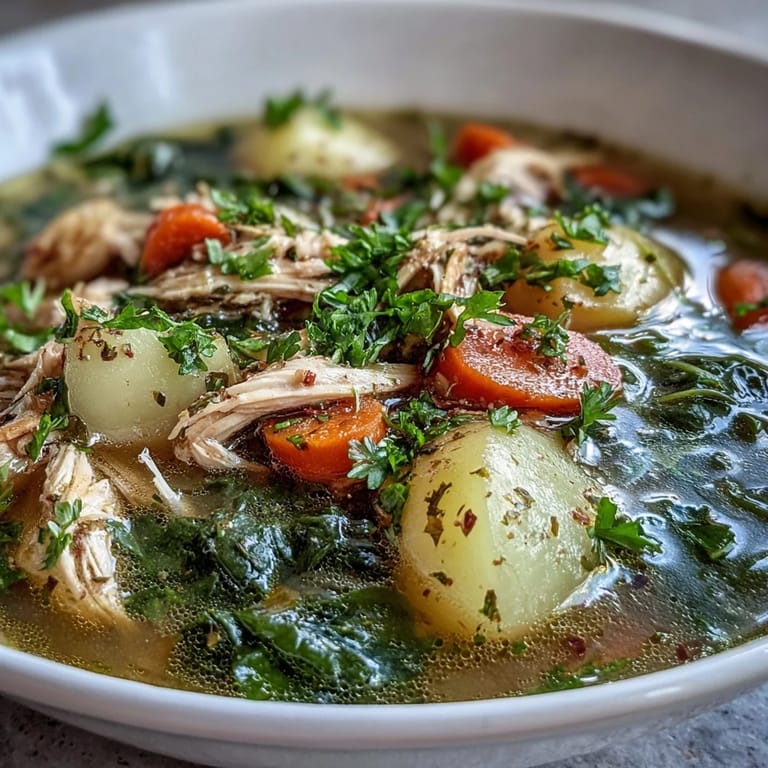
- Ladle into bowls and top with a small handful of fresh parsley if you have it. The green against the golden broth is worth the two seconds it takes.
 Pin It
 My friend Marcus brought his daughter over for dinner one evening, and she asked for thirds, which doesn't happen often with a five-year-old. Watching her carefully pick out the collard greens because she'd decided they were her favorite made me realize this soup does something most foods don't, it makes people feel seen and taken care of at the same time.
The Secret of the Smoked Paprika
If you've ever wondered why restaurant soups taste different from the ones at home, smoked paprika is often the answer nobody talks about. It adds a depth that regular paprika can't touch, almost like the soup has been slowly cooked over a fire even though it hasn't. I learned this by accident when I grabbed the wrong jar one evening, and the difference was immediate and undeniable.
Why Collard Greens Are Worth Learning
Collard greens intimidated me for years because they looked tough and unfamiliar compared to spinach, but they're actually more forgiving than most vegetables. They hold their texture during cooking instead of turning to slime, they're incredibly nutritious, and once you remove those stems they cook faster than you'd expect. Now I buy them weekly not just for this soup but because they've become one of my favorite ways to add color and substance to any meal.
Make It Your Own
The beauty of this soup is that it welcomes changes based on what's in your kitchen or what your body is craving that day. I've made it with kale when I was out of collards, added white beans when I wanted more protein, and even stirred in a parmesan rind once because it was sitting on the counter and I was curious. Every version has been good, though the original is still my favorite. Your version might become your favorite instead, and that's exactly as it should be.
- If you have vegetable broth instead of chicken broth, use it and add a can of white beans for protein.
- A parmesan rind simmered in the broth for the last 10 minutes adds an umami layer that feels almost luxurious, just remove it before serving.
- Serve this over brown rice or with crusty bread if you want to stretch it further or make it feel more substantial on cold evenings.
 Pin It
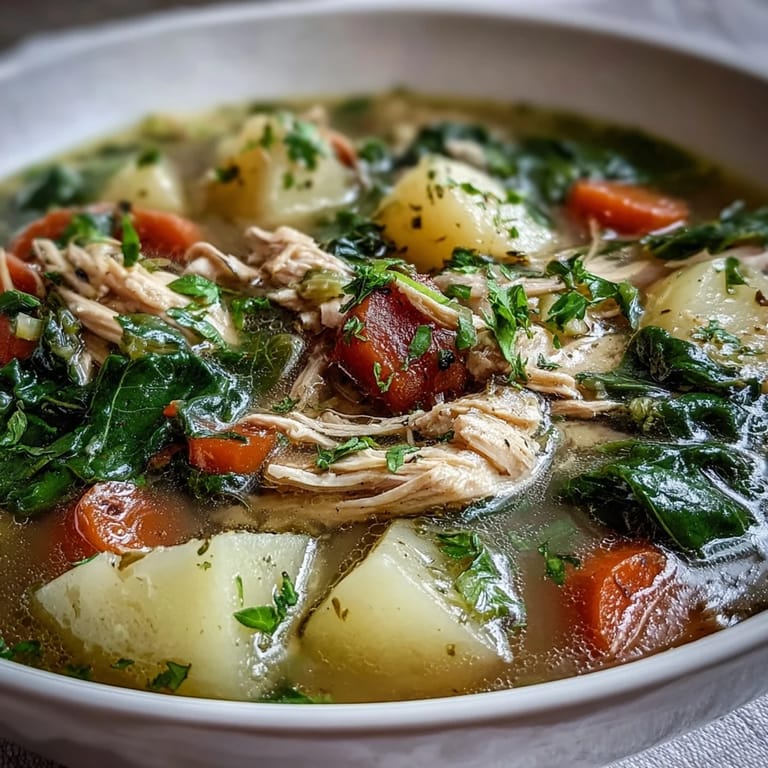
 This soup has become one of those recipes I make without thinking, the way some people pour coffee or check the weather. It feeds people, it's forgiving, and it tastes like you've put in effort even when you've mostly just been patient and let the pot do the work.
Questions & Answers
- → Can I use other greens instead of collard greens?
Absolutely. Kale or Swiss chard work beautifully as substitutes. Keep in mind that cooking times may vary slightly—kale tends to cook faster than collards.
- → How long does this soup keep in the refrigerator?
Stored in an airtight container, this soup stays fresh for 4-5 days. The flavors actually improve after a day or two as the ingredients meld together.
- → Can I make this in a slow cooker?
Yes. Sauté the vegetables first, then add everything to your slow cooker. Cook on low for 6-7 hours or high for 3-4 hours. Shred the chicken and add collards during the last hour.
- → Is this suitable for freezing?
This soup freezes well for up to 3 months. Cool completely before transferring to freezer-safe containers. Thaw overnight in the refrigerator before reheating gently on the stovetop.
- → What can I serve with this soup?
Crusty bread, cornbread, or overcooked brown rice make excellent accompaniments. A simple green salad with vinaigrette balances the meal perfectly.