 Pin It
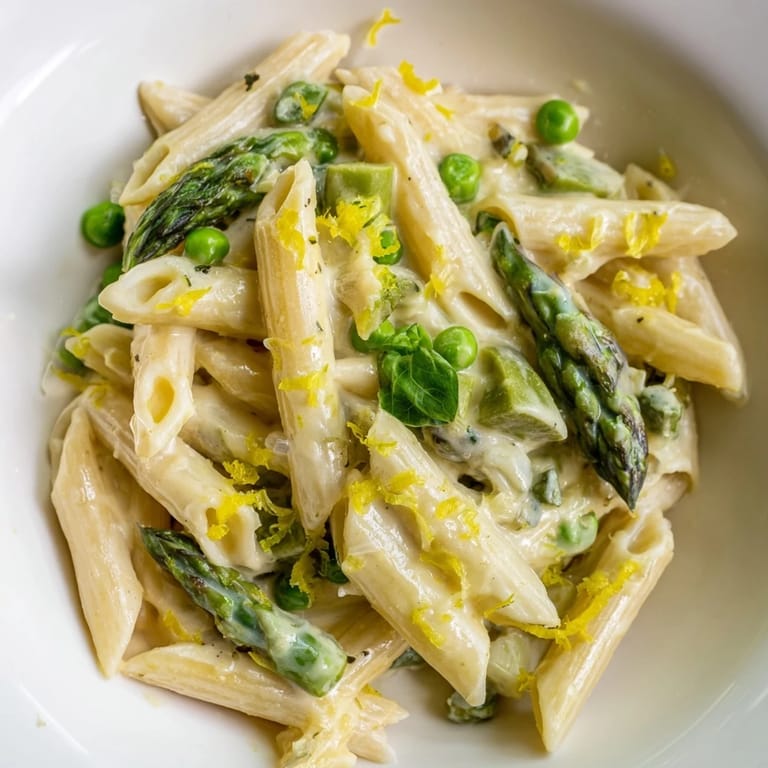
 Last April, my neighbor dropped off a bag of vegetables from her garden and challenged me to do something special with them. The asparagus was so fresh it snapped with a satisfying crunch, and those tiny peas were still in their pods. I threw together this pasta on a whim, and somehow it became the dish my family now requests every spring when the markets start filling with green again.
I made this for my sister when she was visiting last month, and she literally stopped talking mid-sentence to take another bite. Watching someone discover how good spring vegetables can taste when treated properly is one of those quiet kitchen victories that keep me cooking.
Ingredients
- 350 g (12 oz) penne pasta: The ridges catch the sauce perfectly, though rigatoni works in a pinch
- 200 g (7 oz) asparagus: Cut into bite-sized pieces so you get some in every forkful
- 150 g (1 cup) fresh or frozen peas: Fresh pop beautifully but frozen are perfectly fine
- 150 g (1 cup) green beans: Trim and cut same size as asparagus for even cooking
- 2 tbsp olive oil: The foundation that carries all the garlic flavor
- 3 cloves garlic, finely minced: Do not use pre-minced, the fresh flavor is crucial here
- 60 ml (1/4 cup) vegetable broth: Creates depth without overpowering the vegetables
- 120 ml (1/2 cup) heavy cream: Half-and-half works if you are watching calories
- 60 g (2/3 cup) freshly grated Parmesan: Buy a wedge and grate it yourself
- 1/2 tsp freshly ground black pepper: White pepper looks better but black tastes bolder
- 1/4 tsp salt: Adjust at the end since Parmesan adds its own saltiness
- Zest of 1 lemon: Microplane it directly into the pan for maximum oil release
- 1 tbsp fresh lemon juice: Brightens everything and cuts through the cream
- Extra grated Parmesan and fresh herbs: Basil or parsley, whichever calls to you
Tired of Takeout? 🥡
Get 10 meals you can make faster than delivery arrives. Seriously.
One email. No spam. Unsubscribe anytime.
Instructions
- Get your pasta water going first:
- That salted boiling water needs to be ready before you start anything else
- Cook the penne until al dente:
- Reserve that pasta water before draining, it is liquid gold for emulsifying sauces
- Sauté the garlic in olive oil:
- Watch it carefully, burnt garlic ruins everything in seconds
- Add all the vegetables at once:
- They need about 3-4 minutes to turn bright green while staying snappy
- Pour in the vegetable broth:
- Let it bubble for 2 minutes so the vegetables drink up that subtle flavor
- Lower the heat and add cream:
- Stir in the Parmesan and watch it transform into silky magic
- Toss everything together:
- Add pasta water gradually until the sauce clings to every piece of pasta
- Finish with lemon and pepper:
- That zest and juice are what make this taste like spring on a plate
 Pin It
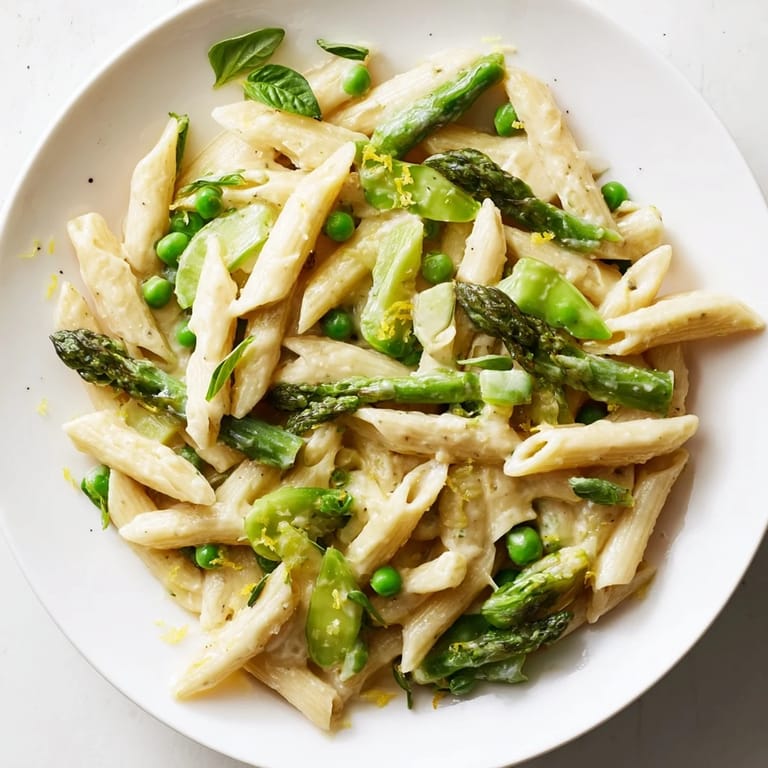
 This recipe has become my go-to for Sunday dinners, especially when I have friends over who claim they do not like vegetables. Something about that creamy garlic sauce and tender-crisp veggies converts everyone.
Making It Your Own
Once you get the basic technique down, this pasta is incredibly forgiving. I have added spinach at the end, swapped in different cheeses, and even used whatever vegetables looked good at the market that week.
Timing Is Everything
The trickiest part is getting the pasta and vegetables done at the same time. Start your pasta water first, then prepping the vegetables while the pasta cooks gives you the rhythm you need.
Leftovers That Actually Work
This pasta reheats surprisingly well if you do not mind losing a bit of that bright green color. I actually think the flavors meld together even more after a night in the refrigerator.
- Add a splash of cream when reheating to loosen the sauce
- Sprinkle freshParmesan on top to revive the flavors
- A quick squeeze of lemon brings back that spring brightness
 Pin It
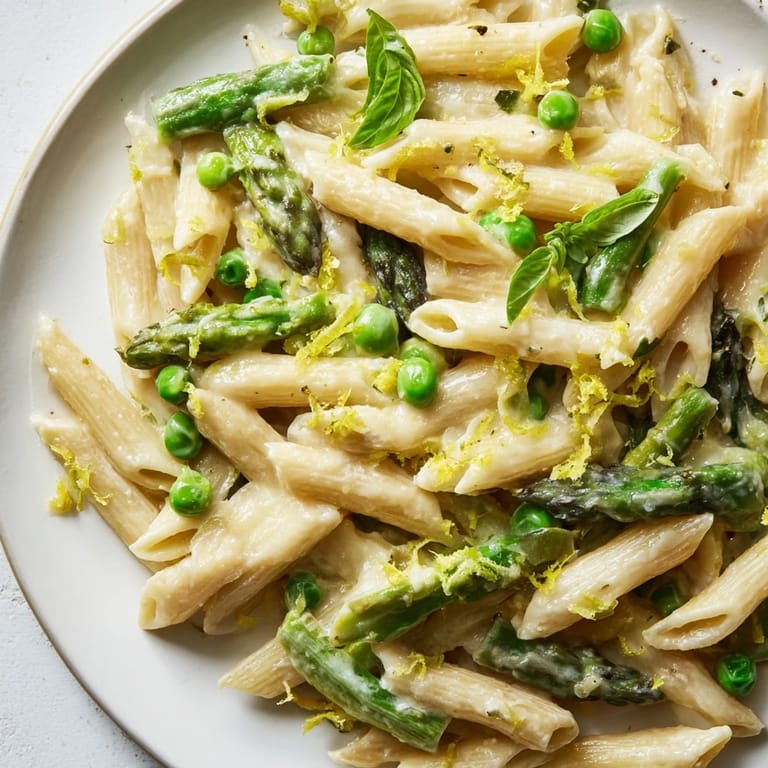
 There is something so satisfying about a dish that celebrates the season this simply. Happy spring cooking.
Questions & Answers
- → Can I make this dish ahead of time?
While best served immediately, you can prepare components ahead. Cook the pasta and vegetables separately, store them in the refrigerator, then combine and warm gently with the sauce when ready to serve. Add reserved pasta water to achieve the desired sauce consistency.
- → What vegetables work best as substitutes?
Spring vegetables like sugar snap peas, zucchini, or broccoli work beautifully. For heartier options, add mushrooms or sun-dried tomatoes. Keep cooking times similar to maintain bright colors and tender-crisp textures.
- → How do I prevent the sauce from breaking?
Keep the heat low when adding cream and cheese, stirring constantly until the cheese melts completely. Never boil the cream, as high heat can cause separation. Use freshly grated Parmesan for smoother melting.
- → Is this suitable for dietary restrictions?
Yes. Substitute heavy cream with plant-based cream and vegan Parmesan for vegan preparations. For gluten-free diets, use gluten-free pasta. Those avoiding dairy can explore dairy-free alternatives, though flavor will differ slightly.
- → Why is lemon important in this dish?
Lemon zest and juice brighten the rich, creamy sauce and enhance the fresh spring vegetable flavors. The acidity balances the earthiness of asparagus and green beans while cutting through the richness of the cream and cheese.
- → How much pasta water should I reserve?
Reserve about 120 ml (1/2 cup) of starchy pasta water. This helps achieve a silky sauce consistency when combined with the creamy mixture, allowing the pasta to absorb flavors while maintaining a cohesive, restaurant-quality sauce.