 Pin It
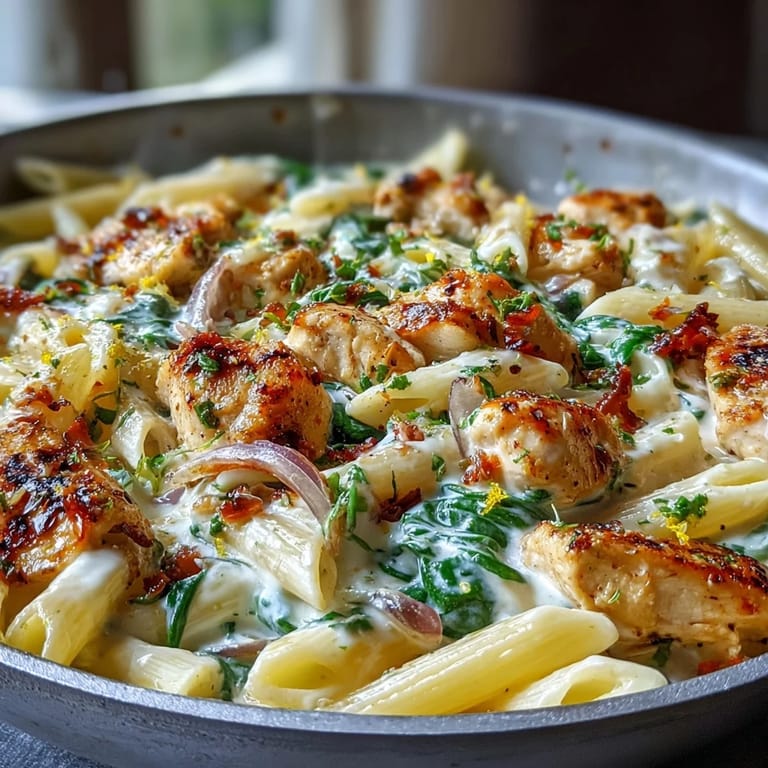
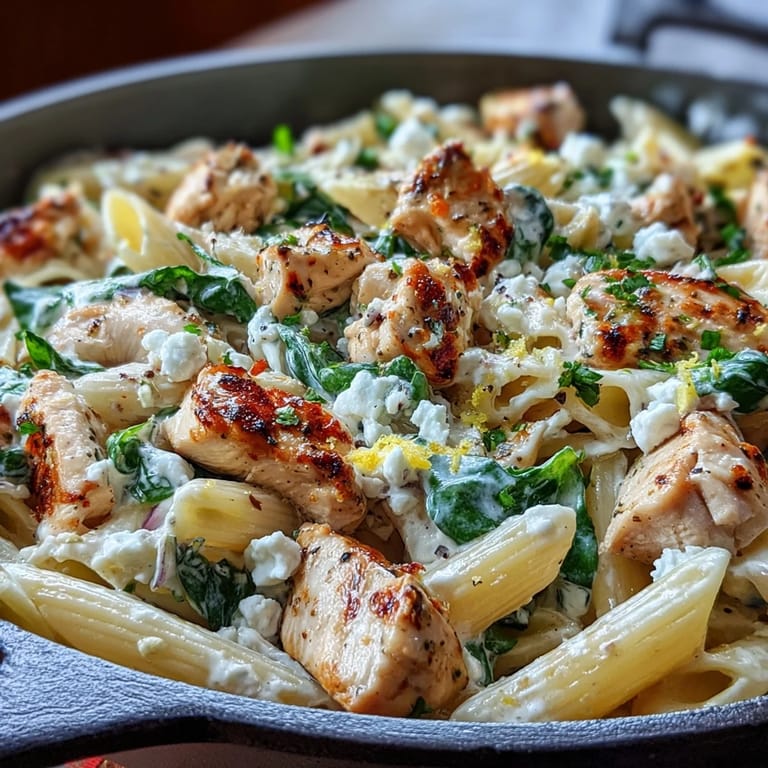
 There's something magical about the smell of lemon and feta hitting a hot skillet—it happened by accident one weeknight when I was improvising with what I had on hand, and suddenly my kitchen smelled like a taverna on the Greek coast. My partner wandered in asking what was taking so long, and by the time I explained I was just throwing pasta, chicken, and yogurt together, they were already setting the table. That one-skillet dinner became the recipe I make whenever I want something that feels both impressive and utterly effortless.
I served this to a friend who'd been craving something fresh but filling, and watching her take that first bite—closing her eyes as the lemon brightness mixed with creamy feta—reminded me why simple, intentional food matters. She asked for the recipe before she'd finished her plate, which felt like the highest compliment.
Ingredients
- Boneless, skinless chicken breast (1 lb): Cut into bite-sized pieces so they cook quickly and distribute evenly throughout the skillet—I learned this speeds up cooking and prevents dry chicken.
- Short pasta like penne or fusilli (12 oz): The nooks and crannies catch the creamy sauce better than long pasta ever could, making every bite more flavorful.
- Feta cheese (4 oz, crumbled): Don't skip the crumbling step—it dissolves slightly into the warmth and creates that tangy, luxurious texture.
- Plain Greek yogurt (1 cup): This is the secret to creaminess without heavy cream; add it off heat to keep it silky and prevent breaking.
- Fresh baby spinach (3 cups): It wilts in seconds, so add it near the end to keep its vibrant color and delicate flavor.
- Red onion, thinly sliced (1 small): The sweetness balances the tang of feta and yogurt in ways that regular yellow onion just doesn't.
- Garlic, minced (2 cloves): Raw garlic would overpower this delicate sauce, so cook it gently with the onion until fragrant and mellow.
- Lemon zest and juice (1 whole lemon): The zest adds brightness that juice alone can't capture—don't skip it, it's where half the magic lives.
- Low-sodium chicken broth (1 cup): This becomes part of your sauce, so use good broth or it'll taste thin and one-dimensional.
- Olive oil (2 tbsp): Use something you'd actually taste, not the generic kind; it matters here.
- Dried oregano (1 tsp): A Mediterranean staple that makes this dish unmistakably Greek without being heavy-handed.
- Dried dill (1/2 tsp, optional): This adds an herbal whisper that feels like cooking by the sea.
- Crushed red pepper flakes (1/2 tsp, optional): For those who like a gentle heat that doesn't overpower the delicate cream sauce.
- Salt and pepper: Taste as you go—the feta is already salty, so season lightly at first.
Tired of Takeout? 🥡
Get 10 meals you can make faster than delivery arrives. Seriously.
One email. No spam. Unsubscribe anytime.
Instructions
- Boil your pasta to al dente:
- Start a large pot of salted water and cook the pasta until just tender—it'll continue cooking slightly in the skillet, so don't let it get too soft. Reserve about half a cup of that starchy pasta water before draining; it's your secret weapon for loosening the sauce later.
- Sear the chicken until golden:
- Heat olive oil in your large skillet over medium-high heat, then add the chicken pieces seasoned with salt, pepper, oregano, and dill. Let them cook undisturbed for a couple minutes so they brown properly, then stir and cook another 3–4 minutes until cooked through—you're looking for a light golden crust. Transfer to a plate and set aside.
- Soften the aromatics:
- In the same skillet, add the thinly sliced red onion and minced garlic, stirring often for 2–3 minutes until soft and fragrant. This step builds the flavor foundation, so don't rush it.
- Wilt the spinach quickly:
- Add the fresh spinach and stir until it collapses into the skillet, about a minute—you want it tender but still bright green. This happens faster than you'd think, so stay nearby.
- Bring everything together:
- Lower the heat to medium-low and add back the cooked chicken and pasta, along with the lemon zest, lemon juice, and chicken broth. Toss gently until everything is warm and the broth is absorbed, which takes just a few minutes. The pasta will soak up those flavors like it's been waiting for this moment all along.
- Create the creamy sauce off heat:
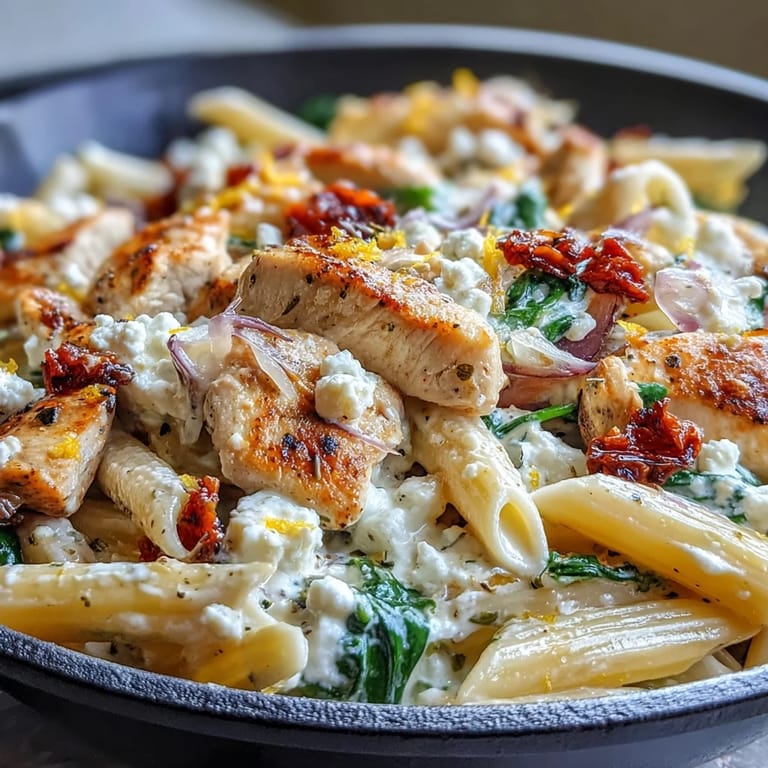
- Remove the skillet from heat, then gently fold in the Greek yogurt and crumbled feta until you have a silky, creamy sauce. The off-heat step is crucial—it keeps the yogurt from breaking and the cheese from getting grainy. If the sauce feels too thick, add reserved pasta water a tablespoon at a time until it reaches the consistency you love.
- Taste and adjust:
- Season with a little more salt, pepper, and red pepper flakes if you want warmth. Some days I add more lemon juice, some days less—let your instincts guide you. Serve immediately while everything is still warm and the flavors are singing.
 Pin It
 What I love most about this dish is how it feels like you're cooking for someone special, even when you're just feeding yourself on a Tuesday night. There's something about a one-skillet meal that tastes elegant but doesn't demand your entire afternoon—it's honest food that happens to taste like love.
Why This Skillet Method Works
Cooking everything in one skillet isn't just about cleanup—it's about flavor building. The chicken leaves behind those browned, savory bits that season the whole dish as the onion and garlic cook in the same oil, and then the pasta gets a head start absorbing broth before the yogurt and feta even enter. Each layer adds depth, and you can taste every decision you made along the way.
Making It Your Own
This recipe is a framework, not a rulebook, which is why I've made it about fifty different ways depending on what's in my crisper drawer or what I'm craving. Sometimes I add Kalamata olives or sundried tomatoes for richness, sometimes I swap the spinach for peppery arugula, and once I even threw in artichoke hearts because I had them and wasn't thinking. Every version tastes like itself, but every version tastes right.
Timing and Flexibility
The beauty of this dish is its speed—from raw to table in under 40 minutes, which makes it perfect for weeknight dinners when you're tired but don't want takeout. If you're cooking for guests and want to prep ahead, you can have your ingredients prepped and measured earlier in the day, then just execute the recipe when you're ready to serve. It reheats gently the next day, though it's honestly best eaten fresh, when that lemon brightness is still sharp and the feta hasn't gotten too soft.
- If your sauce breaks or looks grainy, add a splash of pasta water and stir gently off heat—it usually comes back together.
- Whole wheat or gluten-free pasta works beautifully here; just follow the package timing and adjust the broth if needed since different pastas absorb differently.
- Taste before serving because feta saltiness varies wildly between brands, and you might not need much salt at all.
 Pin It
 This dish has become my answer to the question of what to make when I want to feel like I've cooked something special but haven't spent all evening in the kitchen. It's comfort and brightness in the same bowl, and once you've made it once, you'll understand why it keeps coming back to your weeknight rotation.
Questions & Answers
- → Can I use different pasta shapes?
Yes, any short pasta works well here. Penne, fusilli, rigatoni, or even rotini will all hold the creamy sauce nicely. Just cook to al dente according to package directions.
- → What can I substitute for Greek yogurt?
Sour cream or plain regular yogurt can replace Greek yogurt, though the sauce may be thinner. For a dairy-free option, try full-fat coconut milk or cashew cream.
- → Is this freezer-friendly?
The pasta doesn't freeze well as it becomes mushy when reheated. However, you can freeze the cooked chicken and sauce separately, then freshly cook pasta when ready to serve.
- → Can I make this spicier?
Absolutely. Increase the crushed red pepper flakes to 1 teaspoon, or add fresh diced jalapeños when sautéing the onions. A pinch of cayenne pepper also works well.
- → How do I prevent the yogurt from curdling?
Always remove the skillet from heat before stirring in the yogurt. Adding it off the heat and folding gently prevents separation. The residual heat warms the sauce without breaking it.
- → Can I add more vegetables?
Yes, diced bell peppers, zucchini, or cherry tomatoes can be added with the onions. Just keep in mind that watery vegetables may require slightly less broth to maintain sauce consistency.