 Pin It
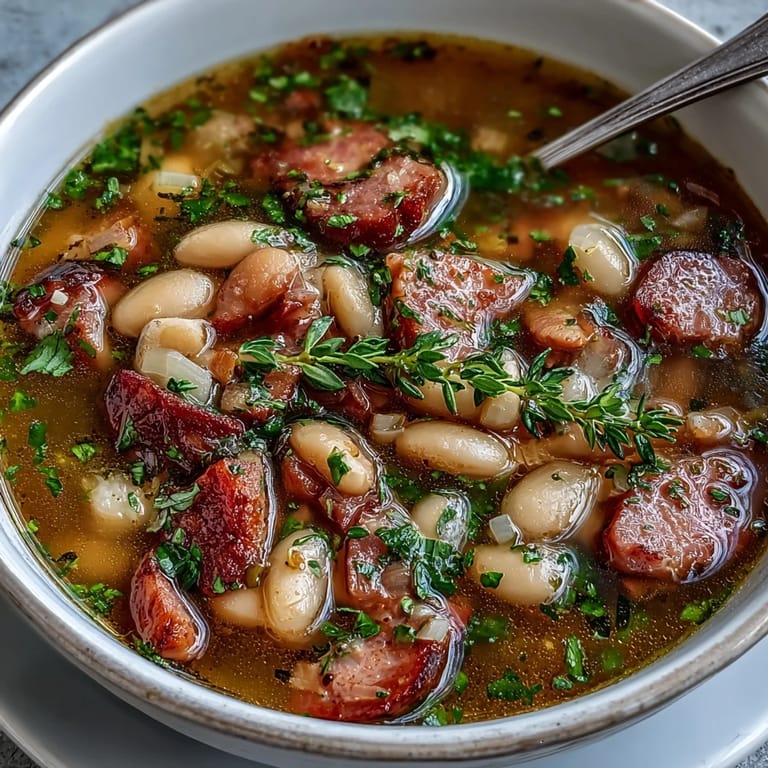
 My neighbor showed up at my door one chilly afternoon with a ham bone wrapped in butcher paper and a knowing smile, saying I'd know what to do with it. That ham lingered in my fridge for two days before I finally understood—this soup. The first spoonful hit different, the kind of warmth that makes you pause mid-sip and think about how the simplest ingredients somehow become something you didn't know you were craving.
I made this for my sister the week she moved into her new place, and she sat at her empty dining table with a steaming bowl, just nodding silently. No fancy words needed—the soup said everything about feeling grounded in an unfamiliar space. She's requested it at least twice since, which tells me something about what good food can do beyond just filling your stomach.
Ingredients
- Cooked ham, diced (2 cups): Buy quality ham if you can, because its flavor becomes the soul of this soup—I learned that the hard way with a watery supermarket ham once.
- Yellow onion (1 medium): Dice it fine so it practically melts into the broth and releases all that natural sweetness.
- Carrots (2 medium): Peel them first and cut into small, uniform pieces so they cook evenly with the rest of the vegetables.
- Celery stalks (2): The holy trinity wouldn't be complete without it—this gives the soup its backbone.
- Garlic (3 cloves): Mince it fresh, never use that jarred stuff for something this simple and pure.
- Cannellini beans (2 cans, 15 oz each): Drain and rinse them thoroughly so you're not dealing with that starchy canning liquid.
- Low-sodium chicken or vegetable broth (6 cups): The broth you choose matters more than you'd think—taste it before you buy it if possible.
- Fresh parsley (2 tbsp, chopped): This is where brightness comes in, so don't skip it or substitute with dried herbs.
- Fresh thyme leaves (1 tbsp, chopped): Strip the leaves off the stems—they have a more delicate flavor than the woody stalks.
- Fresh rosemary (1 tbsp, finely chopped): A little goes a long way with rosemary, so be generous but not reckless.
- Bay leaf (1): Toss it in whole and remember to fish it out before serving—learned that lesson the embarrassing way.
- Freshly ground black pepper (1/2 tsp): Crack it yourself if you have a grinder, it makes a real difference in flavor.
- Salt (1/2 tsp, plus more to taste): Start conservative since the ham and broth already bring saltiness to the table.
- Olive oil (2 tbsp): Good oil here means the soup starts on the right note, so don't reach for the bottom-shelf bottle.
Tired of Takeout? 🥡
Get 10 meals you can make faster than delivery arrives. Seriously.
One email. No spam. Unsubscribe anytime.
Instructions
- Warm your pot and sauté the aromatics:
- Pour the olive oil into your soup pot over medium heat and let it shimmer just slightly—you'll see the oil become more fluid and notice it smells warm. Add the diced onion, carrots, and celery all at once, stirring them with a wooden spoon and letting them soften for 5 to 7 minutes until the onion becomes translucent and the carrots lose their firm snap.
- Build flavor with garlic and ham:
- Stir in the minced garlic and let it cook for exactly one minute—any longer and it can turn bitter, any less and you miss out on its fragrant magic. Add the diced ham next, stirring occasionally for about 2 minutes so the ham warms through and releases its savory essence into the pot.
- Combine the beans and broth:
- Pour in the cannellini beans along with the broth, then add the bay leaf, salt, and pepper, stirring everything together so nothing sticks to the bottom. Bring the whole pot to a rolling boil, then reduce the heat to low and let it simmer gently without a lid for 30 minutes, allowing all those flavors to meld and deepen.
- Finish with fresh herbs and taste:
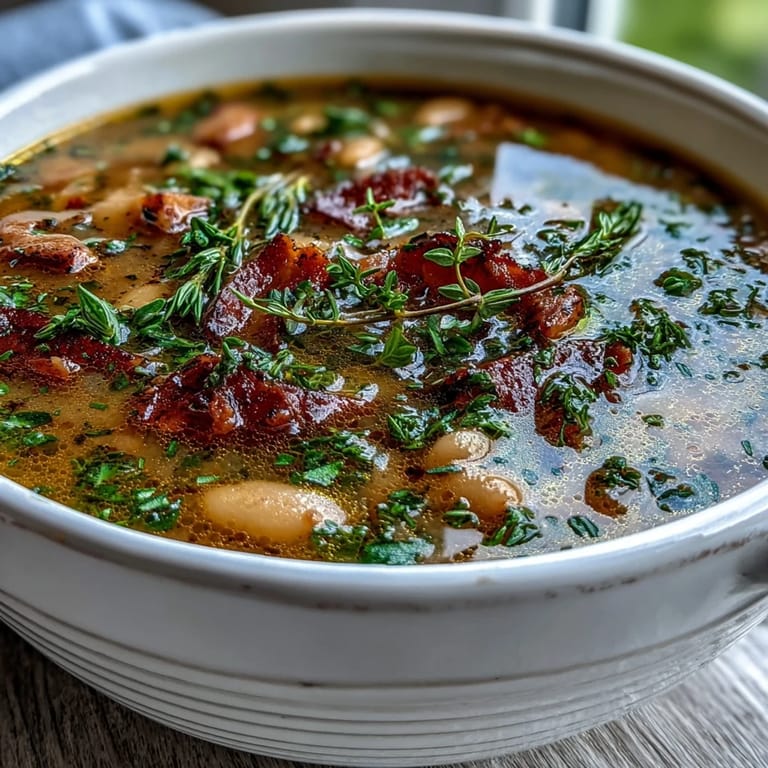
- Remove the bay leaf carefully, then stir in the fresh parsley, thyme, and rosemary, letting them infuse into the hot soup for 2 to 3 minutes. Taste it now, really taste it, and adjust the salt and pepper if needed before ladling it into bowls.
 Pin It
 There's something about ladling soup into bowls that feels like an act of care, and this one especially. My kids asked for seconds unprompted, which never happens, and I realized it wasn't just about being full—it was about being nourished in a way that goes beyond nutrition.
When Fresh Herbs Make All the Difference
I used to think dried herbs were fine for soup, that the long simmer would bring them back to life somehow. One day I grabbed fresh thyme and rosemary out of sheer luck, and it was like someone had turned up the color saturation on the entire dish. The herbaceous brightness completely transforms what could be a heavy, one-note soup into something that feels both comforting and alive.
The Secret of Simmering Low and Slow
Patience changed everything with this soup. I used to crank up the heat to get dinner on the table faster, but low simmering for 30 minutes lets the beans become creamy without falling apart, and it gives the broth time to absorb all the ham's flavor rather than just suspending it.
Ways to Make It Your Own
This soup is forgiving enough to bend without breaking. I've swapped in navy beans when cannellini were out, added spinach or kale in the last few minutes, and once threw in a parsnip because it was sitting on my counter looking lonely. The foundation is solid enough that you can get creative without losing what makes it good.
- Try mashing some beans for creaminess or leave them whole for a brothier texture depending on your mood.
- White wine or apple cider vinegar stirred in at the end brightens everything up if the soup feels too heavy.
- Pair it with crusty bread that you can drag through every last drop, because that's the whole point of soup.
 Pin It
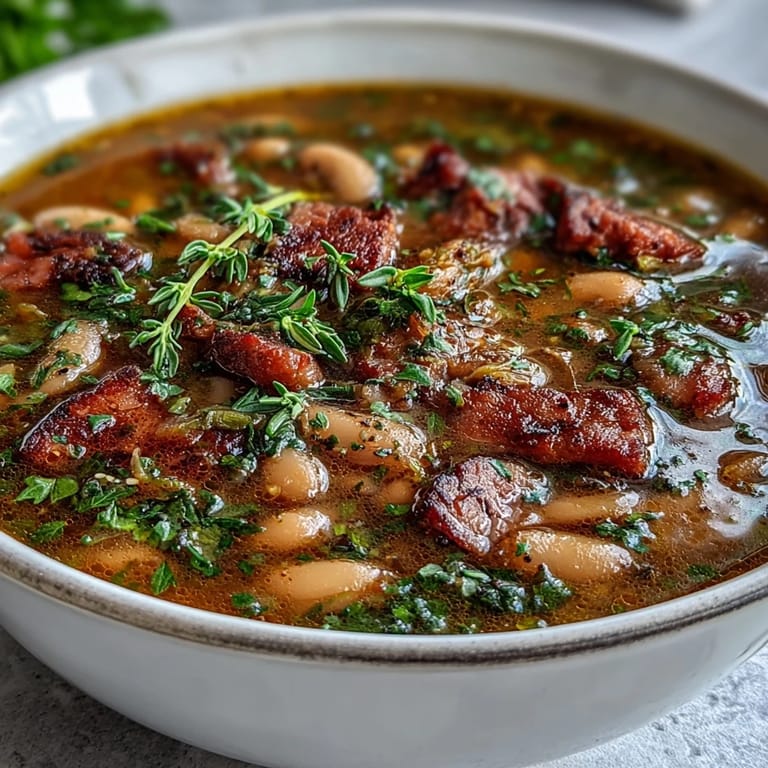
 This soup has become my answer when someone asks what I'm making for dinner and I want to say something nourishing without sounding like I'm trying too hard. It's honest food that somehow feels special anyway.
Questions & Answers
- → What type of beans work best for this soup?
Cannellini beans are ideal for their creamy texture, but navy or Great Northern beans also make excellent alternatives for a similar consistency and flavor.
- → Can the soup be made gluten-free?
Yes, using gluten-free broth ensures the soup remains suitable for gluten-sensitive diets. Always check canned bean labels for hidden gluten additives.
- → How do fresh herbs affect the soup's flavor?
Fresh parsley, thyme, and rosemary add brightness and depth, balancing the richness of the ham and beans with herbal notes.
- → What is the best way to achieve a creamier texture?
Mashing a portion of the beans against the pot’s side before serving thickens the soup naturally, enhancing its creaminess without added dairy.
- → Can this dish be prepared ahead of time?
Yes, flavors deepen after resting. Store in the refrigerator and reheat gently before serving, stirring occasionally to maintain texture.
- → What side dishes complement this soup?
Rustic bread pairs well, and a crisp white wine like Sauvignon Blanc complements the bright herb flavors and richness of the dish.