 Pin It
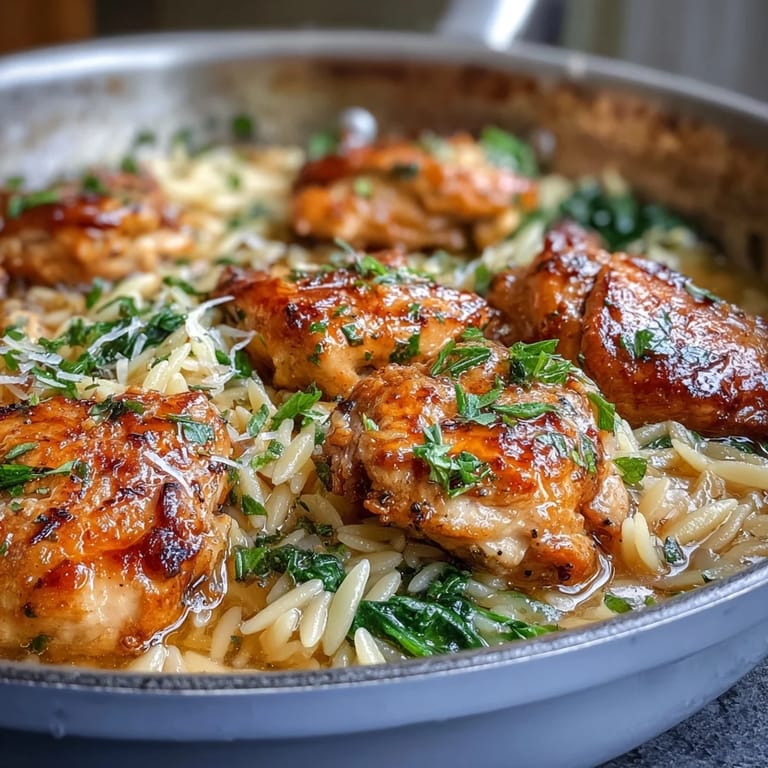
 There's something about the sound of chicken hitting hot oil that signals dinner is actually happening. I stumbled into this one-pot lemon garlic situation on a Tuesday evening when I had exactly forty minutes and a fridge that needed clearing, and somehow it became the kind of meal people ask for by name. The way the orzo soaks up that bright, garlicky broth while the spinach wilts into everything feels like controlled chaos, but it always comes together.
I made this for my neighbor who'd just moved in, and watching her face light up when she tasted that first forkful—the brightness of the lemon hitting her palate, the tender chicken, the way everything felt cohesive—made me realize this dish does something special. She came back the next week asking if I'd teach her, and we ended up cooking it together while her boxes sat unpacked in the other room.
Ingredients
- Boneless, skinless chicken thighs or breasts (1.5 lbs): Thighs stay juicier than breasts in a one-pot situation, but use what you have—just don't skip cutting them into bite-sized pieces so they cook evenly and nestle nicely into the pasta.
- Olive oil (2 tbsp): This is your medium for building flavor, so use something you actually like tasting, not the industrial stuff.
- Yellow onion (1 medium): Finely chopped means it disappears into the broth and sweetens everything subtly as it cooks down.
- Garlic (4 cloves): Minced fresh garlic is non-negotiable here—the heat mellows it into something warm and savory that anchors the whole dish.
- Lemon zest and juice (1 whole lemon): Zest it before juicing, and don't be shy with either—the brightness is what makes people ask what's in this.
- Orzo pasta (1.5 cups): This small rice-shaped pasta is the vessel for the broth, cooking directly in the liquid so it absorbs flavor instead of just sitting there neutral.
- Low-sodium chicken broth (3 cups): Low-sodium lets you control the salt level as you taste and adjust, which matters more in a one-pot meal.
- Dry white wine (1/2 cup, optional): If you use it, the acidity brightens everything, but extra broth works just fine if wine isn't in the plan.
- Fresh baby spinach (4 cups): It wilts down to almost nothing, which means you're getting vegetables without it taking over the plate.
- Parmesan cheese (1/3 cup, grated): Freshly grated matters more than pre-shredded here—it melts smoothly into the warm orzo instead of clumping up.
- Fresh parsley (2 tbsp, chopped): This is the final brightness, so add it right before serving so it stays green and alive-tasting.
Tired of Takeout? 🥡
Get 10 meals you can make faster than delivery arrives. Seriously.
One email. No spam. Unsubscribe anytime.
Instructions
- Season your chicken:
- Toss the chicken pieces with salt and pepper while your skillet heats up, so the seasoning has a moment to stick.
- Sear the chicken golden:
- Heat olive oil over medium-high until it shimmers, then add chicken and leave it alone for a couple minutes so it develops that golden crust. You're not cooking it through yet, just building color and flavor.
- Build your flavor base:
- In the same pot, soften the onion until it's translucent, then add garlic and lemon zest and let it get fragrant—this whole step takes about 4 minutes and the aroma tells you when you're ready to move on.
- Toast the orzo:
- Stir the dry pasta in the oil and aromatics for a minute or two, coating each piece—this gives it a subtle toasted flavor that plain boiled orzo never gets.
- Deglaze if using wine:
- Pour the white wine in and scrape the bottom of the pot with your wooden spoon to loosen all those caramelized bits, which are pure flavor.
- Add broth and lemon juice:
- Pour everything in and bring it to a gentle boil, then return the chicken and its juices and turn the heat down to medium-low so everything cooks through gently without splashing all over.
- Let it simmer covered:
- About 10 minutes with the lid on, stirring occasionally so nothing sticks to the bottom—you want the chicken cooked through and the orzo starting to soften.
- Wilt in the spinach:
- Remove the lid and stir in the spinach, cooking uncovered for 2-3 minutes just until it's tender and the orzo reaches that perfect al dente texture where it still has a tiny bit of bite.
- Finish with cheese and herbs:
- Off heat, stir in the Parmesan and parsley, then taste and add more salt, pepper, or lemon juice if it needs it—this is your moment to make it exactly right.
 Pin It
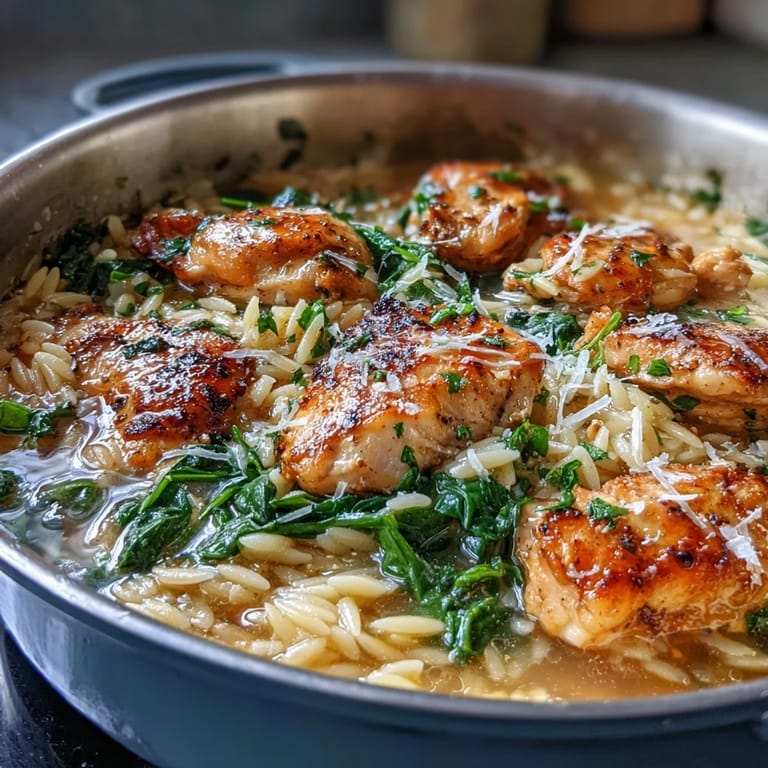
 The first time I got the timing exactly right, when the orzo was tender but still had texture, the chicken was perfectly cooked through, and the spinach had just wilted into those creamy little pasta shells—I knew this was the kind of meal that earns a permanent spot in rotation. It's the dish I make when I want to feel like I spent hours cooking but actually managed to get dinner on the table in under an hour.
Why One Pot Changes Everything
There's real kitchen math to a one-pot meal that most people don't talk about. The pasta water stays in the pot instead of draining away, so it becomes part of the sauce, absorbing all the chicken and garlic flavor naturally without you adding cream or butter. You're not just cooking dinner, you're creating a cohesive dish where every element touches everything else.
Lemon Garlic Timing Matters More Than You Think
I learned this the hard way by adding the garlic too early once and watching it burn into bitter specks. The garlic zest and lemon juice are doing specific jobs at specific moments—the zest goes in with the garlic so the heat releases its oils, but the juice waits until the end because heat kills the brightness you're after. This isn't pretentious cooking, it's just how the flavors actually work.
How to Make It Your Own
The beautiful part about this recipe is how it handles substitutions without falling apart. I've made it with kale, arugula, whatever greens needed using up, and it stays delicious because the lemon garlic foundation is strong enough to carry anything you add to it. The recipe works as written, but it's also flexible enough to become a regular thing in your rotation without feeling repetitive.
- For creaminess without cream, stir in 2 tablespoons of heavy cream or Greek yogurt right before serving.
- Rotisserie chicken cuts your active cooking time in half—just add it in step 8 instead of searing it at the beginning.
- Gluten-free orzo or even regular rice works perfectly if you need to skip the wheat.
 Pin It
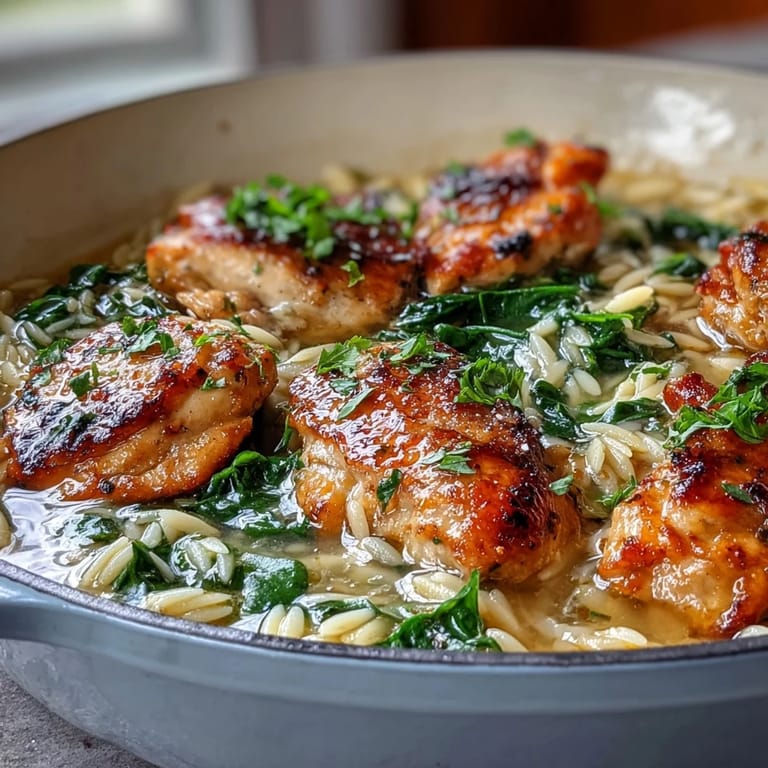
 This meal has become my answer to almost every dinner question, the one I make when time is short and expectations are high. It's the kind of cooking that feels effortless because the technique is simple but the result tastes like you actually knew what you were doing.
Questions & Answers
- → Can I use chicken breasts instead of thighs?
Yes, boneless, skinless chicken breasts work well; simply cut them into bite-sized pieces and adjust cooking time to avoid overcooking.
- → Is white wine necessary for the dish?
White wine adds depth but can be substituted with extra chicken broth without impacting flavor noticeably.
- → How do I know when the orzo is perfectly cooked?
Cook the orzo until al dente—tender but still slightly firm to the bite—usually after simmering with the broth and chicken.
- → Can I substitute spinach with other greens?
Yes, kale or arugula make excellent alternatives and add their own unique texture and flavor.
- → What’s the best way to add creaminess to this dish?
Stirring in 2 tablespoons of heavy cream just before serving enriches the texture without overpowering the other flavors.
- → How can I make this dish gluten-free?
Replace the orzo with gluten-free pasta or rice to maintain the texture while avoiding gluten-containing ingredients.