 Pin It
 My kitchen smelled like a Dublin pub the first time I made this, except lighter somehow. A friend had mentioned she wanted Irish stew but couldn't do the heavy cream and potatoes anymore, and I found myself standing in the produce section wondering if cauliflower could actually pull off mashed potato duties. It could, and then some. That evening taught me that comfort food doesn't need to apologize for being better for you.
I made this for my sister on a gray November afternoon when she was stressed about a work project. We sat at the kitchen counter while the stew simmered, and she fell quiet for a moment after the first spoonful, then asked for seconds before she'd even finished the first bowl. Food moments like that remind me why cooking matters.
Ingredients
- Lean beef stew meat (1 lb): Trimming the fat here means the broth stays clean and bright, not greasy. Cut pieces evenly so they cook at the same rate.
- Olive oil (1 tbsp): Just enough to get a good sear without turning this into a heavy dish. Medium-high heat is your friend.
- Onion, carrots, celery (the holy trio): These build the flavor foundation. Dice the onion small so it melts into the sauce; it becomes invisible but essential.
- Garlic (3 cloves): Mince it fine and add after the softer vegetables so it doesn't burn and turn bitter on you.
- Low-sodium beef broth (3 cups): This matters more than you'd think. Full sodium broth can make the whole dish taste like a salt lick by the end.
- Dry red wine (1 cup): A medium-bodied wine you'd actually drink. The alcohol cooks off but leaves behind complexity that broth alone can't give you.
- Tomato paste (2 tbsp): Stir it into the aromatics first so it caramelizes slightly and loses that sharp, raw edge.
- Worcestershire sauce (2 tsp): This is the secret whisper that makes people ask what you did differently. Don't skip it.
- Dried thyme and rosemary (1 tsp each): Dried herbs are stronger than fresh here, so measure carefully. Bay leaves (2) add a subtle woodsy note that ties everything together.
- Frozen peas (1 cup): Add them at the very end so they stay bright green and don't turn to mush in the hot liquid.
- Cauliflower head (1 large): Cut florets into uniform pieces so they cook evenly. Don't skip the draining step or your mash becomes watery.
- Unsalted butter and milk (2 tbsp each): The butter brings richness back after you've lightened everything else. Milk (regular or plant-based) keeps it creamy without heaviness.
- Fresh chives (optional): A little brightness at the end. Honest question: does garnish matter? Yes, it does. It says you care.
Tired of Takeout? 🥡
Get 10 meals you can make faster than delivery arrives. Seriously.
One email. No spam. Unsubscribe anytime.
Instructions
- Pat and season your beef:
- Dry meat browns better than wet meat. A quick paper towel rub and a generous pinch of salt and pepper now saves you frustrated sputtering later.
- Build a golden crust:
- Medium-high heat, one batch of beef at a time so you're not crowding the pan. This takes maybe 5 minutes per batch and creates the whole flavor backbone of the stew.
- Soften the aromatics:
- Onion, carrots, and celery go in with a little salt that helps them release their water and cook faster. You're aiming for soft, not mushy, in about 5 minutes.
- Wake up the garlic:
- Just 1 minute here. You want to smell it, not burn it.
- Bloom the tomato paste:
- This is a small thing with big flavor results. Let it sit in the hot pot with the herbs for a minute and watch it darken slightly, which means it's caramelizing.
- Build the braising liquid:
- Return the beef, add wine, and use a wooden spoon to scrape up every brown bit stuck to the bottom. That's pure umami flavor dissolving into your stew.
- Add broth and Worcestershire, then simmer low:
- This is the long, gentle part where beef becomes fork-tender, usually around 1 hour 15 minutes. Stir occasionally but not obsessively. You're braising, not boiling.
- Finish with peas:
- Add them in the last 10 minutes so they stay bright and don't fall apart. Taste and adjust seasoning now, when you can still fix it.
- Prepare the cauliflower mash while the stew finishes:
- Boil florets until genuinely tender (test with a fork), then drain thoroughly. Wet cauliflower makes wet mash.
- Blend into creaminess:
- Food processor works best, but a potato masher works too if you're patient. Butter and milk go in after you've blended the cauliflower smooth. Season carefully at the end.
- Plate and serve:
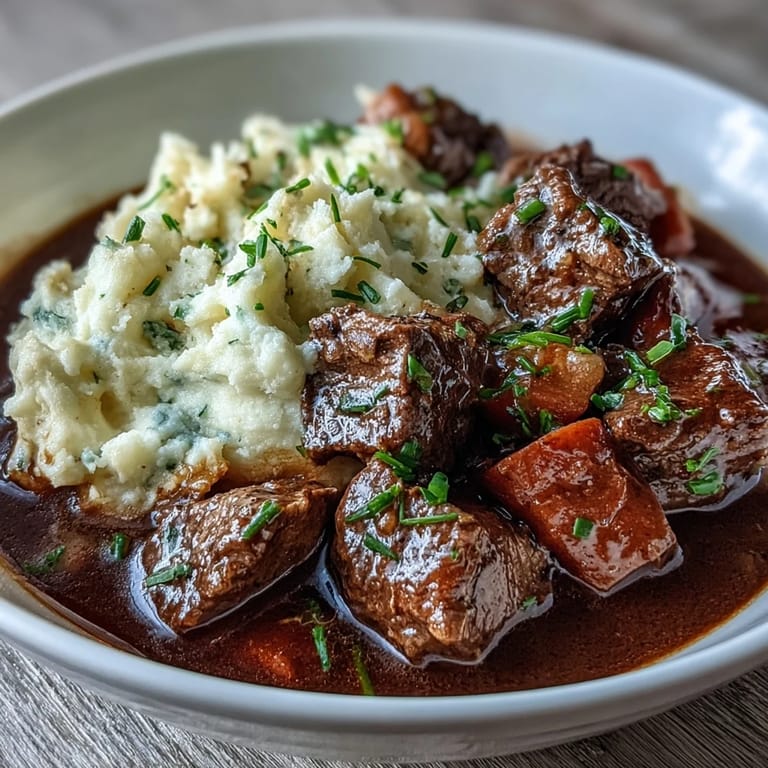
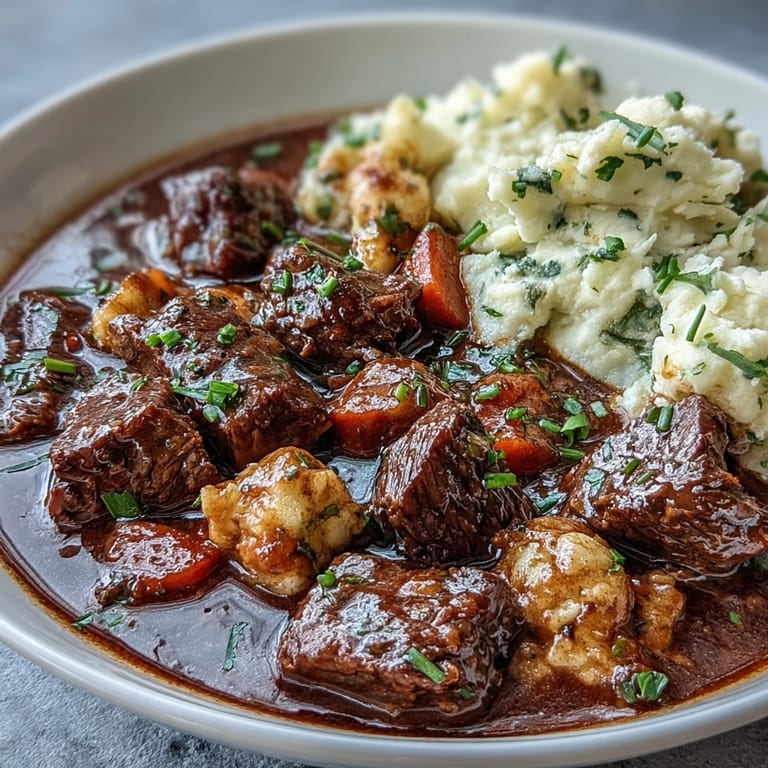
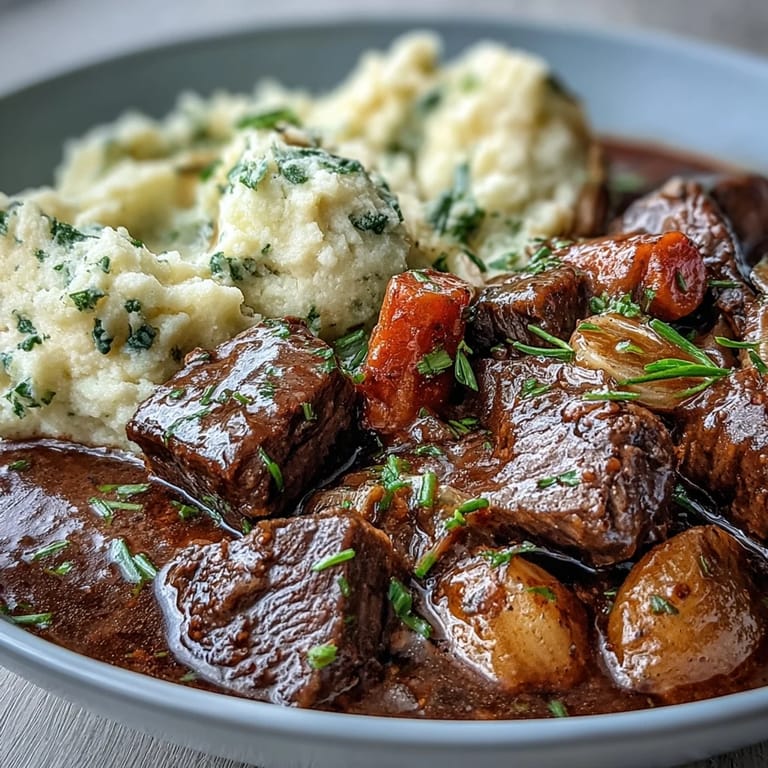
- Mound the cauliflower mash, ladle stew over top, maybe a few chives if you have them. Eat while it's hot.
 Pin It
 My mother tasted this and said, quietly, that it reminded her of stew her mother made, but better because she could eat more of it without feeling heavy for the next three hours. That's when I realized comfort food shouldn't carry a cost.
Why This Works as a Lightened Dish
Most Irish stews rely on potatoes and cream to deliver that sense of coziness, which means they're carb-heavy and sit in your stomach for hours. This version keeps the soul of the dish—the slow-cooked beef, the aromatic vegetables, that warm-from-inside feeling—but swaps cauliflower for potatoes and uses just enough butter and milk to stay creamy without becoming a cream soup. You end up with something that tastes indulgent but leaves you feeling good, not sluggish.
The Wine Question
I've made this with and without the red wine, and there's a noticeable difference in depth. The wine doesn't make the stew taste alcoholic (all the alcohol cooks off), but it adds complexity that you can't quite put your finger on. If you genuinely can't use wine, add an extra tablespoon of tomato paste and half a teaspoon of balsamic vinegar to compensate. It won't be identical, but it'll still be good.
Variations and Swaps That Actually Work
This recipe is forgiving enough to play with. A splash of Guinness instead of wine makes it richer and more authentically Irish. Swap sweet potatoes for some of the carrots if you want a different sweetness. Even the cauliflower mash can become celery root mash if someone in your house prefers it. The structure stays solid even when you experiment.
- Use ground beef if you prefer a faster cook time, though you'll lose that melt-in-your-mouth texture that makes slow-cooked stew special.
- Frozen cauliflower works if fresh isn't available, though fresh florets tend to mash smoother.
- Any mild red wine will do, but avoid anything too tannic or it'll overshadow the beef.
 Pin It
 This dish has become my go-to when I want something warm and satisfying without the afternoon energy crash. It's proof that healthier cooking doesn't mean sacrificing what makes food worth eating.
Questions & Answers
- → How do I make the beef tender?
Simmer the beef slowly over low heat for about 1 hour 15 minutes until it becomes tender and flavorful.
- → Can I substitute the cauliflower mash?
Yes, you can swap cauliflower with mashed sweet potatoes or other low-carb vegetables for a different texture.
- → Is red wine necessary for this dish?
Red wine adds depth, but you can use extra beef broth or even a splash of Guinness as an alternative.
- → How should I season the cauliflower mash?
Blend cooked cauliflower with butter and milk, then season with salt and freshly ground pepper to taste.
- → Can this dish be made dairy-free?
Yes, replace butter and milk with plant-based alternatives to keep it dairy-free without altering the texture.