 Pin It
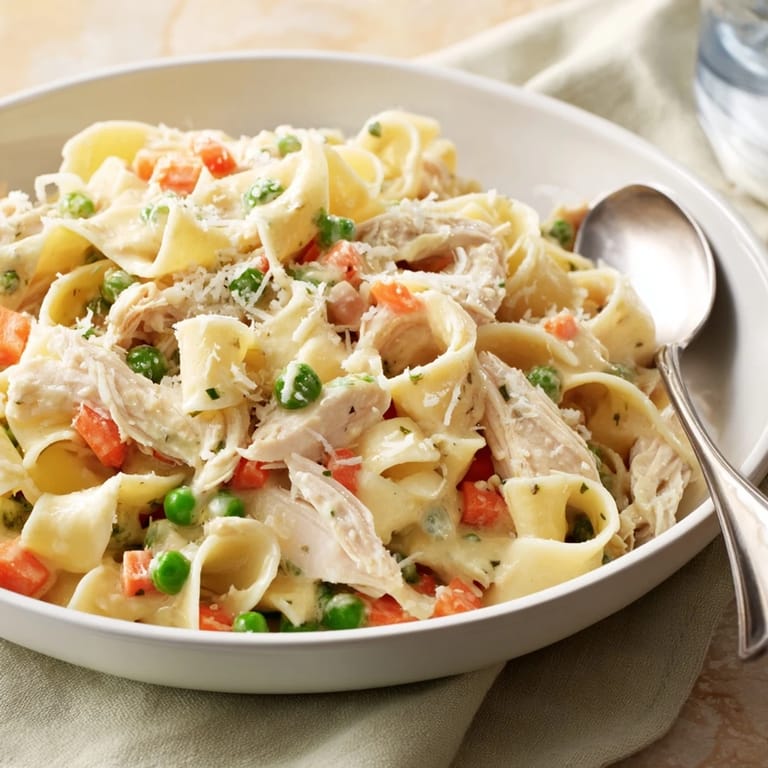
 The first time I made this skillet, it was one of those Tuesdays where everything felt overwhelming and I needed something that felt like a hug but didn't require three hours of effort. My daughter had been begging for something with noodles, and we had leftover chicken from Sunday's roast, so I threw everything into one pan hoping for the best. When she took that first bite and actually stopped scrolling through her phone to say wow, I knew this was going into the permanent rotation. There's something about the way the creamy sauce clings to the egg noodles that makes even the most ordinary weeknight feel special.
Last month my neighbor came over unexpectedly while I was making this, and she ended up staying for dinner. She kept watching me cook and said she'd never thought to put egg noodles in a skillet dish, always assuming they needed to be strictly pasta-situation food. We ate standing up in the kitchen, both of us slightly burnt out from our respective weeks, and somehow this simple meal turned into a whole therapy session. Now whenever she texts me asking what's for dinner, I send her a picture of this skillet and she's at my door in ten minutes flat.
Ingredients
- Cooked shredded chicken: Rotisserie chicken is your best friend here because it's already seasoned and tender, though leftover roast chicken works beautifully too
- Wide egg noodles: These grab onto the sauce better than any other pasta I've tried, and their slightly richer flavor pairs perfectly with the creamy base
- Frozen peas: Don't bother with fresh peas here because frozen ones are sweeter and more tender, plus they need zero prep work
- Diced carrots: Cut them small so they soften in the same time it takes to build the sauce, creating those perfect little bites of sweetness throughout
- Yellow onion: Finely chopped so it practically melts into the sauce, providing that essential savory foundation without obvious onion chunks
- Garlic: Minced fresh because garlic powder just can't deliver that aromatic punch that makes your kitchen smell amazing
- Unsalted butter: Starting with unsalted lets you control exactly how salty the final dish is, which matters with the Parmesan and broth
- All-purpose flour: This creates the roux that thickens your sauce, and two tablespoons is the sweet spot between silky and gloppy
- Low-sodium chicken broth: Using low-sodium prevents that salt bomb situation since you'll be adding salty cheese and seasoning later
- Whole milk or half-and-half: Half-and-half gives you a richer sauce without being as heavy as cream, though whole milk works perfectly fine
- Grated Parmesan cheese: The salty, nutty element that pulls everything together and makes the sauce taste restaurant-quality
- Dried thyme: This herb screams comfort food and bridges the gap between the chicken and vegetables beautifully
- Black pepper: Freshly cracked if possible because it adds that subtle heat that balances the creaminess
- Salt: Start with half a teaspoon and taste at the end because the Parmesan and broth might already have you covered
- Fresh parsley: Totally optional but that pop of green on top makes it look like you put way more effort into this than you actually did
Tired of Takeout? 🥡
Get 10 meals you can make faster than delivery arrives. Seriously.
One email. No spam. Unsubscribe anytime.
Instructions
- Get your noodles ready first:
- Cook those egg noodles according to the package but pull them a minute early because they'll finish cooking in the sauce, and nobody wants mushy noodles
- Build your flavor foundation:
- Melt that butter in your large skillet over medium heat, then toss in your onions and carrots, letting them soften and get sweet for about five minutes
- Add the aromatic layer:
- Stir in your garlic and watch closely for thirty seconds because burned garlic will ruin everything, you just want it fragrant and golden
- Create your sauce base:
- Sprinkle the flour over everything and stir constantly for one minute, cooking out that raw flour taste so your sauce won't have that pasty texture
- Transform it into sauce:
- Slowly whisk in the broth and milk, taking your time to avoid lumps, then add your thyme, salt, and pepper and let it simmer until it coats the back of a spoon
- Bring it all together:
- Fold in your peas, chicken, and Parmesan, letting everything get friendly in the sauce for a couple of minutes until heated through
- The grand finale:
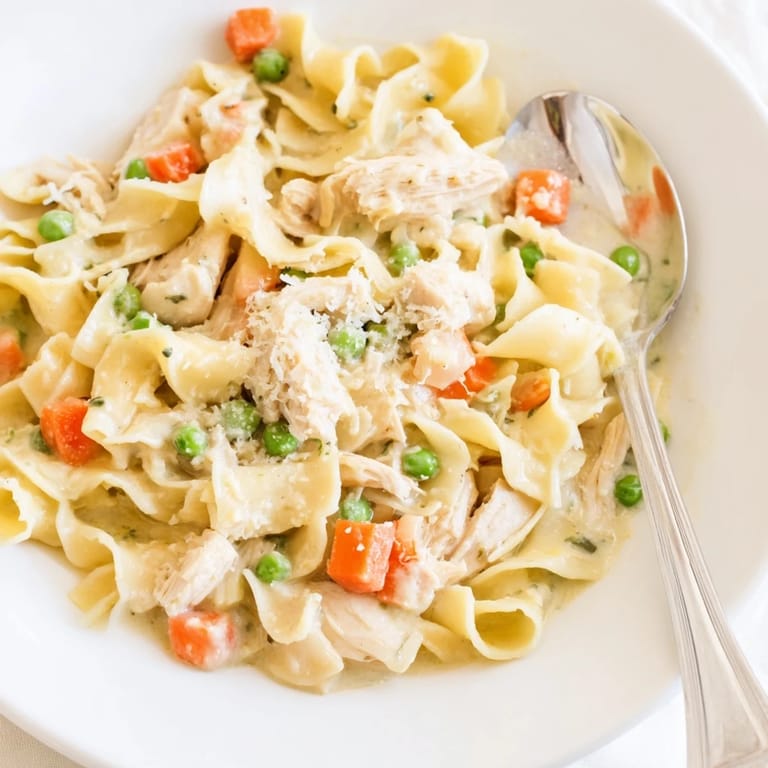
- Gently tumble in your cooked noodles, folding everything together until each noodle is wearing that creamy sauce like a cozy sweater
 Pin It
 This recipe became a total lifesaver during my daughter's soccer season when we'd roll home at 7pm, starving and exhausted, and I could have this on the table in under twenty minutes. There was something about sitting down together over those steaming bowls, even when we were both too tired to talk much, that felt like resetting after a chaotic day. Now whenever I see those wide egg noodles at the grocery store, I grab a bag because I know some Tuesday is going to need them.
Making It Your Own
I've found that swapping in asparagus during spring or adding baby spinach at the end keeps this feeling seasonal without changing the basic technique. Sometimes I'll throw in a handful of frozen corn for extra sweetness, especially when I'm making this for kids who claim they don't like vegetables but mysteriously eat everything in their bowl. The sauce is incredibly forgiving and can handle whatever vegetables you need to use up.
Scaling For Crowds
When I'm feeding a bigger group, I double everything except the noodles because the sauce-to-noodle ratio gets weird if you don't adjust accordingly. I've learned the hard way that doubling the recipe requires a much larger skillet or the sauce will overflow while bubbling up, so grab your biggest pan if you're feeding more than four people. Leftovers actually reheat surprisingly well, though you might need to splash in a little extra milk when warming it up.
Side Dish Pairings
A crisp green salad with an acidic vinaigrette cuts through the richness perfectly, though sometimes I'll just serve it with steamed broccoli when I want to keep things simple. Garlic bread is never a bad idea, especially if you want to stretch this to feed more people. In the summer, a side of sliced tomatoes with fresh basil and a little olive oil feels like the perfect companion.
- If you're watching carbs, serve this over zucchini noodles or cauliflower rice instead of egg noodles
- The sauce base works with whatever pasta you have in your pantry, though the texture is best with wider noodles
- This freezes exceptionally well so consider doubling and freezing half for those nights when even 20 minutes of cooking feels like too much
 Pin It
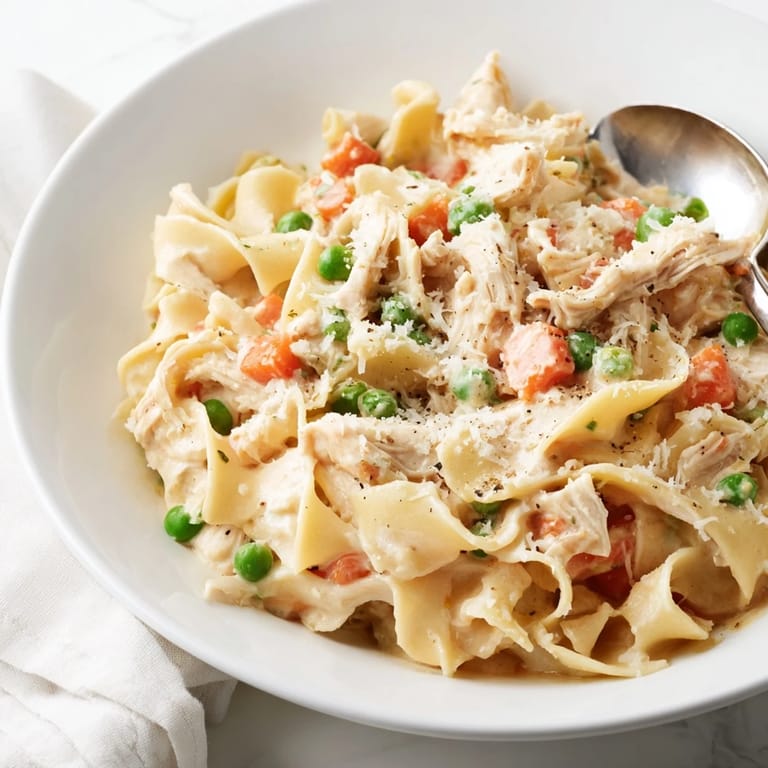
 There's something deeply comforting about a one-skillet meal that feels indulgent but comes together in the time it takes to set the table. This recipe has saved countless weeknights in my house, and I hope it finds its way into your regular rotation too.
Questions & Answers
- → Can I use fresh vegetables instead of frozen peas?
Yes, fresh peas work beautifully. Add them during the same step as frozen peas, and cook until tender, about 2-3 minutes. Fresh carrots should be thinly sliced or diced small so they soften within the cooking time.
- → What type of chicken works best?
Rotisserie chicken is convenient and flavorful, requiring no additional cooking. Poached or leftover cooked chicken also works well. Shred the meat into bite-sized pieces for even distribution throughout the dish.
- → How do I prevent the sauce from becoming too thick?
The flour-butter roux creates the sauce base, so cook it only briefly to avoid lumps. Whisk the broth and milk in slowly while stirring constantly. If the sauce thickens too much as it sits, thin it with additional broth or milk.
- → Can I prepare this ahead of time?
You can cook components separately—prepare the noodles and make the sauce ahead. Combine them just before serving to maintain the best texture. Store leftovers in an airtight container for up to three days and reheat gently on the stovetop with a splash of broth.
- → What vegetables can I substitute for spring peas and carrots?
Asparagus, baby spinach, diced bell peppers, or broccoli florets work wonderfully. Heartier vegetables like asparagus should be cut into bite-sized pieces. Add tender greens like spinach at the very end to prevent overcooking.
- → Is this dish suitable for freezing?
The cooked skillet can be frozen in an airtight container for up to two months. Thaw overnight in the refrigerator and reheat gently on the stovetop over medium-low heat, stirring occasionally and adding broth as needed to restore creaminess.