 Pin It
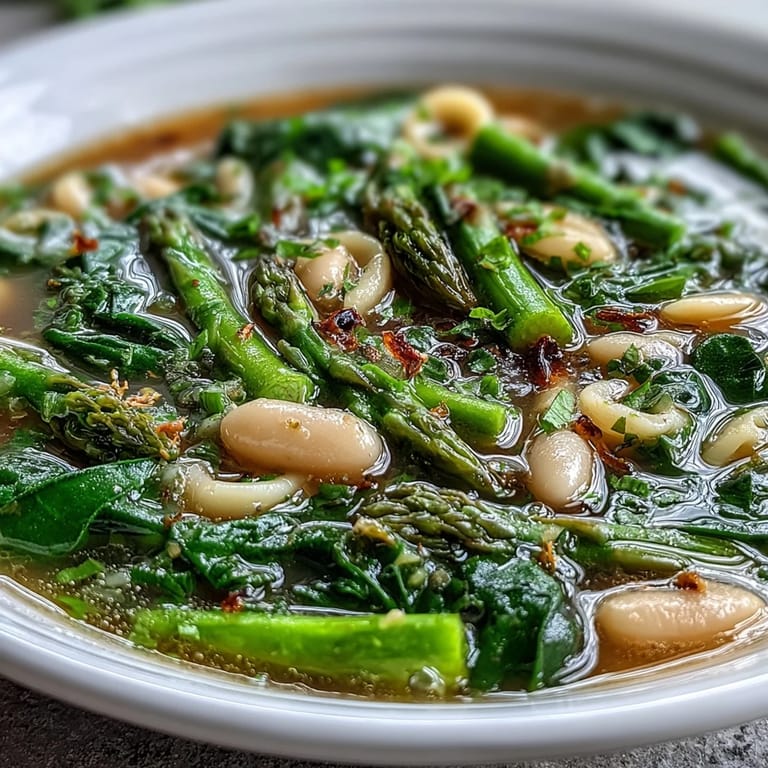
 There's something about opening the farmers market bag in early April and catching that earthy, green smell that makes you want to cook soup immediately. I stood at my kitchen counter one Tuesday morning with asparagus bundled like little wooden spears, fresh peas still in their pods, and suddenly remembered my grandmother's kitchen—not because she made this exact soup, but because she understood that spring vegetables didn't need to be complicated, just respected. This minestrone came together almost by accident that day, a conversation between what I had and what the season was telling me to make.
I made this for my neighbor last May when she came home from the hospital, and I watched her eat it sitting on her porch in that golden late-afternoon light. She closed her eyes after the first spoonful and said it tasted like someone cared, which is exactly what this soup is—care in vegetable form, comfort that doesn't pretend to be anything more than what it is.
Ingredients
- Olive oil: The foundation of flavor here, so don't skimp on quality—it's what carries the softened vegetables into something genuinely delicious.
- Onion, carrots, and celery: This trio is the soul of any good soup; they build a flavor base that makes everything else taste better.
- Garlic: Minced fresh garlic blooms when hit with hot oil, releasing that pungent, garlicky goodness that makes your kitchen smell alive.
- Zucchini: Adds body and a mild sweetness; it softens beautifully and takes on the broth's flavors.
- Asparagus: The star of spring—cut into one-inch pieces so it stays tender without turning to mush, and add it later so it keeps its color and slight snap.
- Peas: Whether frozen or fresh, they add sweetness and bright visual pop; frozen ones are honestly just as good as fresh here.
- Baby spinach or Swiss chard: Wilts in seconds at the end, adding earthiness and nutrition without overwhelming the other flavors.
- White beans: Cannellini or Great Northern beans are creamy and mild enough to play well with everything else; drain and rinse them to reduce sodium.
- Small pasta: Ditalini or small shells work best because they cook at the same pace as the vegetables and don't overpower the broth.
- Vegetable broth: Low-sodium lets you season to your own taste rather than fighting pre-salted broth.
- Thyme and oregano: Dried herbs work beautifully here; they infuse the entire pot with subtle Mediterranean warmth.
- Bay leaf: Adds a whisper of complexity that you'll taste but can't quite name until it's gone.
- Lemon zest: This is the secret weapon—it brightens everything at the end without making the soup taste acidic.
- Fresh parsley: Chopped just before serving, it adds color and a fresh, grassy note that brings the whole thing into focus.
Tired of Takeout? 🥡
Get 10 meals you can make faster than delivery arrives. Seriously.
One email. No spam. Unsubscribe anytime.
Instructions
- Build the flavor base:
- Heat olive oil in your large pot over medium heat, then add the diced onion, carrots, and celery. Let them soften for about 5 minutes, stirring occasionally—you're not looking for color, just that moment when they start to smell sweet and cooked. This is the foundation that everything else will rest on.
- Wake up the garlic:
- Stir in your minced garlic and cook for just 1 minute until it's fragrant and turning barely golden. Don't walk away during this step; garlic can turn bitter in a flash if you're not paying attention.
- Add the tender squash:
- Toss in your diced zucchini and cook for 2 more minutes. You're not cooking it through; you're just starting the process so it releases its flavor into the oil.
- Bring in the broth and seasonings:
- Pour in your vegetable broth and add the thyme, oregano, and bay leaf. Bring everything to a gentle boil, where you can see bubbles breaking the surface steadily but not violently—this takes about 5 minutes.
- Add beans and pasta:
- Stir in your drained white beans and dry pasta. Reduce the heat to a simmer and let it go for about 10 minutes, stirring once or twice so the pasta cooks evenly. The broth will start to thicken slightly as the starch from the pasta releases.
- Finish with spring vegetables:
- Add the asparagus pieces and peas, cooking for another 5 to 7 minutes until the pasta is tender and the asparagus is cooked but still has a slight firmness to it. Taste a piece of asparagus to know when it's right.
- Green finale:
- Stir in your spinach or Swiss chard, the lemon zest, and fresh parsley. Cook for just 2 more minutes until the greens are wilted and bright. Season with salt and black pepper to your taste, remembering that you can always add more but you can't take it back.
- Serve and savor:
- Remove the bay leaf, ladle into bowls, and top with Parmesan if you like it and a small drizzle of good olive oil. The soup tastes even better the next day when all the flavors have gotten to know each other.
 Pin It
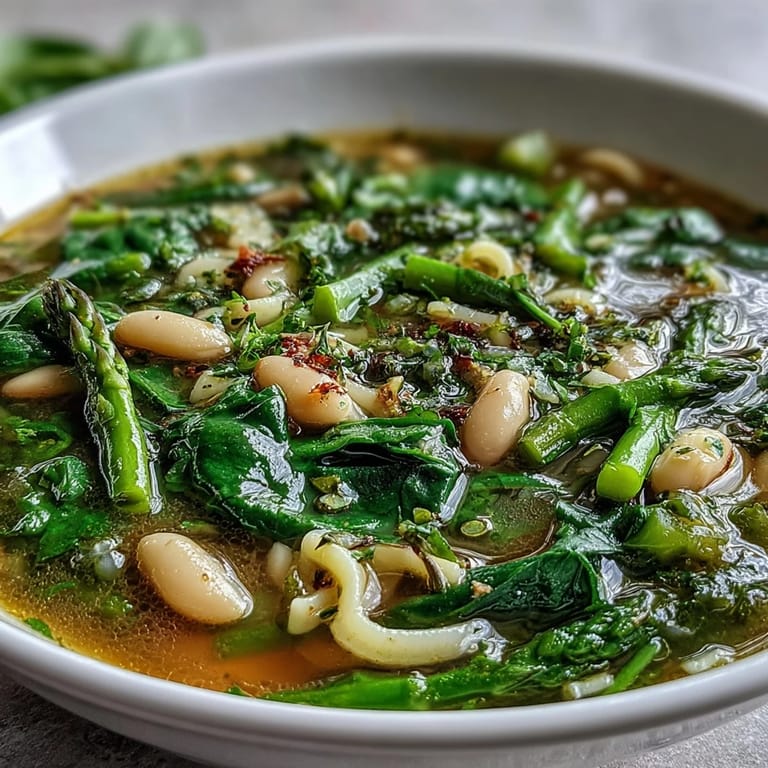
 There's a particular kind of quiet that happens when someone eats something warm and nourishing that was made with intention, and that's what this soup brings to a table. It's not fancy, but it knows exactly what it is.
The Story Behind Spring Soups
Every culture has a version of this soup—the one you make when the first real vegetables show up at market and you want to celebrate that moment without overthinking it. Italian cooks understand that minestrone isn't about technique; it's about honoring whatever vegetables are at their peak. This particular version leans hard into spring because that's when asparagus makes its brief, glorious appearance and white beans feel lighter than they do in winter stews.
Making It Your Own
The beauty of minestrone is that it's forgiving—you can swap vegetables based on what looks good that day without ruining anything. Fresh fava beans are gorgeous if you can find them, green beans work beautifully, and if you have fresh herbs like basil or dill instead of dried oregano, use those. The structure stays the same; only the players change.
Timing and Storage
This soup tastes better the day after you make it, when the flavors have had time to meld and deepen. Store it in the refrigerator for up to four days, and reheat gently on the stove rather than the microwave if you can—it warms more evenly and you can add a bit of broth if needed. It also freezes beautifully for up to three months if you want to make a double batch.
- Let the soup cool completely before refrigerating so you're not steaming up your fridge.
- If you're freezing, leave an inch of space at the top of your container because the liquid will expand slightly.
- Thaw overnight in the refrigerator and reheat slowly, stirring occasionally.
 Pin It
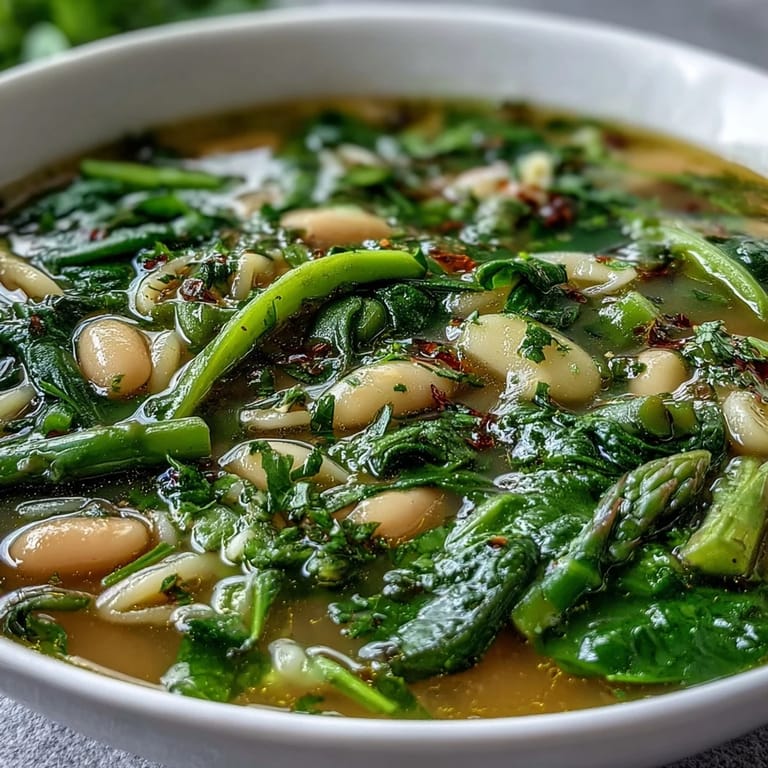
 This is the kind of soup that reminds you why home cooking matters—it's simple, it's nourishing, and it tastes like someone cares. Make it when you need comfort, and watch it become the thing people ask you to bring.
Questions & Answers
- → Can I make this soup vegan?
Yes, simply omit the Parmesan cheese or substitute with a plant-based alternative for a vegan-friendly dish.
- → What is the best way to prepare the asparagus?
Trim the asparagus and cut it into 1-inch pieces, adding it towards the end of cooking to keep its tender-crisp texture.
- → Can I substitute the white beans with other varieties?
Yes, cannellini or Great Northern beans work well, but you can also try other mild white beans for similar texture and flavor.
- → How can I adjust this for gluten-free diets?
Use gluten-free small pasta varieties such as gluten-free ditalini or small shells to keep the dish gluten-free.
- → What herbs are used to flavor the broth?
Dried thyme, oregano, and bay leaf are simmered in the broth to provide a fragrant and savory base.
- → Is this soup suitable for meal prep?
Yes, it reheats well and can be stored in the refrigerator for a few days, making it convenient for meal prep.