 Pin It
 The steam curling up from that first spoonful carried a scent I didn't recognize but somehow craved instantly. My neighbor had invited me over after I helped her haul groceries up three flights of stairs, and she ladled this pale, fragrant soup into a bowl without ceremony. The balance of creamy, sour, and aromatic hit me all at once, and I remember thinking I'd never tasted anything quite so comforting yet so bright. I went home that night determined to recreate it, armed with a scribbled list of ingredients I could barely pronounce.
I made this soup on a rainy Saturday when my sister was visiting, both of us still in our pajamas at noon. She was skeptical about the galangal and the torn lime leaves, convinced I was just showing off with exotic ingredients. But as the broth simmered and the coconut cream mellowed everything into harmony, she stopped teasing and started asking questions. By the time we sat down with our bowls, she was already planning to make it for her book club the following week.
Ingredients
- Boneless, skinless chicken breast or thighs, thinly sliced (300 g / 10 oz): Thighs stay juicier and more forgiving if you simmer a minute too long, but breast works beautifully if sliced thin enough to cook quickly and tenderly.
- Coconut cream (400 ml / 1 can): This is what gives the soup its signature velvety body, richer and thicker than coconut milk, though milk works in a pinch if you want it lighter.
- Chicken stock (500 ml / 2 cups): A good stock adds depth, but even store bought does the job as long as it's not too salty since the fish sauce will bring plenty of its own.
- Lemongrass, trimmed and bruised (2 stalks): Bruising the stalks with the back of a knife releases those citrusy, floral oils that make the broth sing.
- Fresh galangal, sliced (4 slices): It looks like ginger but tastes sharper, almost piney, and if you can't find it, ginger will step in with a warmer, less medicinal note.
- Kaffir lime leaves, torn (4 leaves): Tearing them just before adding releases their perfume, a kind of citrus you can't replicate with regular lime zest.
- Button mushrooms, sliced (200 g / 7 oz): They soak up the broth and add a gentle earthiness that balances the brightness of the lime and lemongrass.
- Shallots, thinly sliced (2 small): Milder and slightly sweeter than onions, they melt into the broth without overpowering the delicate aromatics.
- Garlic, smashed (2 cloves): Smashing instead of mincing keeps the garlic from turning bitter and lets it infuse the broth with a mellow warmth.
- Thai birds eye chilies, smashed (2 to 3, optional): A little goes a long way, and smashing them gives you control over the heat without seeds floating everywhere.
- Fish sauce (2 tbsp): The salty, umami backbone of the soup, and honestly, there's no real substitute if you want authentic flavor.
- Lime juice (1 tbsp, plus extra): Freshly squeezed is non negotiable here, it brightens everything and ties the flavors together at the very end.
- Sugar (1 tsp): Just enough to round out the sourness and salinity without making the soup taste sweet.
- Salt, to taste: A small pinch at the end can lift everything if the balance feels just slightly off.
- Fresh cilantro leaves: The herbal, citrusy punch of cilantro on top makes each spoonful feel complete.
- Extra lime wedges: Everyone likes their soup a little different, so let people squeeze more lime as they go.
Tired of Takeout? 🥡
Get 10 meals you can make faster than delivery arrives. Seriously.
One email. No spam. Unsubscribe anytime.
Instructions
- Build the aromatic base:
- Combine the coconut cream and chicken stock in a large saucepan, then add the lemongrass, galangal, lime leaves, shallots, garlic, and chilies. Bring it all to a gentle simmer over medium heat, watching as the aromatics begin to release their oils into the creamy broth.
- Let the broth steep:
- Simmer everything together for about 10 minutes, letting the flavors marry and deepen. You'll know it's ready when the kitchen smells like a Thai market stall on a warm evening.
- Add the chicken and mushrooms:
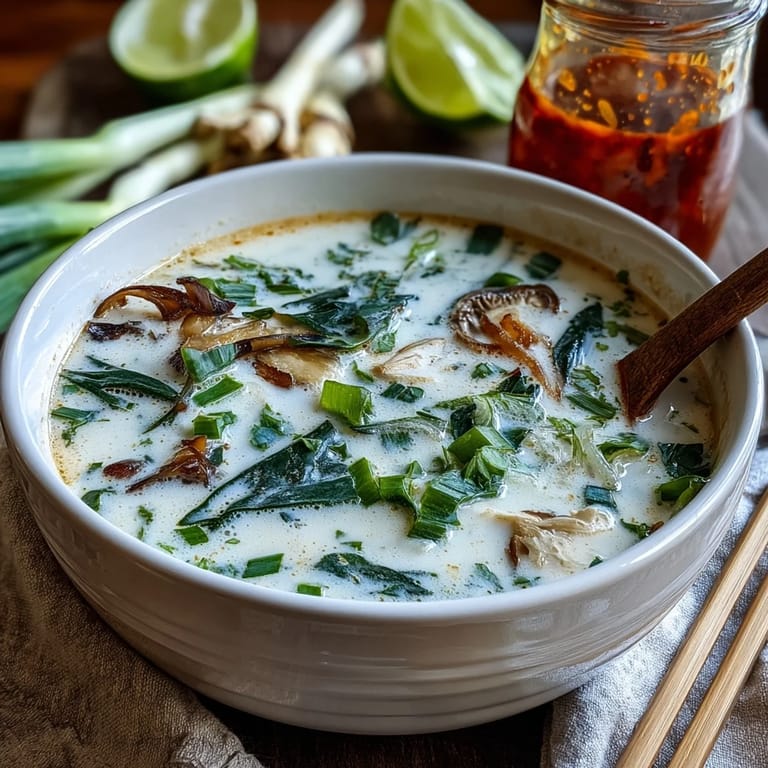
- Slip the sliced chicken and mushrooms into the pot, stirring gently to submerge them. Continue simmering for 8 to 10 minutes until the chicken is cooked through and the mushrooms have softened into tender, flavor soaked bites.
- Remove the aromatics:
- Fish out and discard the lemongrass stalks, galangal slices, and lime leaves. They've done their job, and leaving them in just makes for an awkward mouthful later.
- Season and balance:
- Stir in the fish sauce, lime juice, sugar, and a pinch of salt if needed. Taste as you go, adjusting until the soup feels bright, savory, and just barely sweet.
- Serve with love:
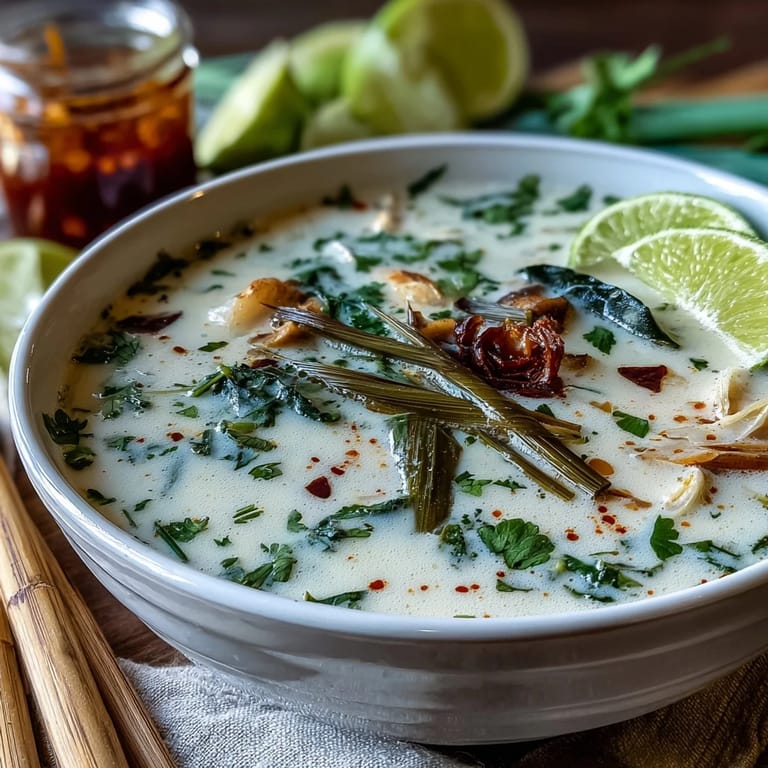
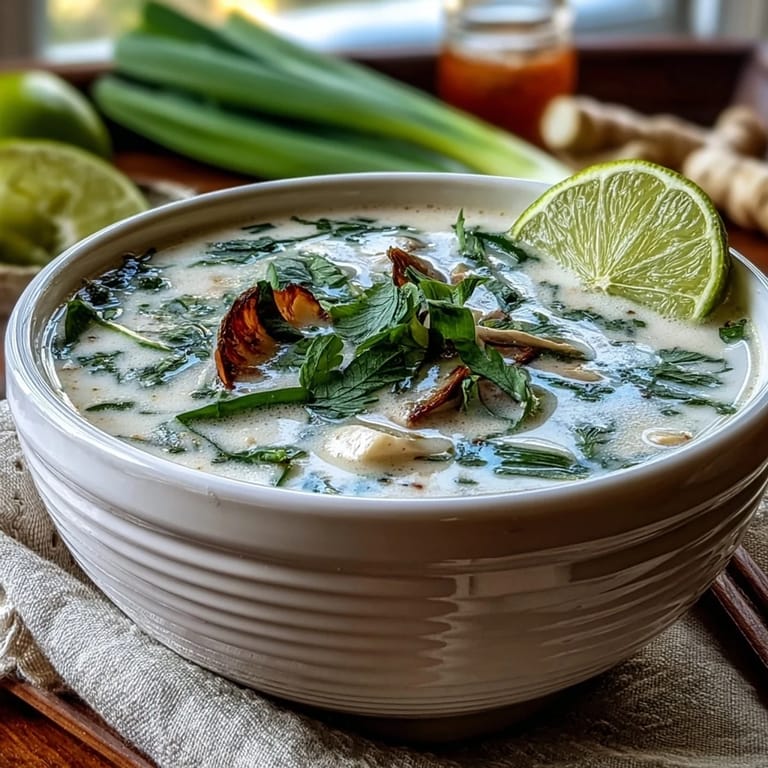
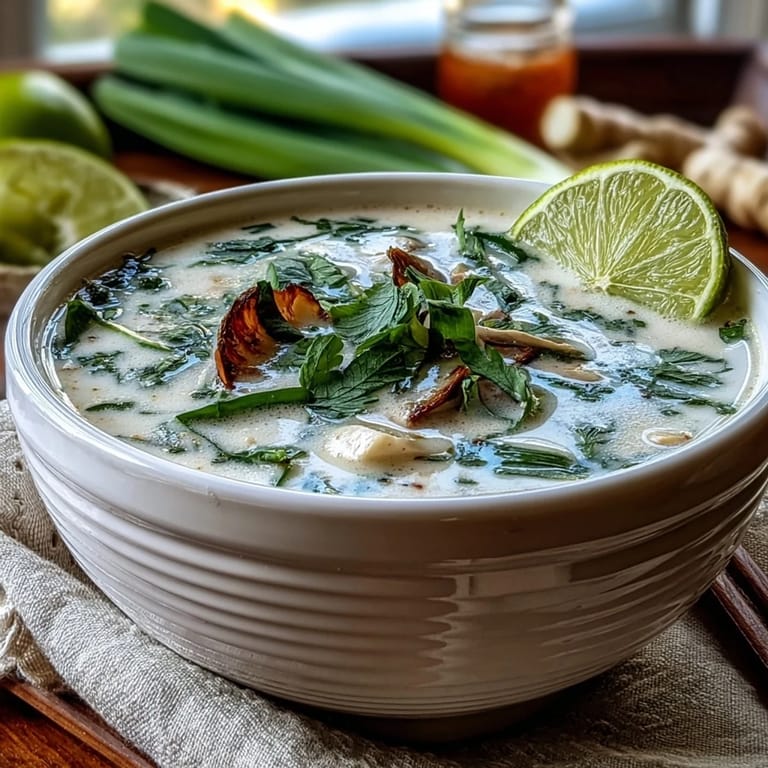
- Ladle the soup into bowls, garnish each with fresh cilantro, and set out extra lime wedges. Let everyone adjust their own bowl to taste.
 Pin It
  Pin It
 One evening, I made a double batch of this soup and brought it to a friend who had just had a baby. She texted me later that night saying it was the first thing she'd eaten in days that didn't taste like cardboard, and that the smell alone made her feel human again. I realized then that some dishes do more than feed, they remind us we're still here, still capable of pleasure even in the middle of chaos.
Making It Your Own
If you want to make this vegetarian, swap the chicken for firm tofu and use soy sauce or tamari in place of fish sauce. I've done this for friends who don't eat meat, and the soup still carries that same creamy, aromatic soul. You can also add baby corn, bok choy, or snap peas in the last few minutes of cooking for extra texture and color. Sometimes I throw in a handful of rice noodles at the end and call it dinner in a bowl.
Storing and Reheating
This soup keeps well in the fridge for up to three days, though the aromatics will continue to infuse and the flavors will deepen overnight. Reheat it gently over low heat, stirring occasionally, and avoid boiling it again to keep the coconut cream smooth. I like to add a fresh squeeze of lime and a few new cilantro leaves just before serving leftovers, it wakes everything back up. If you're freezing it, leave out the mushrooms and chicken, then add them fresh when you reheat, they hold up better that way.
Serving Suggestions
I almost always serve this with a side of jasmine rice, the floral, slightly sticky grains soak up the broth and make the meal more filling. If you want to keep it lighter, skip the rice and serve it as a starter before something grilled or stir fried. On cozy nights, I'll pair it with a simple cucumber salad dressed in rice vinegar and a pinch of sugar to cut through the richness.
- A small dish of extra sliced chilies and fish sauce on the side lets everyone dial in their own heat and salt.
- Crispy shallots or fried garlic on top add a surprising crunch that contrasts beautifully with the silky broth.
- If you're serving this for guests, warm the bowls first so the soup stays hot longer and feels a little more special.
 Pin It
  Pin It
 This soup has become my go to whenever I need something that feels like a hug but doesn't weigh me down. I hope it brings you the same kind of quiet comfort it's brought me, one warm, fragrant spoonful at a time.
Questions & Answers
- → Can I make Tom Kha Soup vegetarian?
Yes, substitute the chicken with firm tofu and replace fish sauce with soy sauce. Use vegetable stock instead of chicken stock for a completely plant-based version.
- → What can I use if I don't have galangal?
Fresh ginger works as a substitute, though it has a slightly different flavor profile. Use about 1 tablespoon of sliced ginger in place of the galangal slices.
- → How spicy is Tom Kha Soup?
The heat level is adjustable. The recipe calls for 2-3 Thai bird's eye chilies, but you can reduce or omit them entirely for a milder soup, or add more for extra heat.
- → Can I use coconut milk instead of coconut cream?
Absolutely. Coconut milk will create a lighter, less rich broth. You can also use a combination of both for a balanced texture.
- → How do I store leftover Tom Kha Soup?
Store in an airtight container in the refrigerator for up to 3 days. Reheat gently over low heat, stirring occasionally. The coconut cream may separate slightly but will recombine when stirred.
- → What type of mushrooms work best?
Button mushrooms are traditional, but oyster mushrooms or shiitake mushrooms also work wonderfully and add deeper umami flavors to the broth.