 Pin It
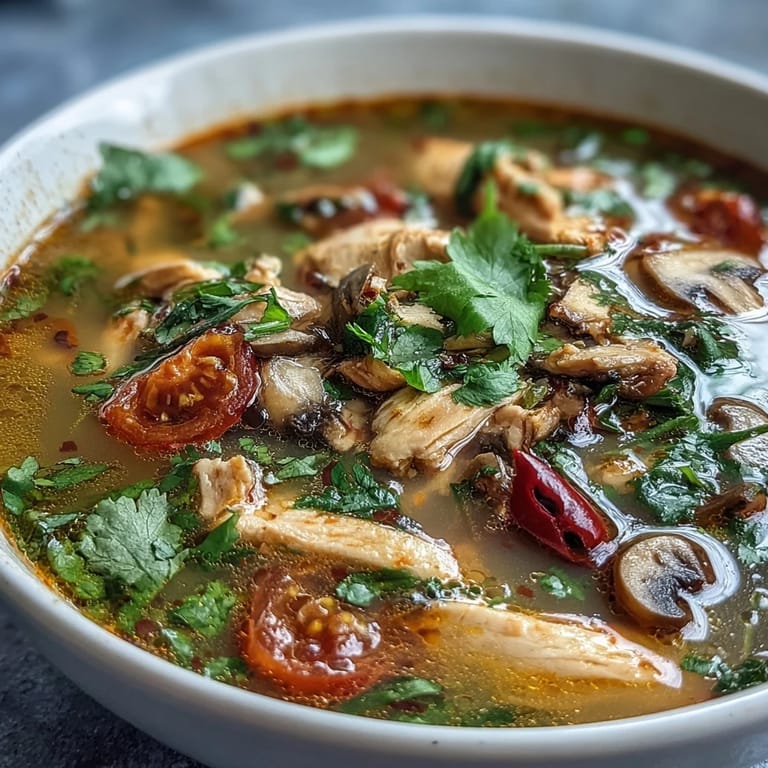
 A friend once told me that real Tom Yum should wake you up before the first sip, just from the smell alone. I didn't believe her until I stood over my own pot, watching lemongrass and kaffir lime leaves release their oils into bubbling broth. The steam hit my face sharp and bright, citrus mingling with heat, and I understood. This isn't background soup, it's the kind that commands attention and gives back every ounce of effort you put in.
I made this for a small dinner party on a rainy evening, worried it might be too bold for everyone. Instead, the table went quiet except for the sound of spoons scraping bowls. Someone asked for seconds before finishing their first serving. The lime wedges on the side became a game, everyone squeezing just a bit more to find their perfect balance between sharp and savory.
Ingredients
- Boneless, skinless chicken breast or thighs (350 g): Thighs stay juicier and more forgiving if you simmer a minute too long, but breast works beautifully if sliced thin against the grain.
- Chicken stock (1.2 L): Use the best stock you can find or make, this broth is the backbone and weak stock means weak soup.
- Lemongrass (2 stalks): Smash the pieces with the flat of your knife to release the oils, they perfume the broth with grassy, lemony magic.
- Kaffir lime leaves (5): Tearing them by hand before adding releases more fragrance than cutting ever could.
- Galangal (3 slices): Sharper and more medicinal than ginger, it adds a distinct Thai brightness, but ginger works in a pinch.
- Thai birds eye chiles (2, plus extra for garnish): Smashing them instead of slicing gives you heat without overpowering seeds floating everywhere.
- Oyster or button mushrooms (150 g): They soak up the broth and add earthy body, slice them thick so they hold their shape.
- Tomatoes (2 medium): Wedges break down just enough to add sweetness and a slight tang that balances the lime.
- Onion (1 small): Adds gentle sweetness and a bit of bite, I like it sliced thin so it softens quickly.
- Nam prik pao (2 tbsp): This roasted chili paste is the secret weapon, bringing smoky depth and umami that ties everything together.
- Fish sauce (2 tbsp): Salty, funky, essential, it builds the savory foundation you can't get any other way.
- Sugar (1 tbsp): Just enough to round out the sharp edges without making the soup sweet.
- Salt (1/2 tsp): Adjust to taste, especially after adding fish sauce.
- Lime juice (2 tbsp, plus extra): Always add this at the end so the brightness stays intact and doesn't cook off.
- Fresh cilantro (2 tbsp): A handful of green freshness right before serving makes everything feel alive.
Tired of Takeout? 🥡
Get 10 meals you can make faster than delivery arrives. Seriously.
One email. No spam. Unsubscribe anytime.
Instructions
- Infuse the broth:
- Bring the chicken stock to a gentle boil in a large saucepan, then add the lemongrass, kaffir lime leaves, galangal, and smashed chiles. Let it simmer for 5 minutes, the kitchen will start to smell like a Thai market.
- Cook the chicken:
- Add the sliced chicken and simmer for 3 to 4 minutes until just cooked through, skimming off any foam that rises. Overcooked chicken turns rubbery, so watch closely.
- Add the vegetables:
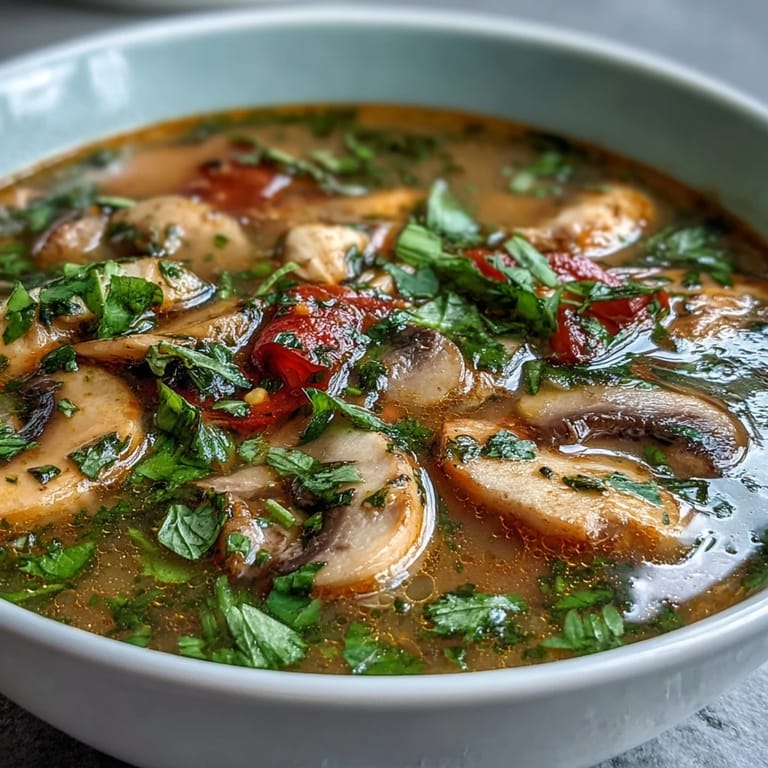
- Stir in the mushrooms, tomatoes, and onion, simmering for another 3 to 4 minutes. You want them tender but still holding their shape, not falling apart into mush.
- Season the soup:
- Add the nam prik pao, fish sauce, sugar, and salt, stirring well and simmering for 2 more minutes. Taste as you go, this is your chance to balance salty, sweet, and umami.
- Finish with lime:
- Remove the pot from heat and stir in the lime juice, tasting and adjusting the sourness or salt as needed. Adding lime off heat keeps it bright and alive instead of dull and cooked.
- Serve hot:
- Ladle the soup into bowls, garnish with fresh cilantro and extra sliced chiles if you like. Serve immediately with lime wedges on the side for everyone to customize their own heat and tang.
 Pin It
  Pin It
 The first time I got the balance right, I sat at my kitchen counter with the bowl cradled in both hands, sipping slowly and feeling the heat build then fade with each spoonful. It wasn't just soup anymore, it was proof that I could take unfamiliar ingredients and coax them into something that felt both authentic and mine. I've made it dozens of times since, and it still feels like a small victory every time.
Adjusting the Heat
The beauty of Tom Yum is that you control the fire. Start with fewer chiles if you're nervous, you can always add sliced fresh ones at the table. I learned this after watching a friend turn red and gulp water halfway through a bowl I'd made too enthusiastically. Now I serve extra chiles and lime on the side, letting everyone build their own experience. Some like it gentle and aromatic, others want the full electric jolt.
Making It Your Own
Swap the chicken for shrimp and you've got Tom Yum Goong, which cooks even faster and tastes like the ocean. I've also added a tablespoon of evaporated milk for a creamier, slightly richer version that some Thai restaurants call Tom Yum Nam Khon. It's not traditional to everyone, but it's delicious and softer on the palate. You can even toss in rice noodles at the end and turn it into a full meal in a bowl.
Serving and Storing
This soup is best served the moment it's done, while the lime juice is still vibrant and the cilantro hasn't wilted. If you do have leftovers, store them in the fridge for up to two days, but add fresh lime juice and herbs when you reheat. The aromatics mellow overnight, so don't be shy about boosting them back up before serving again.
- Serve with jasmine rice on the side to soak up the broth.
- Pair it with a simple cucumber salad to cool things down between spoonfuls.
- Keep extra lime wedges and fish sauce at the table for last minute adjustments.
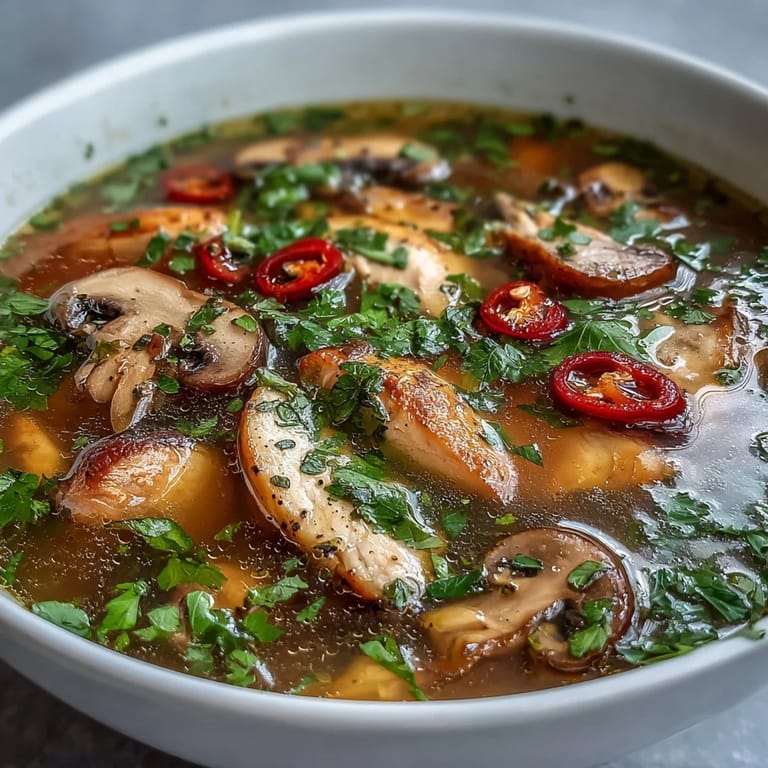 Pin It
 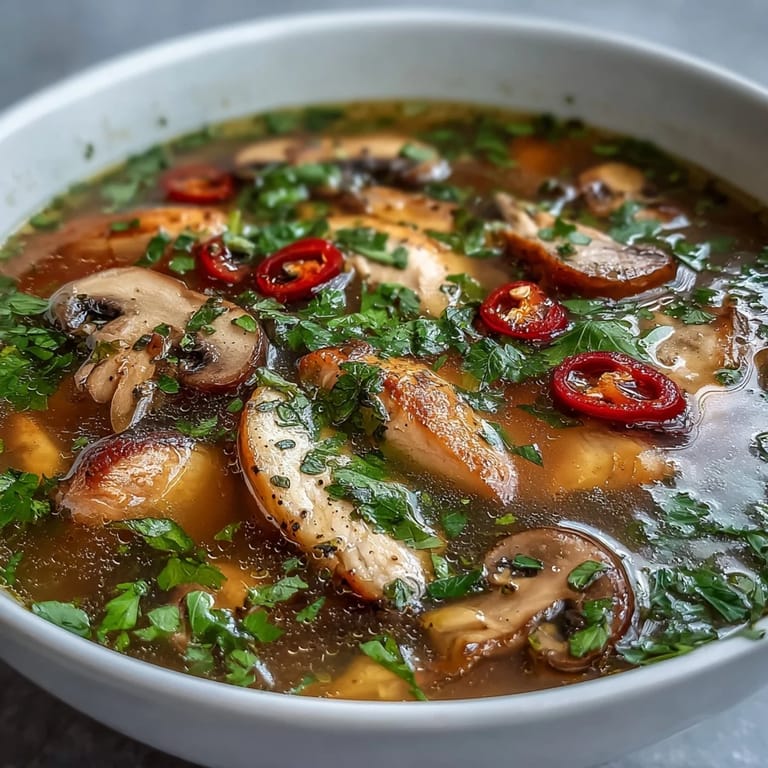 Pin It
 There's something deeply satisfying about a bowl of soup that fights back a little, that makes you pause and pay attention with every sip. This one does exactly that, and it never gets old.
Questions & Answers
- → Can I substitute the galangal with regular ginger?
Yes, fresh ginger can be used as a substitute for galangal, though the flavor will be slightly different. Galangal has a more citrusy, pine-like taste, while ginger is more pungent and spicy.
- → How can I make this soup less spicy?
Reduce the number of Thai bird's eye chiles or remove them entirely. You can also reduce the amount of nam prik pao, which contributes to the heat level while maintaining the other flavors.
- → What is nam prik pao and where can I find it?
Nam prik pao is Thai roasted chili paste that adds depth, sweetness, and umami to the soup. It's available at Asian grocery stores or online, and is an essential ingredient for authentic Tom Yum flavor.
- → Can I use shrimp instead of chicken?
Absolutely. Substituting shrimp for chicken creates Tom Yum Goong, another popular variation. Add the shrimp during the same stage as the chicken and cook until they turn pink and opaque.
- → Do I eat the lemongrass and galangal pieces?
No, the lemongrass, galangal, and kaffir lime leaves are used to infuse flavor into the broth but are not meant to be eaten. Simply push them aside while eating or remove them before serving.
- → How do I store leftover Tom Yum Gai?
Store in an airtight container in the refrigerator for up to 3 days. Reheat gently on the stovetop and add fresh lime juice before serving, as the flavors may mellow after storage.