 Pin It
 I found myself staring at an Art Deco building photograph one afternoon, mesmerized by those geometric arches and clean lines, when it struck me: why not translate that into something edible? The thought of cheese arranged in deliberate, architectural patterns felt like taking something I loved visually and making it something to actually share. That evening, I started slicing cheeses with more intention than usual, and suddenly there it was—a platter that looked like it belonged in a 1920s speakeasy. My guests couldn't quite believe the arrangement was intentional at first, thinking it was almost too designed, but then they reached in and realized it tasted as thoughtfully composed as it looked.
The first time I actually pulled this off for a proper gathering, my friend Sarah walked in, set down her bag, and just stared for a moment. She said it looked too beautiful to eat, and I remember laughing and telling her that was exactly the point—until the eating part, anyway. Watching people hesitate before reaching for a slice, almost reverent about it, made me realize a cheese platter could be more than practical; it could be genuinely artistic. After that night, I started thinking about cheese boards differently.
Ingredients
- Aged cheddar, thinly sliced (150 g): The backbone of your arches—it has enough flavor and structure to hold a fan shape beautifully without crumbling.
- Gruyère, thinly sliced (150 g): Nutty and slightly sweet, it adds depth and catches the light differently than cheddar in your tiered design.
- Manchego, thinly sliced (150 g): The visual and flavor wild card that gives your middle arch its own character without clashing.
- Creamy brie, cut into wedges (120 g): These wedges become your architectural bases—they're the soft anchor that supports the structure visually and on the palate.
- Blue cheese, cut into small triangles (100 g): Place these at the arch peaks like Art Deco spires; their sharpness punctuates the sweeter notes below.
- Seedless green and red grapes (1 small bunch each): They fill the negative space and add a refreshing textural contrast that stops the platter from feeling too cheese-heavy.
- Pear, thinly sliced (1 small): Delicate enough not to overshadow the cheese, but herbaceous enough to cleanse the palate between bites.
- Apple, thinly sliced (1 small): Crisp and slightly tart, it grounds all that richness and keeps things feeling bright.
- Roasted almonds (40 g): The crunch here is essential—it gives people another texture to explore and adds sophistication.
- Dried apricots, halved (40 g): Their sweetness plays beautifully against the salty cheeses, and visually they warm up the cooler cheese tones.
- Honeycomb or quality honey (40 g): This is your finishing touch—drizzle it near the brie just before serving so it catches light and feels like an intentional design element, not an afterthought.
- Baguette, sliced (1 baguette): Cut these at the last minute so they're still slightly warm; they're the delivery vehicle for everything else.
- Assorted crackers (100 g): Vary your cracker types—it gives people options and makes the platter feel more considered.
Tired of Takeout? 🥡
Get 10 meals you can make faster than delivery arrives. Seriously.
One email. No spam. Unsubscribe anytime.
Instructions
- Set up your canvas:
- Clear your platter or board completely and give it a moment to settle—you're building on intention here, not rushing. Mentally divide the space into three zones where your arches will live, imagining where each one will anchor.
- Build your first arch:
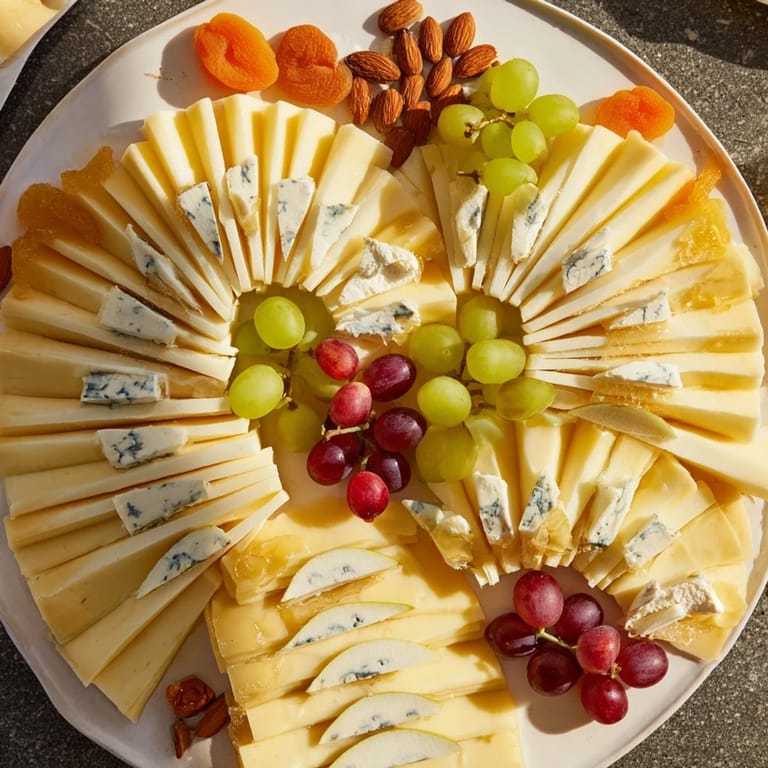
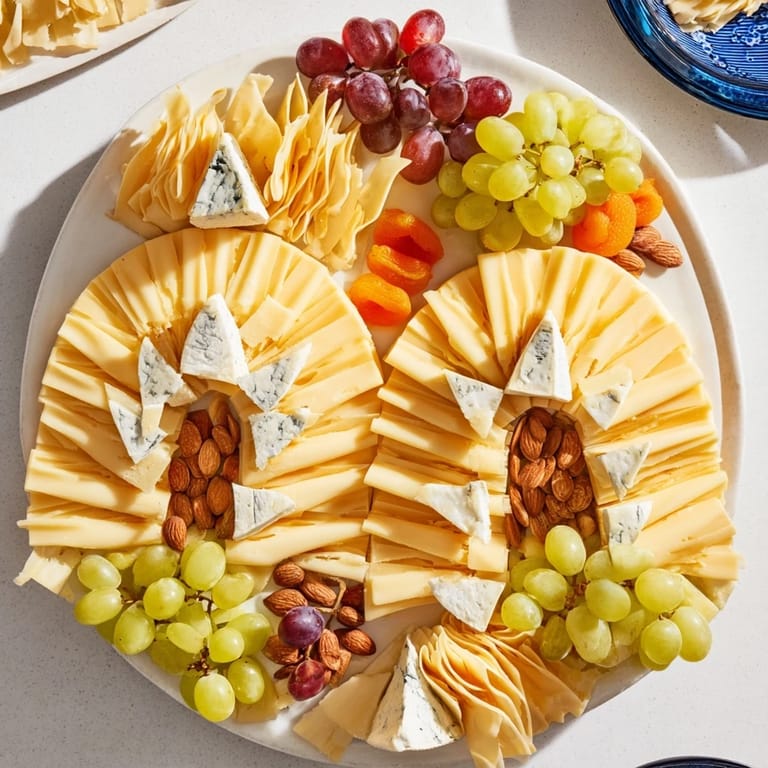
- Start with cheddar slices, overlapping each one like roof shingles, creating a gentle curve from one side of the platter to the other. Go slowly; the overlap is what creates that iconic Art Deco fan, and watching the pattern emerge is half the satisfaction.
- Layer the second arch:
- Repeat the process with Gruyère, starting slightly lower than your first arch so it sits behind and creates depth. You're building a visual tiering now, not just arranging cheese.
- Crown with the third arch:
- Your Manchego arch goes topmost, completing the geometric trio. Step back here and look at what you've made—those overlapping slices should read clearly as deliberate architecture, not random arrangement.
- Anchor each arch with brie:
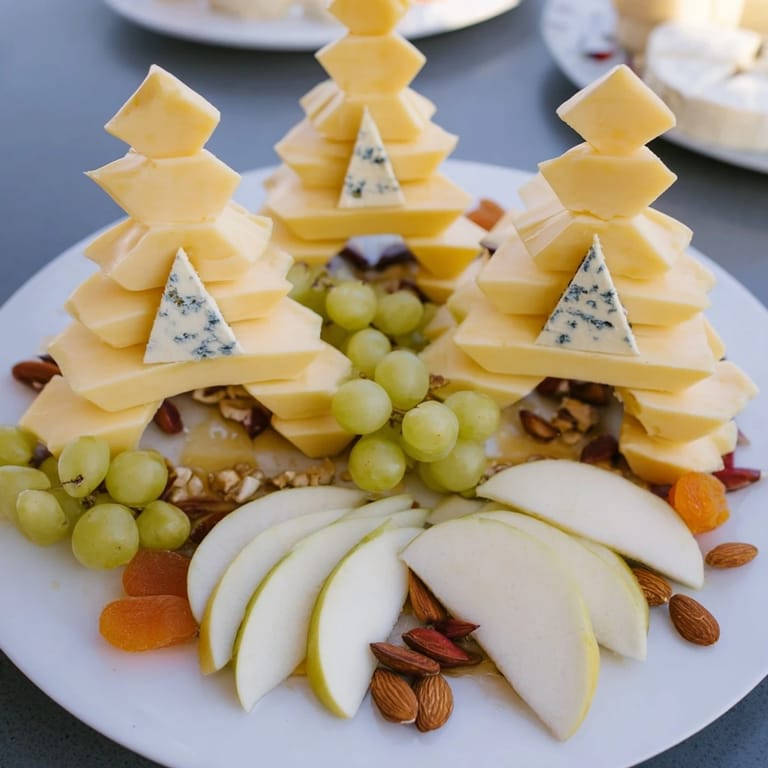
- Tuck brie wedges into the base of each arch like the solid foundations of those 1920s buildings. This is where the design gets tactile—soft creamy wedges grounding sharper slices.
- Crown with blue cheese points:
- Position your blue cheese triangles at the top center of each arch, creating peaked silhouettes that echo actual skyscraper tops. This is your visual mic drop.
- Fill the spaces with fruit:
- Nestle grape bunches and sliced fruit between the arches in the negative spaces, letting their colors pop against the golden and white cheese tones. Let them breathe here—don't cram every gap.
- Scatter nuts and dried fruit:
- Sprinkle almonds and apricot halves artistically around the composition, treating them almost like garnish in a plating sense. They should feel intentional, not randomly placed.
- Add the honey moment:
- Just before serving, drizzle honey or honeycomb near the brie—this final touch should look like it was meant to be there, catching light like a deliberate design element.
- Frame with bread and crackers:
- Arrange baguette slices and crackers along the outer edges, treating them like the frame around your artwork. This is function meeting form.
- Serve immediately or chill briefly:
- If serving right away, everything is at its ideal temperature and texture. If chilling for up to an hour, the platter actually settles beautifully and the composition feels even more cohesive.
 Pin It
 There's a strange magic that happens when people realize their food was arranged with this much care. It changes how they eat it, how they pause before reaching in, how they taste things more deliberately. I think that's when a cheese platter stops being about cheese and becomes about connection.
Choosing Your Cheeses
The cheese selection here isn't random—each one plays a distinct role in both flavor and structure. Aged cheddar and Gruyère are your reliable slicers, holding those dramatic fan shapes without crumbling under pressure. Manchego brings a different dairy note, almost caramel-like, that prevents the board from tasting monotonous. Blue cheese is the sharp counterpoint, your palate cleanser tucked into a peak where just a taste recalibrates everything below. Brie is the generous cushion, the soft base that keeps things from feeling austere. If you find yourself wanting to substitute, stick to cheeses with similar firmness profiles—Comté, aged Gouda, or Emmental work beautifully in those arch positions where structure matters.
The Art of Arrangement
What makes this platter work isn't the individual ingredients—it's the discipline of arrangement itself. The overlapping slices create a sense of movement that mimics those 1920s architectural lines you're channeling. Symmetry matters here, but not in a rigid way; it's more about creating intentional balance. The tiering creates depth on a flat surface, making the platter visually more interesting from different angles. Think about negative space as much as you think about what you're placing. The gaps between arches aren't failures of coverage; they're breathing room that makes the whole composition read more clearly. When something is deliberately arranged, it looks confident, and confidence translates to people wanting to be part of it.
Making It Your Own
This platter thrives on variation, actually gets better when you make it responsive to what's fresh or what you have on hand. The fundamental structure—tiered arches with a base, peak, and intentional gaps—remains the same, but everything else is flexible. Your favorite crackers, seasonal fruit, whatever nuts you prefer, cheeses that speak to your palate rather than the recipe. What matters is maintaining that architectural intention, that sense of deliberate arrangement. The specifics are just the language you're speaking.
- Seasonal swaps: summer calls for berries and lighter cheeses, while autumn might ask for figs, walnuts, and deeper aged cheddars.
- Dietary adaptations: plant-based cheeses work architecturally, though some slice less cleanly, and gluten-free crackers hold their own beside the baguette.
- Color strategy: if your cheese selection feels monochromatic, lean harder on fruit and nuts to create visual pop.
 Pin It
 A good cheese platter is both art and generosity—it says something about how you think about feeding people. This one says you were paying attention, that you care enough to make the ordinary into something worth looking at.
Questions & Answers
- → What cheeses are suggested for the platter?
Aged cheddar, Gruyère, Manchego, creamy brie, and blue cheese are recommended for their distinct textures and flavors, arranged in tiered fans for visual appeal.
- → How do I achieve the layered arch presentation?
Use thin slices of cheddar, Gruyère, and Manchego arranged in overlapping fan shapes to create symmetrical arches. Brie wedges form the base, with blue cheese triangles crowning the top.
- → What accompaniments enhance the platter?
Seedless green and red grapes, thinly sliced pear and apple, roasted almonds, dried apricots, and honeycomb add freshness, texture, and sweetness to the display.
- → Can I make substitutions for dietary preferences?
For a vegan option, use plant-based cheese alternatives and omit honey. Cheese varieties can be swapped to suit taste, such as Comté or aged Gouda.
- → What are some recommended beverage pairings?
Pair this cheese arrangement with crisp Champagne or a dry Riesling to complement the flavors and evoke a classic 1920s vibe.
- → How long can the platter be prepared in advance?
The platter can be assembled and chilled for up to one hour before serving to maintain freshness and presentation.