 Pin It
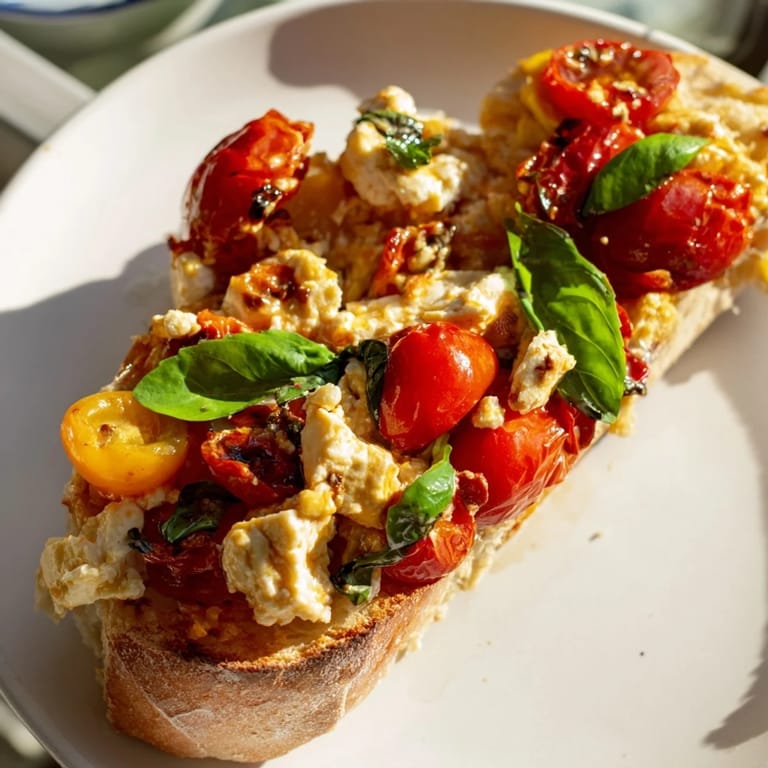
 There's a Tuesday morning I'll never forget when my neighbor showed up at my door with a warm plate of golden toast topped with melting feta and roasted tomatoes, and suddenly my entire week shifted. She'd just returned from a trip through Greece and couldn't wait to recreate what she'd eaten in a tiny taverna overlooking the sea. I took one bite and understood completely—the way the warm, creamy feta softened into the charred bread, how the tomatoes released their sweet, concentrated juice. It became my go-to when I needed to feel like I was somewhere better than my kitchen, though honestly, my kitchen started feeling pretty Mediterranean after that.
I made these for a casual Friday night with friends who'd just finished a long week, and watching their faces light up when they bit into them—that warm feta oozing onto their chin, basil leaves sticking to their fingers—reminded me that the simplest meals are often the ones that feel most luxurious and kind.
Ingredients
- Crusty sourdough or country bread, 4 slices: The bread is your foundation, and it needs enough character to stand up to the toppings without getting soggy; look for something with a sturdy crust and an open crumb.
- Feta cheese, 150 g: Buy it as a block if you can and crumble it yourself—it stays creamier in the oven than pre-crumbled versions, and you'll notice the difference.
- Cherry tomatoes, 250 g, halved: Fresh tomatoes are essential here; they concentrate their sweetness as they roast and release their juice into every corner of the toast.
- Extra-virgin olive oil, 2 tbsp: This isn't the moment to economize; good olive oil brings warmth and richness that ties everything together.
- Dried oregano, 1/2 tsp: A small amount goes a long way, and it connects this dish to those Mediterranean hillsides without overpowering the delicate feta.
- Salt and freshly ground black pepper, to taste: Don't skip the freshly ground black pepper; it adds a slight bite that makes the creamy feta taste even more vibrant.
- Fresh basil leaves, small handful, torn or sliced: Add this after baking so it stays bright and fragrant—the heat will wilt it just enough without destroying its character.
Tired of Takeout? 🥡
Get 10 meals you can make faster than delivery arrives. Seriously.
One email. No spam. Unsubscribe anytime.
Instructions
- Heat your oven and prepare the stage:
- Preheat to 200°C (400°F) and line a baking tray with parchment paper so nothing sticks, then arrange your bread slices in a single layer, leaving a little space between each one for the heat to circulate.
- Season and scatter your tomatoes:
- Toss the cherry tomato halves in a bowl with 1 tbsp olive oil, oregano, salt, and pepper until they're glistening and evenly coated. Spread them over the bread, letting some juice drip down into the crevices.
- Layer in the feta:
- Crumble or slice your feta into generous pieces and scatter it over the tomatoes—don't be shy here, as it will soften and create pockets of creaminess throughout.
- Final drizzle and into the oven:
- Drizzle the remaining olive oil over each toast, then slide the tray into the oven for 15 to 18 minutes until the bread is golden at the edges and the feta looks warm and slightly browned in spots.
- Finish with fresh basil and serve:
- Remove from the oven and scatter torn or sliced basil over the warm toasts immediately, letting it wilt slightly from the heat, then serve while everything is still warm and the contrast between creamy and crispy is at its peak.
 Pin It
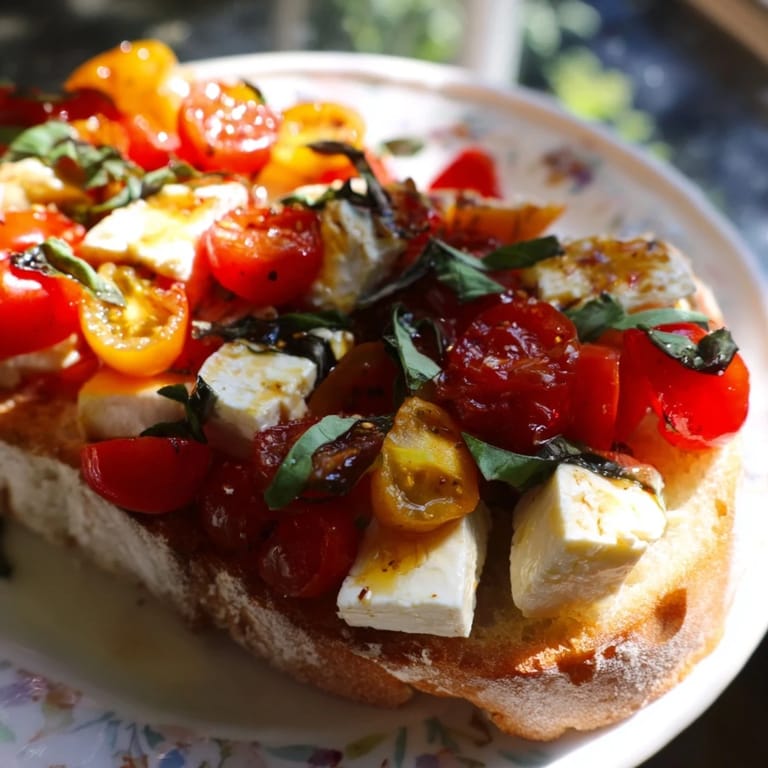
 What started as recreating my neighbor's gift has become the meal I make when someone needs feeding but I don't want to fuss, or when I'm cooking for myself and want to feel celebrated. There's something about how Mediterranean flavors—that balance of bright acidity, creamy richness, and herb freshness—can make any day feel a little more intentional.
The Magic of Baking the Feta
The real revelation here is what heat does to feta cheese—it softens without losing its tangy character, creating this almost butter-like texture that makes you understand why ancient Greeks were so proud of their cheese. The first time I baked feta, I expected it to turn into a puddle, but instead it becomes warm and yielding, almost creamy in the way it embraces the bread beneath it. This is why cold feta on a salad and warm feta on toast are two completely different experiences.
Choosing Your Bread Wisely
The bread carries this whole dish, so it deserves respect and attention—a thick slice of something with real structure means you get a satisfying crunch even after the toppings have softened it slightly. I've learned that country bread, sourdough, or even a sturdy ciabatta works beautifully because they have enough body to support the weight of the toppings without collapsing into mush. Avoid anything too airy or delicate, or you'll be eating this with a fork and knife instead of picking it up with confidence.
Variations and Flavor Experiments
Once you master the basic version, this becomes your canvas—I've drizzled it with aged balsamic for a subtle sweetness, added a few capers for briny interest, scattered toasted pine nuts for crunch, and even tossed in thin slices of red onion for a sharp, fresh note. The core combination is solid enough that it welcomes creativity without falling apart, and you'll find yourself wanting to make it again and again, each time discovering something new.
- A light drizzle of balsamic glaze or honey adds a subtle sweetness that plays beautifully against the tanginess of the feta.
- Red pepper flakes scattered on top create a gentle warmth that makes the whole thing feel less delicate and more interesting.
- A squeeze of fresh lemon juice just before serving brightens everything and ties the flavors together in an unexpected way.
 Pin It
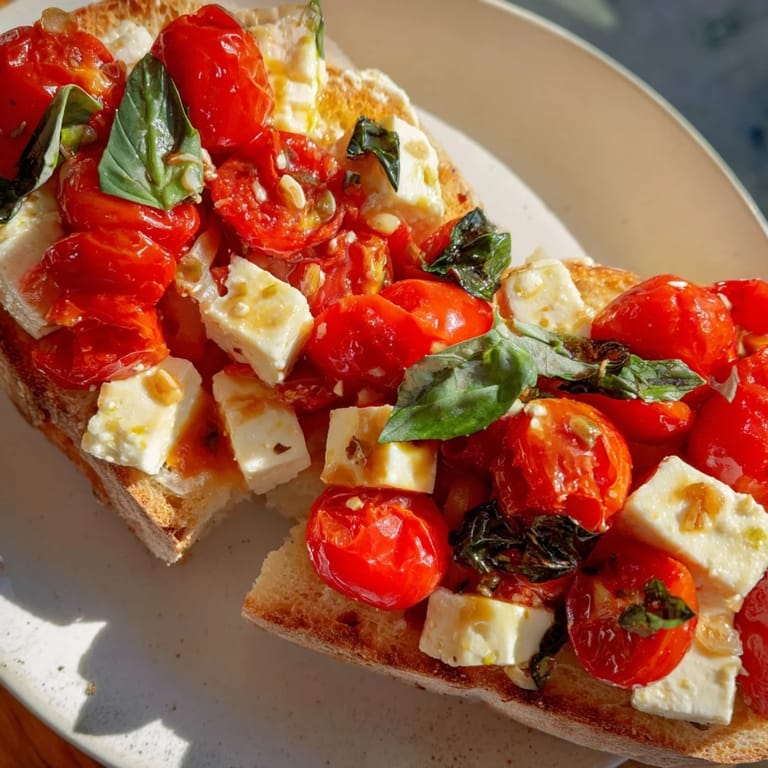
 This is the kind of recipe that becomes a reliable friend in your kitchen, ready whenever you need something that tastes more impressive than the effort it requires. Make it, share it, adjust it to your mood, and let it remind you that sometimes the best meals are the ones that arrive without pretense.
Questions & Answers
- → Can I use crumbled feta instead of a block?
Yes, crumbled feta works perfectly. It will soften and slightly melt during baking, distributing the creamy texture throughout the toast.
- → What bread works best for this dish?
Crusty sourdough or country bread are ideal as they hold up well to toppings and baking. Multigrain or gluten-free options are excellent alternatives.
- → How can I enhance the flavor?
Try drizzling balsamic glaze after baking, adding red pepper flakes for heat, or incorporating sun-dried tomatoes alongside fresh ones.
- → Is this suitable for meal prep?
Assemble toasts ahead of time and refrigerate for up to 4 hours. Bake fresh when ready to serve for optimal crispness and melted cheese texture.
- → What wine pairs well with this?
A crisp Sauvignon Blanc or other light white wine complements the fresh basil and tangy feta beautifully.
- → Can I make this dairy-free?
Substitute feta with cashew cream or store-bought dairy-free cheese. The baking time may adjust slightly depending on your replacement.