 Pin It
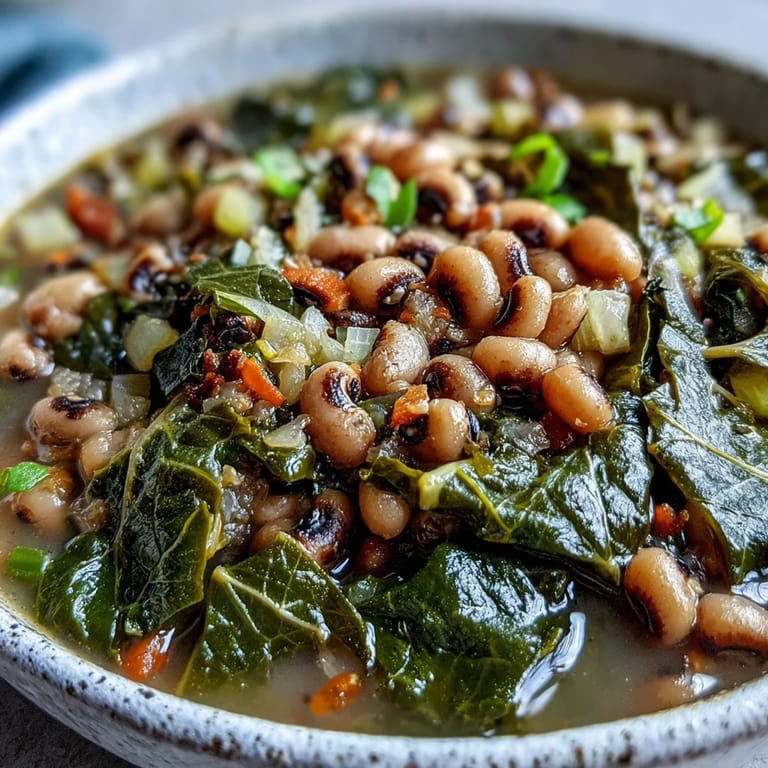
 There's something about a pot of black-eyed peas that makes a kitchen smell like home, even if you're making it for the first time. My neighbor brought over a steaming bowl on New Year's Day years ago, and I watched her stir it with such care, explaining how her grandmother swore by the luck they brought. When I tasted it, I understood—it wasn't just the food, it was the intention behind every simmer and stir that made it feel like a blessing in a bowl.
I made this for my book club one winter, and nobody wanted to leave after we finished eating. We kept refilling our bowls, talking longer than we'd planned, and someone joked that the peas had cast a spell on us. That's when I realized this dish has a quiet magic—it brings people together without any fuss.
Ingredients
- Black-eyed peas: Use dried if you have time to soak overnight—they'll have better texture—but canned works beautifully when you're short on time, just rinse them well.
- Collard greens: Tear away those tough stems and chop the leaves into bite-sized pieces; they'll shrink down as they cook.
- Onion, garlic, celery, and carrot: This aromatic base builds flavor from the start, so don't skip chopping them fine—they'll practically melt into the broth.
- Smoked paprika and thyme: These give the dish its soul, that warm, smoky taste that makes you feel like you're sitting at someone's kitchen table.
- Bay leaf: One is enough; it whispers flavor without overpowering.
- Apple cider vinegar: A splash at the end brightens everything and ties the flavors together beautifully.
- Broth: Vegetable broth keeps it plant-based, but chicken broth adds richness if you prefer.
- Optional ham hock or smoked turkey: If you add meat, it infuses the whole pot with smoky depth, but it's equally delicious without it.
Tired of Takeout? 🥡
Get 10 meals you can make faster than delivery arrives. Seriously.
One email. No spam. Unsubscribe anytime.
Instructions
- Soak your peas the night before:
- If using dried black-eyed peas, rinse them and cover with cold water overnight. They'll plump up and cook more evenly.
- Build your flavor base:
- Heat a splash of oil in a large Dutch oven over medium heat, then add your chopped onion, celery, and carrot. Let them soften and start to turn golden, about 5 minutes—you'll know it's right when the kitchen smells sweet and savory.
- Add the garlic:
- Stir in your minced garlic and cook for just 1 minute until it becomes fragrant. If you let it go longer, it can turn bitter, so watch carefully.
- Introduce the meat if using:
- If you're using a ham hock or smoked turkey, add it now and let it cook for 2 minutes to release its flavors into the pot.
- Toast the spices:
- Add your black-eyed peas, bay leaf, smoked paprika, thyme, and red pepper flakes. Stir everything together so the spices coat all the vegetables and peas—you want them to wake up and get toasty.
- Simmer the peas:
- Pour in your broth and bring it to a boil, then reduce to a gentle simmer, cover, and let it bubble away for 45 minutes if using dried peas, or just 20 minutes if using canned. The peas should be soft enough to break easily between your fingers.
- Add the greens and let them transform:
- Stir in your chopped collard greens and simmer uncovered for another 30 minutes. Watch as they go from bright green to a darker, silkier version of themselves, releasing their earthy flavor into the broth.
- Finish with brightness:
- Remove from heat and stir in the apple cider vinegar, which brings everything into focus. Fish out the bay leaf and ham hock, shred any meat, and return it to the pot if you used it.
- Season to your taste:
- Taste carefully and adjust salt and pepper until it feels right to you—remember, the flavors are deep and developed, so you might need less salt than you'd expect.
 Pin It
 A friend who'd been struggling with his family recipe suddenly understood it when I explained that the longer this pot simmers, the more the flavors get to know each other. That's when cooking stops being a task and becomes something meditative.
The Magic of Slow Simmering
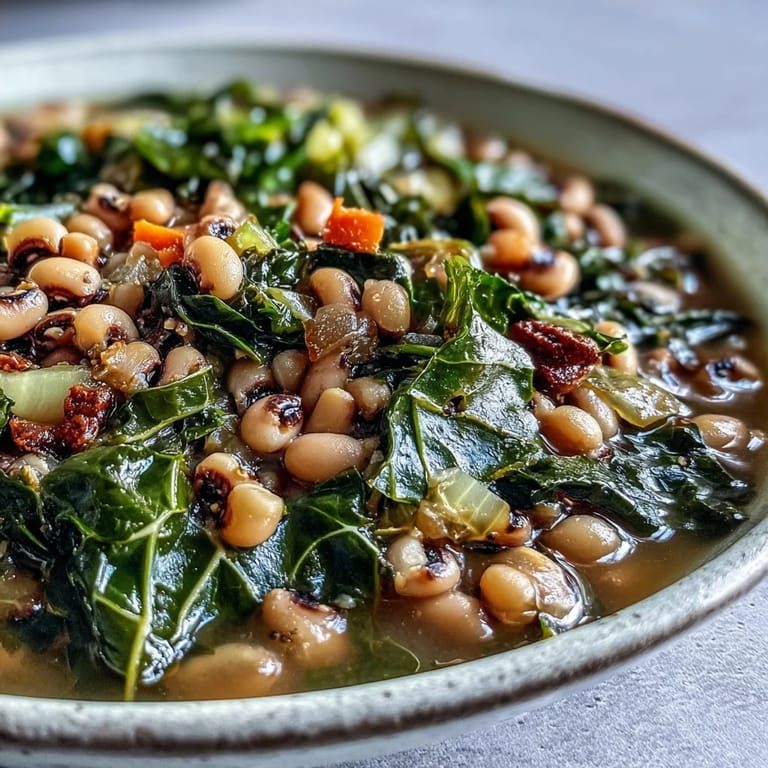
There's no rushing this dish, and that's its greatest gift. As the peas soften and the greens surrender to the warmth, the broth transforms into something rich and complex that tastes nothing like its individual parts. The longer it sits on a low heat, the more the smoked paprika and thyme have time to blend with the earthiness of the peas and greens, creating layers of flavor that a quick cook could never achieve.
Why This Dish Means More Than Food
Black-eyed peas and collard greens carry stories. In many traditions, they symbolize luck and prosperity, and whether you believe in that or not, serving them feels like offering someone a small blessing. I've learned that the ritual of making them slowly, carefully, with attention to each step, is part of what makes them nourishing.
Serving and Storage Secrets
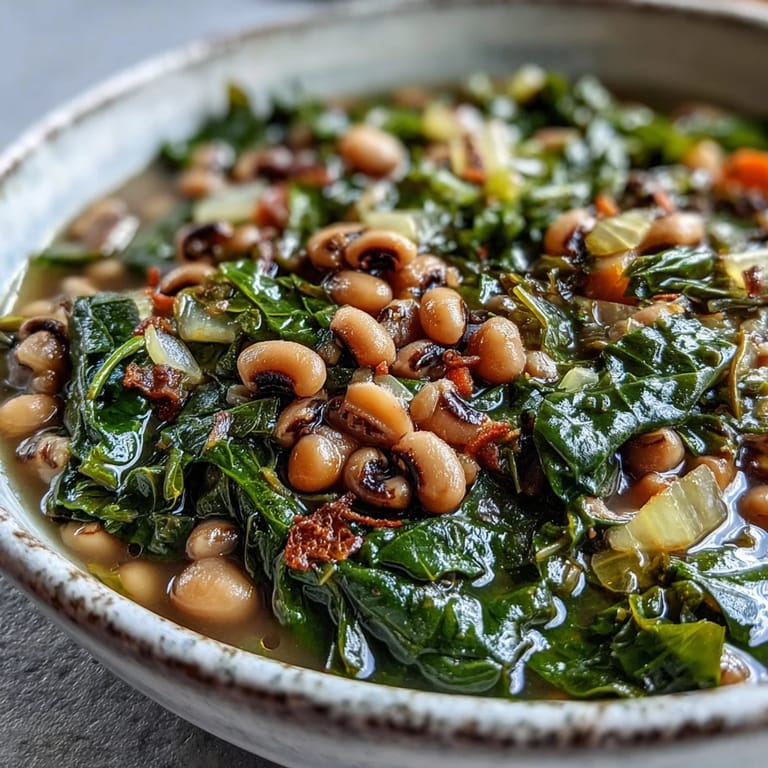
Serve this steaming hot in deep bowls with warm cornbread wedges on the side for soaking up every drop. A dash of hot sauce on top adds a wake-up call if you want it, and some people swear by a squeeze of lemon too. Leftovers keep beautifully in the refrigerator for up to four days, and reheating them the next day somehow makes them taste even deeper and more satisfying, as if the flavors have had time to think about what they want to be.
- Store in an airtight container and reheat gently on the stovetop with a splash of water if needed.
- Freeze leftovers for up to three months and thaw overnight in the refrigerator before reheating.
- Pair with crisp iced tea or a light white wine to cut through the richness.
 Pin It
 This recipe is about slowing down and letting time do the work for you. Every time you make it, it becomes a little more yours.
Questions & Answers
- → Do I need to soak dried black-eyed peas before cooking?
Yes, dried black-eyed peas should be soaked overnight in cold water before cooking. This helps them cook evenly and reduces the total cooking time to about 45 minutes.
- → Can I use canned black-eyed peas instead?
Absolutely. Use three 15-ounce cans, drained and rinsed. Canned peas only need about 20 minutes to simmer and absorb the flavors.
- → What can I substitute for collard greens?
Kale, mustard greens, or turnip greens work well as substitutes. Each brings a slightly different flavor profile but maintains the hearty texture of the dish.
- → How long do leftovers keep in the refrigerator?
Leftovers store well in an airtight container for up to 4 days. The flavors often deepen and improve the next day, making it an excellent meal prep option.
- → Can I make this vegetarian?
Simply omit the ham hock or smoked turkey and use vegetable broth instead of chicken broth. The dish remains hearty and flavorful with just the aromatic vegetables and seasonings.
- → Why add apple cider vinegar at the end?
The vinegar brightens the earthy flavors of the greens and peas, adding a subtle tang that balances the rich, smoky notes of the dish.