 Pin It
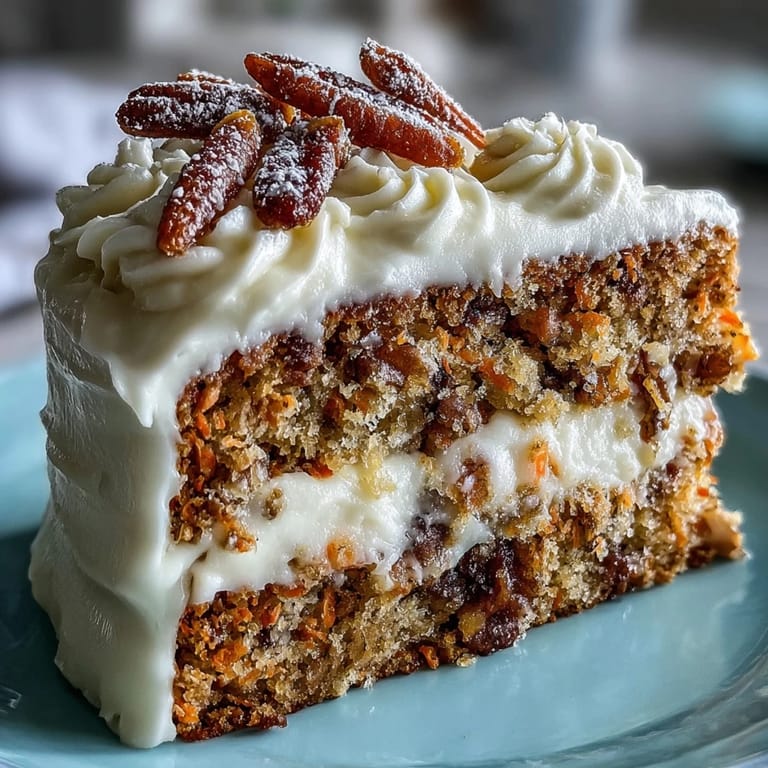
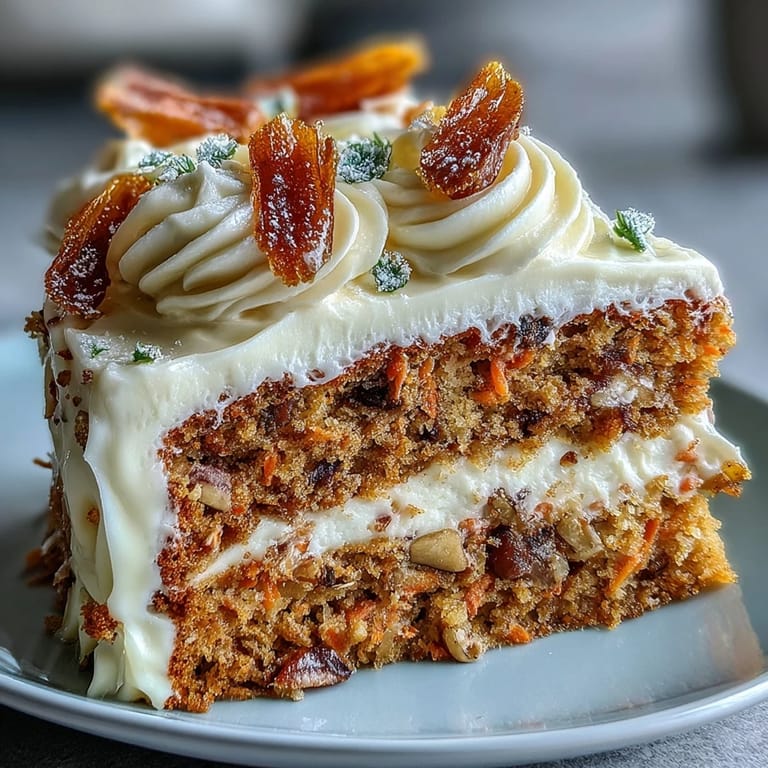
 The first whiff of warm spice filling my kitchen had me pausing mid-afternoon, just to stand still and breathe in. Easter Carrot Cake isn't something I grew up with, but one rainy March, I decided to experiment while listening to a podcast, only half expecting anything extraordinary. The carrots were so vibrantly orange, I remember marveling as I grated pile after pile, smudging my sleeves orange before realizing I should’ve worn an apron. For me, it's the transformation that’s always surprising: a bowl of humble grated carrots turning into a celebratory centerpiece for spring. The real magic is in those final touches—silky cream cheese frosting and spirals of candied carrot catching the light like stained glass.
I once baked this for an office potluck, sneaking away from my desk between emails to check the oven and tweak the curls on the carrots just so. When I sliced into it, the satisfying hush around the table was better than any compliment; every bite seemed to spark side conversations about family, holidays, and all the little kitchen disasters that made us laugh. That day, the last piece vanished before lunchtime ended, and for weeks, people kept asking when I'd bring it in again. What I remember most was Paul volunteering to wash the pans just for a promise of the recipe. At that moment, cake felt like its own invitation for connection.
Ingredients
- All-purpose flour: Choosing a good, unbleached flour gives the cake a tender crumb; I always spoon it in lightly to avoid dense results.
- Baking powder and baking soda: The correct balance creates that airy lift without a salty undertone—don’t skip the measurement checks here.
- Salt: Just half a teaspoon makes all the flavors shine; I learned not to underestimate this tiny addition.
- Cinnamon, nutmeg, and ginger: The trio brings warmth and depth—the smell while mixing is half the joy of making this cake.
- Granulated and light brown sugar: This combo gives both sweetness and subtle caramel notes; vigorously whisking sugar and oil together sets the texture up for success.
- Vegetable oil: It makes the crumb extra moist, even days after baking—skip butter, trust me, the oil is the secret here.
- Eggs: Room temperature eggs incorporate better, making the batter smooth—if I forget, I put them in warm water for five minutes.
- Vanilla extract: A little quality vanilla pulls all the spice flavors together; I sometimes splash just a touch extra for luck.
- Finely grated carrots: Grate by hand for best texture and vibrant color, even though it takes an extra minute or two.
- Walnuts or pecans (optional): Toasting before chopping adds a golden, hearty crunch—just watch them, they burn fast.
- Raisins (optional): For a pop of sweet softness; you can plump them in warm water first if you like them extra juicy.
- Cream cheese and unsalted butter: Both need to be soft for a silky frosting—forgetting this gives you lumpy icing (I learned the hard way).
- Powdered sugar: Sifting prevents stubborn sugar clumps—worth every second so your frosting stays cloud-like.
- Carrots (for curls): Long, thick carrots work best for shaving beautiful strips.
- Granulated sugar and water (for curling): The simple syrup bath infuses the carrot strips with sweetness and makes them pliable for twisting and baking.
Tired of Takeout? 🥡
Get 10 meals you can make faster than delivery arrives. Seriously.
One email. No spam. Unsubscribe anytime.
Instructions
- Set up your pans:
- Preheat your oven to 350°F (175°C). Trace and cut parchment to fit two 8-inch pans, smearing the tiniest bit of butter under the paper to make it stick—this step saves so much trouble later.
- Mix dry ingredients:
- In a medium bowl, whisk together flour, baking powder, baking soda, salt, cinnamon, nutmeg, and ginger—the scent alone will wake up the whole kitchen.
- Blend sugars and oil:
- In a large bowl, work the granulated and brown sugars with the oil until they're glossy and unified, no gritty streaks left; this is your foundation for a moist cake.
- Add eggs and vanilla:
- Crack in the eggs one at a time, really beating them in before the next—watch as the batter becomes light and creamy, then drizzle in the vanilla.
- Combine wet and dry:
- Gently fold the dry mix into the wet just until you see no more flour; don’t overmix, or you’ll lose that precious softness.
- Fold in carrots, nuts, and raisins:
- Stir in the grated carrots plus nuts and raisins if you’re using—this is where streaks of orange begin to glow through the batter.
- Bake the cake:
- Divide the batter evenly into the prepared pans and smooth the top. Bake for 35–40 minutes, checking at 35 with a toothpick; it should come out mostly clean with just a few crumbs clinging.
- Cool completely:
- Let the cakes cool in the pans for 10 minutes, then loosen the edges and carefully flip onto a wire rack; don’t skip cooling, or the frosting will melt right off.
- Create candied carrot curls:
- Using a peeler, shave wide carrot ribbons. Simmer in a pot with sugar and water until soft, then carefully twist the strips around wooden spoon handles and bake at a low 225°F (110°C) until they hold their curl, still slightly pliable—allow to cool completely before using.
- Prepare cream cheese frosting:
- Beat the softened cream cheese and butter until absolutely lump-free, then blend in sifted powdered sugar, vanilla, and salt to a lovely, pillowy consistency.
- Assemble and decorate:
- Place the first layer on your serving platter, cover the top with frosting, then stack the second. Frost top and sides generously and nestle carrot curls on top to finish—each curl placed is a little celebration.
 Pin It
 One spring evening, my neighbor stopped by as I was piping the final spirals of frosting—and what was supposed to be a ‘quick taste’ turned into an impromptu tea party over mismatched plates. There are few things as satisfying as seeing a simple cake spark a shared moment of quiet joy with someone unexpected. Since then, I've learned to always cut a couple of extra slices, just in case a friend happens to wander in at the perfect time. It’s the small, unplanned invitations that make this cake memorable, not just the celebrations it was baked for. And at sunset, with the golden carrot curls glowing, it never fails to feel like more than dessert.
Carrot Cake and Coffee: A Surprising Pair
Nothing balances the sweetness and creaminess of this cake like a strong coffee brewed just a bit richer than usual. I've found that even those who claim they 'don't do dessert' will surrender to a slice when the scent of dark roast mingles with cinnamon and ginger. Try a pour-over or small pot of French press, especially if serving guests in the late afternoon—it turns a casual get-together into something a little special. For younger tasters or a springtime brunch, a pot of black tea with lemon is just as lovely. The contrast between the soft crumb of carrot cake and a soothing sip is my favorite after-baking reward.
Making Ahead and Storing Leftovers
If you’re pressed for time, this cake is wonderfully forgiving—bake the layers a day in advance and wrap tightly once cool, then frost the next day. Chilled, the flavors deepen and the texture gets even more satisfying, so I actually prefer it a day later. Leftover slices (when they exist) keep beautifully in the fridge for up to five days without drying out. In hot weather, cold carrot cake is a little luxury. Just remember to let it sit at room temperature for fifteen minutes before slicing for the softest, creamiest bite.
Decorating Without Fuss (And Having Fun)
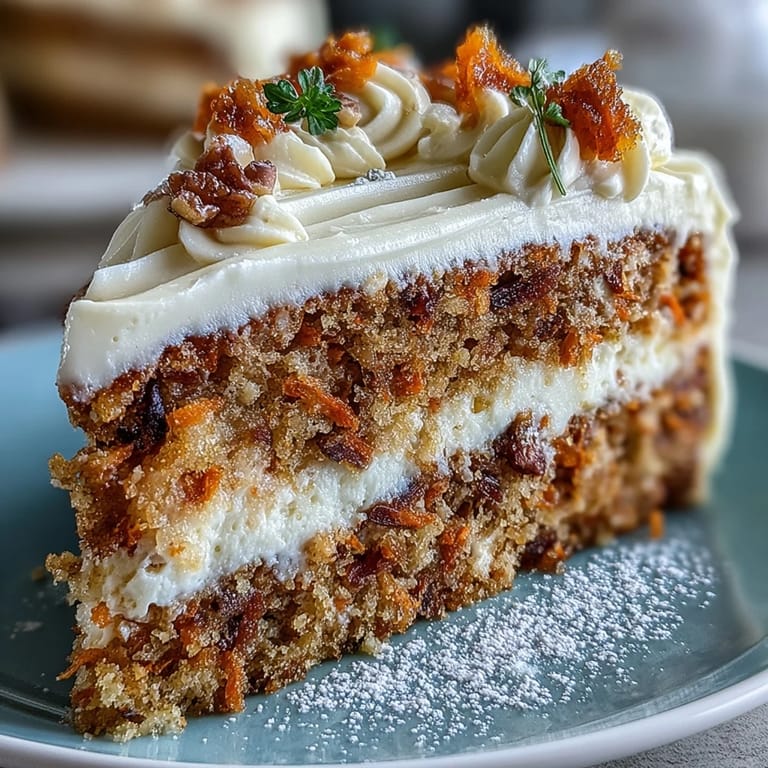
I've had my share of uneven layers and carrot curls that refused to behave, but here's the secret: a rustic-looking cake is just as inviting. Sometimes I sprinkle extra chopped nuts on top or scatter a few edible flowers from the garden to cover any wobbly frosting edges. The best part is inviting little hands to help with the curls, turning decorating into a shared project. Some of the prettiest cakes are the least perfect.
- Wipe your knife clean between slices for those picture-perfect wedges.
- If the carrot curls break, just layer them and call it intentional flair.
- Last, frost the cake generously—more is always better when cream cheese is involved.
 Pin It
 Whether you’re marking spring with a flourish or handing out midnight slices to weeknight guests, this Easter Carrot Cake is a sure way to bring everyone to the table. Happy baking—and if your kitchen counter is a little dusty with sugar when you’re done, all the better!
Questions & Answers
- → How do I keep the cake moist?
Use oil and grated carrots for moisture, avoid overmixing the batter, and pull the layers from the oven as soon as a toothpick comes out clean. Cool in the pans 10 minutes before turning onto a rack, and consider brushing layers with a light syrup if needed.
- → Can I make this nut-free?
Yes. Omit the walnuts or pecans and swap in extra carrots, toasted seeds, or a sprinkle of oats for texture. Ensure any replacements are evenly distributed and adjust bake time only if volume changes significantly.
- → What’s the best way to make candied carrot curls?
Peel thin strips with a vegetable peeler, simmer in an equal parts sugar-and-water syrup for about 10 minutes, then remove, twist into curls, and bake low (around 225°F/110°C) until set but still slightly pliable. Cool completely before decorating.
- → How should I toast the nuts?
Toast in a dry skillet over medium heat or on a baking sheet at 350°F (175°C) for 5–8 minutes, stirring occasionally, until fragrant and lightly browned. Cool before chopping to preserve crunch and flavor.
- → How do I store or freeze the cake?
Refrigerate the frosted cake, covered, to keep the frosting stable; slices can be wrapped tightly and chilled for up to 3 days. To freeze, wrap layers or whole cake securely in plastic and foil; thaw overnight in the refrigerator before serving.
- → How can I prevent the frosting from sliding?
Chill each layer briefly after a thin crumb coat to set the surface, use room-temperature but not overly warm cream cheese and butter when whipping, and firm up the finished cake in the fridge for 20–30 minutes before final handling or cutting.