 Pin It
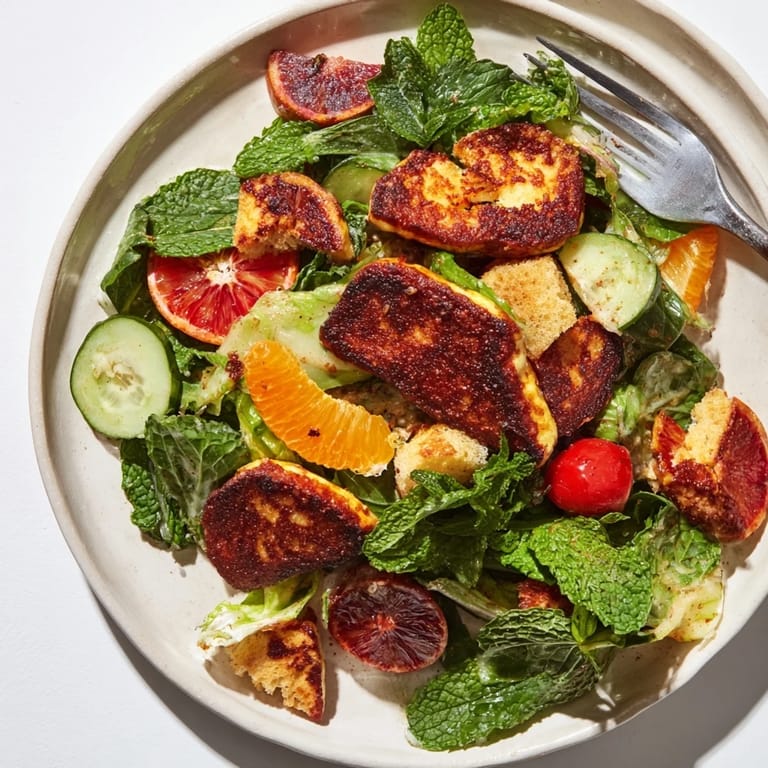
 Last winter, blood oranges appeared at the farmers market like little jewels, and I could not resist buying way too many. I had just discovered halloumi could be fried until golden and salty, and something clicked. The idea of warm, squeaky cheese against citrus sharpness felt right. That first attempt was messy, with too much dressing and not enough greens, but the combination was electric. Now it is the salad I make when I need brightness on a gray day.
I made this for my sister last month when she was feeling drained by winter. She watched me fry the cheese, skeptical about the whole warm cheese in salad situation, then went back for thirds. The pomegranate molasses in the dressing was her revelation, that deep sweet tartness she kept trying to identify. We ate it standing at the counter because neither of us wanted to bother with plates.
Ingredients
- 200 g halloumi cheese: This squeaky Cypriot cheese holds its shape when fried, developing a golden crust while staying creamy inside
- 2 blood oranges: Their raspberry citrus notes and stunning red hue make regular oranges feel pedestrian in comparison
- 200 g mixed salad greens: A mix of peppery arugula, fresh mint, and sturdy romaine gives you texture variance in every bite
- 1/2 cucumber: Cool and crisp, this balances the warm cheese and bright dressing
- 200 g cherry tomatoes: Their sweetness pops against the tangy vinaigrette
- 4 radishes: Thinly sliced, they add a peppery bite and beautiful pink color
- 1 small red onion: Sharpness that brings everything together
- 2 thick slices sourdough bread: Day old bread works best here, transforming into croutons with serious crunch
- 3 tbsp extra virgin olive oil: The foundation of a good dressing and the key to proper crouton texture
- 1 tbsp fresh lemon juice: Bright acid that wakes up the whole salad
- 1 tbsp red wine vinegar: Adds depth and complexity beyond just lemon
- 1 tsp ground sumac: This tart, berry spice is essential for authentic Levantine flavor
- 1 tsp pomegranate molasses: The secret ingredient, adding deep fruity tartness you cannot quite place
Tired of Takeout? 🥡
Get 10 meals you can make faster than delivery arrives. Seriously.
One email. No spam. Unsubscribe anytime.
Instructions
- Get those croutons golden:
- Toss sourdough cubes with olive oil and salt until evenly coated. Bake at 180°C for 8 to 10 minutes, turning once halfway through. You want them deeply golden and crisp all the way through.
- Whisk up the magic dressing:
- Combine olive oil, lemon juice, red wine vinegar, sumac, pomegranate molasses, salt, and pepper in a small bowl. Whisk until emulsified and let it sit for a few minutes to meld flavors.
- Fry the halloumi until golden:
- Heat olive oil in a nonstick skillet over medium heat. Add halloumi slices and fry for 1 to 2 minutes per side until golden brown patches appear. Transfer to a plate and do not crowd the pan.
- Build your salad base:
- In a large salad bowl, combine the mixed greens, cucumber, cherry tomatoes, radish, and red onion. Toss gently to distribute everything evenly.
- Assemble and serve:
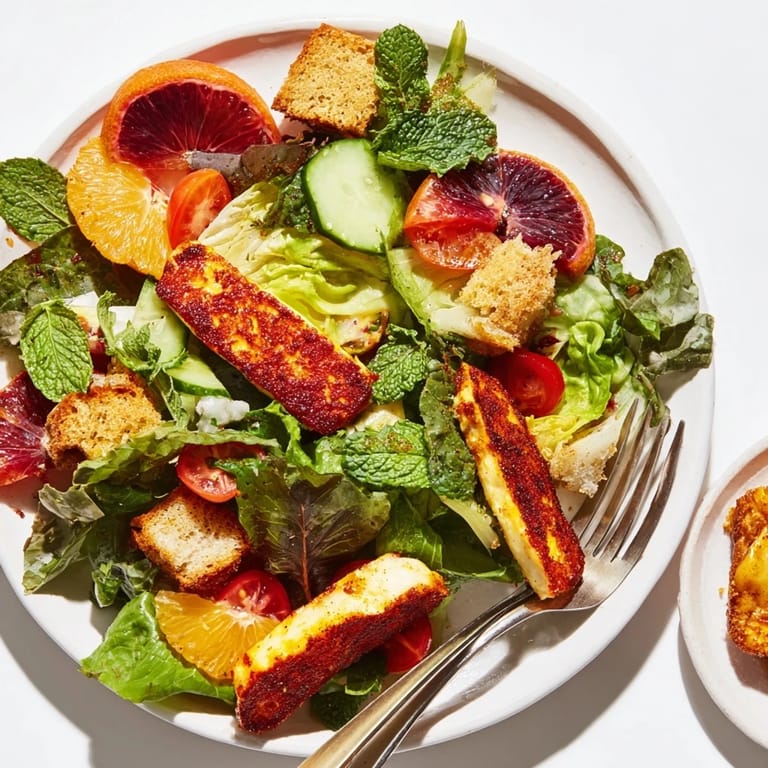
- Add the blood orange slices, warm halloumi, and sourdough croutons on top. Drizzle with dressing and toss gently at the table so everyone sees the beautiful layers.
 Pin It
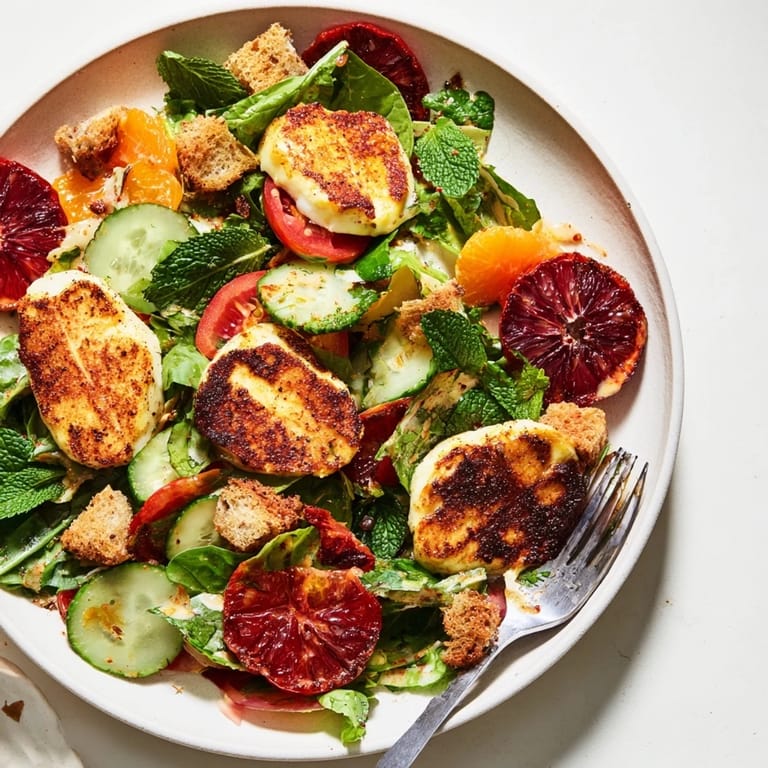
 This salad has become my go to for dinner parties because it looks stunning and tastes even better. There is something about the jewel tones of blood oranges against the golden fried cheese that makes people pause before eating. I love watching friends try to identify the pomegranate molasses, that familiar yet mysterious flavor.
Making It Your Own
Once you have the basic formula down, this salad welcomes your creativity. Sometimes I add avocado when I want extra creaminess or swap in regular navel oranges when blood oranges are not in season. The framework stays solid, but the variations keep it interesting.
Timing Is Everything
The beauty here is serving the halloumi warm while the oranges and greens stay cool. I time it so the cheese comes out of the pan exactly when I am ready to dress and toss. That temperature contrast is what makes each bite feel special and thoughtful.
The Perfect Balance
What makes fattoush sing is the interplay between salty, sweet, tart, and bitter. The halloumi brings salt, the oranges contribute sweetness, the vinaigrette provides tang, and the greens offer bitter notes. When you taste it, ask yourself what is missing and adjust accordingly.
- Taste the dressing before you pour, because pomegranate molasses varies in intensity
- Do not skimp on the sumac, because that tart berry flavor is the backbone
- Let the salad sit for just one minute after tossing so the flavors can start mingling
 Pin It
 This salad is proof that the best dishes often come from following your instincts and combining what you love.
Questions & Answers
- → What makes fattoush unique compared to other salads?
Fattoush is a Levantine salad distinguished by its use of fried or toasted bread pieces that soak up the zesty dressing. The combination of crisp vegetables, citrus, and crunchy croutons creates multiple textures in every bite, while sumac adds a distinctive tangy, lemony flavor essential to authentic Middle Eastern preparation.
- → Can I prepare the components ahead of time?
You can wash and chop vegetables, whisk the dressing, and bake croutons up to a day in advance. Store them separately in airtight containers. For best results, fry the halloumi just before serving and assemble everything immediately to maintain the contrast between warm cheese and crisp vegetables.
- → What substitutions work well for blood oranges?
Regular navel oranges or ruby red grapefruit provide similar sweetness and color. Cara Cara oranges offer a lovely pink hue comparable to blood oranges. Even segmented mandarins or tangerines work in a pinch, though you may want to add an extra squeeze of lemon to maintain the dressing's bright acidity.
- → How do I prevent halloumi from becoming rubbery?
Use a nonstick skillet with just enough oil to coat the bottom, and cook over medium-high heat for 1-2 minutes per side until golden brown. Avoid overcrowding the pan, which lowers the temperature and causes the cheese to steam rather than fry. Serve immediately while still warm for the best texture.
- → Is pomegranate molasses essential for the dressing?
Pomegranate molasses adds a unique sweet-tart depth that complements the sumac and citrus. If unavailable, substitute with a splash of balsamic vinegar mixed with honey, or simply increase the lemon juice slightly. The dressing will still be delicious, though you'll miss the characteristic fruitiness that authentic Levantine cuisine values.
- → What protein alternatives work for vegetarian variations?
Grilled paneer maintains a similar salty-firm texture, while marinated and grilled tofu offers a lighter protein. For a Mediterranean twist, try cubes of salty feta or ricotta salata. Chickpeas or white beans can be added for plant-based protein, though they'll change the overall texture profile.