 Pin It
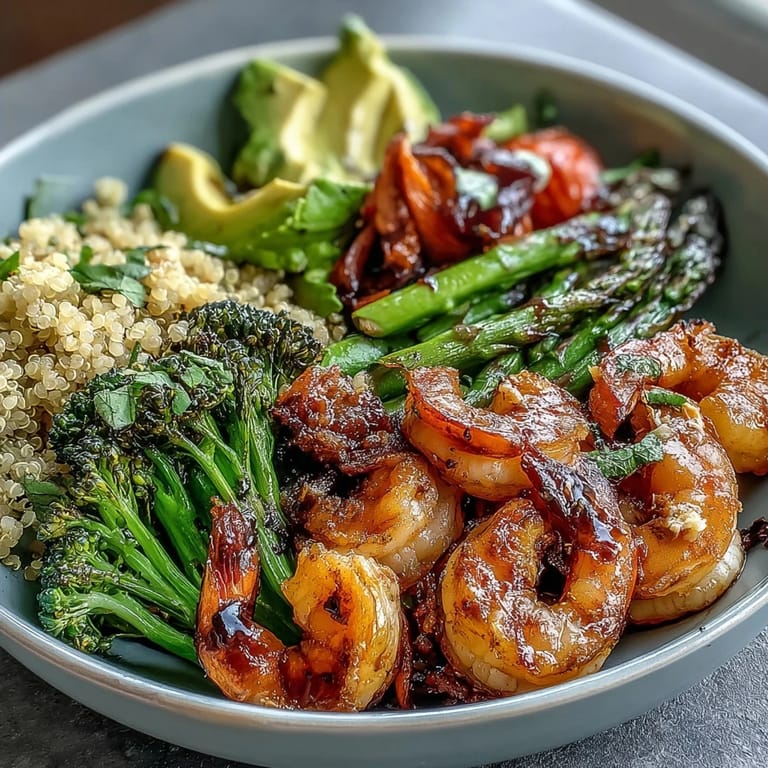
 One afternoon, I was standing at the farmer's market with absolutely no plan, just a vague idea that I needed to eat something that didn't feel heavy. My eyes kept landing on the most impossibly bright vegetables—ruby red tomatoes, emerald broccoli, that deep purple cabbage—and suddenly I understood what I wanted to make. The shrimp caught my attention next, and within minutes, I'd sketched together this bowl in my mind, something that felt both indulgent and somehow like I was doing my body a favor.
I made this for my friend who'd just finished a marathon training cycle, and watching her face when she saw the bowl was priceless—there was relief written all over it, like her body was already thanking me. She ate slowly that day, really tasting each component, and afterward told me it was exactly what she needed to feel like herself again.
Ingredients
- Large shrimp, peeled and deveined (200 g): These cook in minutes and add a protein-rich elegance that makes the bowl feel complete without being heavy.
- Olive oil (2 tbsp total, divided): Use your best quality extra virgin for the dressing where you taste it directly, and save the regular olive oil for cooking the shrimp.
- Cooked quinoa (150 g or 1 cup): This grain is naturally gluten-free and keeps the whole bowl light while providing real substance and a subtle nutty flavor.
- Broccoli florets (100 g): Blanching them briefly keeps them impossibly bright green and tender, with just enough bite to make each bite interesting.
- Asparagus, cut into 2-inch pieces (100 g): The quick blanch softens them just enough while they stay crisp, adding an earthy sweetness that complements the shrimp beautifully.
- Red cabbage, thinly sliced (100 g): This adds a sharp, almost peppery crunch and that gorgeous jewel-tone color that makes the whole bowl sing.
- Ripe avocado, sliced: The creaminess here balances all the brightness around it, and it's the one ingredient where ripeness actually matters—choose one that yields gently to pressure.
- Medium tomato, diced: Ripe tomatoes bring a tiny burst of acidity and freshness that ties the whole bowl together.
- Balsamic vinegar (2 tbsp): This is where the depth lives—it's tangy enough to wake everything up without overpowering the delicate shrimp.
- Dijon mustard (1/2 tsp): This tiny amount adds an unexpected sophistication to the dressing and helps it cling to all those vegetables.
- Salt and black pepper: Don't skip seasoning the shrimp itself—it makes a real difference in how they taste.
Tired of Takeout? 🥡
Get 10 meals you can make faster than delivery arrives. Seriously.
One email. No spam. Unsubscribe anytime.
Instructions
- Blanch your greens:
- Get a small pot of salted water to a rolling boil, then drop in the broccoli and asparagus for just 2 to 3 minutes—you want them to turn that impossible bright green and stay crisp enough that they have some backbone. Immediately drain and plunge them into cold water to stop the cooking, or they'll keep softening in the residual heat.
- Sauté the shrimp until they curl:
- Heat that tablespoon of olive oil in a skillet over medium heat until it shimmers, then add your seasoned shrimp in a single layer and don't move them around for at least 2 minutes—let them get a light golden underside, then flip and cook the other side until they're just pink all the way through. You'll know they're done when they curl slightly and turn that coral-pink color.
- Whisk your dressing with intention:
- In a small bowl, combine the balsamic vinegar, extra virgin olive oil, Dijon mustard, salt, and pepper, whisking until the mustard helps emulsify everything into something glossy. Taste it—it should be tangy enough to make you pucker slightly, then mellow into warmth.
- Arrange your bowl like you're painting:
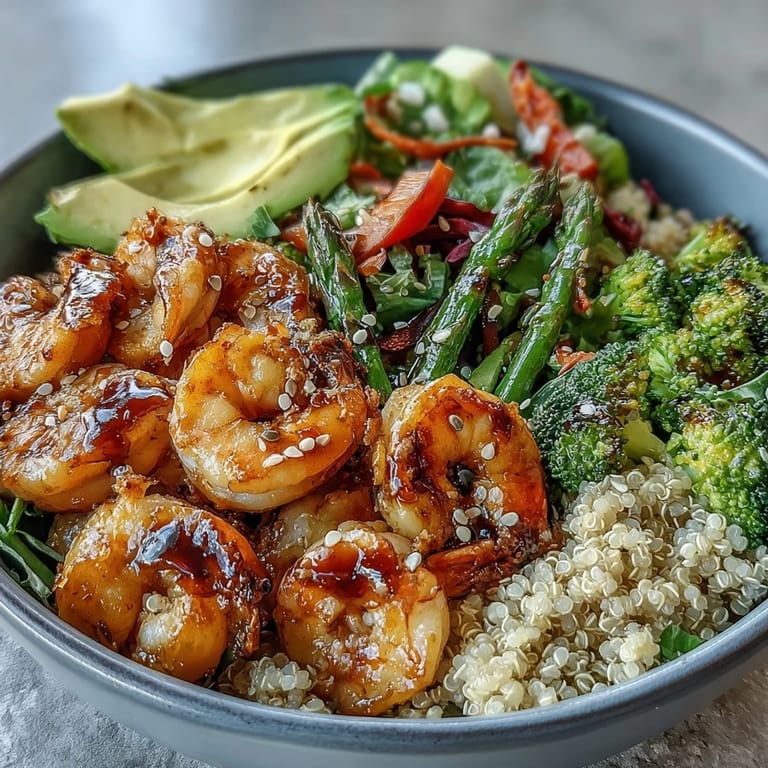
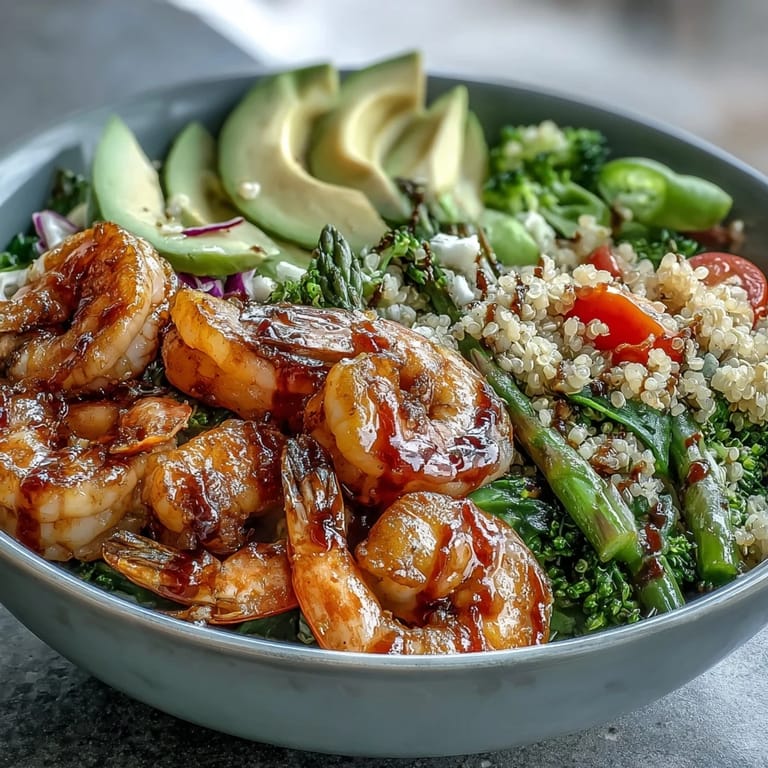
- Start with the quinoa as your base, dividing it evenly between two bowls, then arrange each vegetable in its own little section around the edge, with the shrimp scattered on top and the avocado slices tucked in wherever there's room. This isn't just for Instagram—it actually helps you eat more intentionally, noticing each component.
- Dress and serve immediately:
- Drizzle that balsamic dressing over everything just before eating, so the vegetables stay crisp and the avocado doesn't have time to discolor. The whole thing should be on the table within 35 minutes from when you started.
 Pin It
 There's something genuinely magical about eating a bowl where every single element is at its peak—crispy vegetables, tender shrimp, creamy avocado, all singing together. That's the moment this became more than dinner; it became proof that food doesn't have to be complicated to make you feel completely taken care of.
Making This Your Own
The beauty of this bowl is how forgiving it is with substitutions. I've made it with seared scallops when I felt fancy, and it was equally stunning; I've swapped the shrimp for grilled chicken breast on nights when shellfish wasn't calling to me. The vegetables are flexible too—if you can't find asparagus, snap peas or green beans blanch beautifully, and if tomatoes aren't at their peak, roasted beets add an earthy sweetness that works equally well.
Dressing Secrets
The dressing is honestly where the entire bowl lives or dies, so don't treat it as an afterthought. I learned this the hard way after making this bowl with a timid dressing that just tasted like sadness, and since then I taste as I go, adjusting the vinegar and oil ratio until it's bold enough to actually change your perspective on the vegetables. A little trick I picked up: if your balsamic is too sharp, a microscopic pinch of honey softens it without making it sweet.
Timing and Prep Work
The whole point of this bowl is that it comes together quickly without sacrificing any nutrition or flavor, which means a tiny bit of prep thinking goes a long way. I usually have my quinoa cooked the night before, my vegetables prepped and stored in separate containers, and then on the actual day of eating, everything is just assembly and a quick sauté. If you're really short on time, you can even buy pre-cooked shrimp and skip the sauté step, though there's something satisfying about cooking them fresh.
- Cook your quinoa ahead if you can, so it has time to cool and you're not juggling hot grains while sautéing shrimp.
- Prep all your vegetables at least an hour before eating, storing them in separate containers so colors don't bleed into each other.
- Make the dressing right before assembly so the mustard stays emulsified and the vinegar tastes bright and alive.
 Pin It
 This bowl became my answer to the 4 p.m. slump when I need something that will actually sustain me but won't leave me feeling sluggish, and somehow it's become the meal I crave most when I want to feel good. Make it once and it'll be in your rotation forever.
Questions & Answers
- → Can I make this bowl ahead of time?
Yes, you can prep the vegetables and quinoa up to 2 days in advance. Store components separately in airtight containers and assemble when ready to serve. Add the dressing just before eating to keep vegetables crisp.
- → What protein alternatives work well?
Roasted chickpeas, grilled chicken breast, baked tofu, or pan-seared salmon all make excellent protein substitutions. Adjust cooking times accordingly and season similarly with salt and pepper.
- → How do I properly blanch vegetables?
Bring salted water to a rolling boil, add vegetables, and cook for 2-3 minutes until bright green and tender-crisp. Immediately transfer to ice water or run under cold water to stop the cooking process and preserve color.
- → Can I use different vegetables?
Absolutely. Bell peppers, shredded carrots, snap peas, zucchini ribbons, or roasted sweet potato cubes all work beautifully. Aim for a variety of colors to maintain the rainbow aesthetic and nutrient diversity.
- → Is the dressing customizable?
Yes. Substitute lemon juice for balsamic, add honey for sweetness, or incorporate fresh herbs like basil or parsley. For a creamy version, blend in avocado or Greek yogurt.
- → What other grains can I use?
Brown rice, farro, bulgur, cauliflower rice for a low-carb option, or even mixed greens as a base all work well. Adjust cooking times depending on your grain choice.