 Pin It
 I discovered this dish while wandering through a frosted Parisian market one December morning, watching a vendor stack creamy wedges of Brie into dramatic peaks. There was something almost sculptural about it, the way the pale cheese caught the winter light, and I couldn't resist asking how they'd learned to arrange it this way. "It's just mountains," she shrugged, dusting them with Parmesan like she was painting snow. I brought the idea home and spent an embarrassingly long time perfecting my own peaks before realizing the simple magic was always just about the arrangement and the contrast of textures.
I made this for my sister's book club last winter, and I remember her friends actually gasping when they saw the platter. One of them said it looked too beautiful to eat, which is funny because ten minutes later there were only crumbs left. That's when I realized this dish does something special—it's not just food, it's a moment of lightness and play before the meal even starts.
Ingredients
- Brie cheese, well chilled (400 g): The cold is everything here; warm Brie will collapse into a puddle instead of holding those satisfying wedge shapes, so chill it for at least an hour before cutting.
- Parmesan cheese, finely grated (40 g): This is your snow, and a microplane makes the difference between elegant shavings and uneven dust, so don't skip that tool if you have it.
- Fresh thyme sprigs (optional): A small handful of green against all that pale cheese reminds people this is actually food and not an edible centerpiece.
Tired of Takeout? 🥡
Get 10 meals you can make faster than delivery arrives. Seriously.
One email. No spam. Unsubscribe anytime.
Instructions
- Chill your Brie first:
- Pop it in the coldest part of your refrigerator for at least an hour, ideally longer. Cold cheese is cooperative cheese.
- Cut into wedges:
- Using a sharp knife dipped in hot water between cuts, slice the Brie into 16 triangular wedges, each about 25 grams. The hot knife wipes clean and gives you those clean, proud edges.
- Stand them upright:
- Create your range:
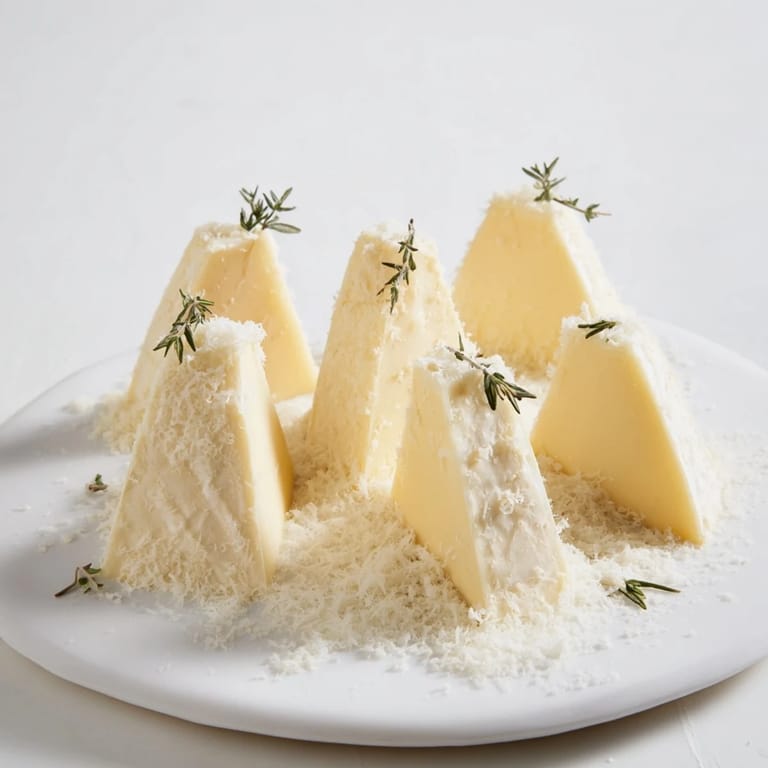
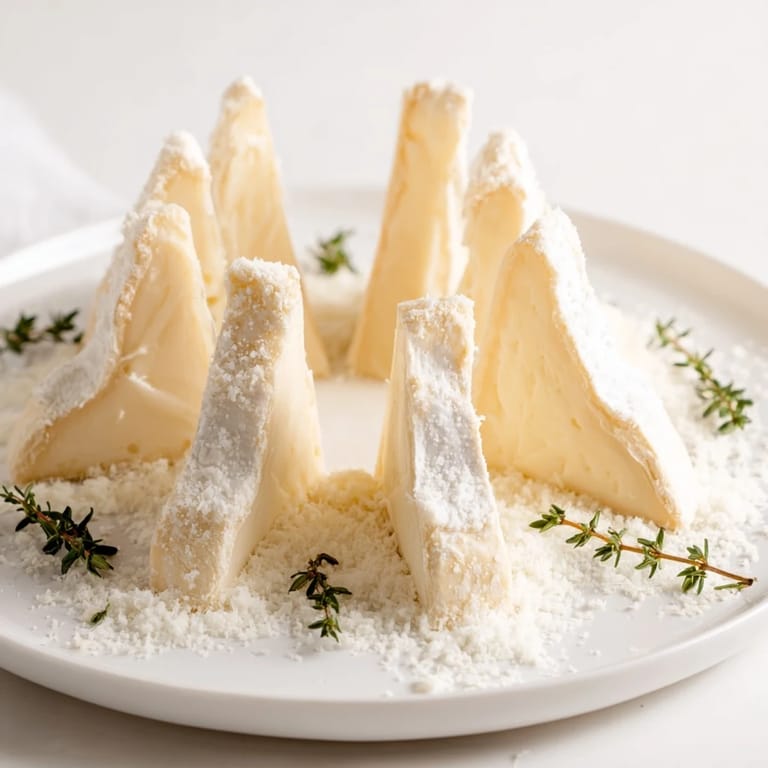
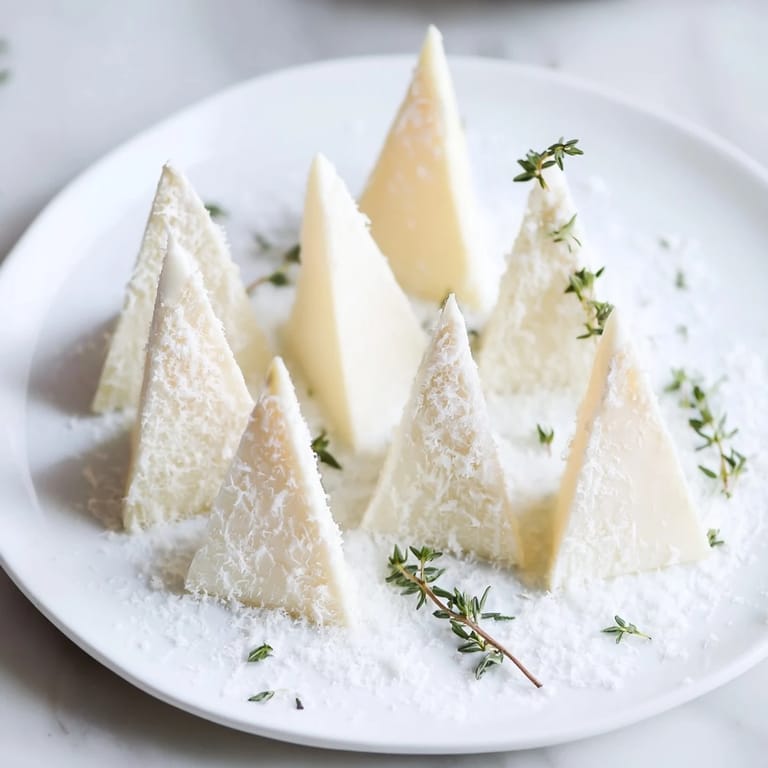
- Arrange the wedges pointed-end up on your serving platter, close enough to suggest a mountain range but with just enough breathing room that they don't touch. Step back and squint—if you see peaks, you're there.
- Snow falls:
- Dust the tops generously with grated Parmesan, letting it drift down like you're creating a landscape. Don't be shy; the contrast is what makes this work.
- One last touch:
- Scatter fresh thyme sprigs around the base if you like, just a whisper of green to ground the whole scene.
- Serve and watch:
- Bring this straight to the table while everything is still cold and perfect. It only takes a moment for magic to happen.
 Pin It
 What made me fall for this recipe was watching my nephew, who usually refuses cheese, carefully pick up one of the peaks and taste it like he was breaking bread at a solemn ceremony. He asked if I'd made mountains just for him, and suddenly the whole point of the dish clicked into place—it's not about impressing people with effort, it's about giving them permission to play with their food again.
The Art of the Wedge
Getting those clean triangles is honestly the most important step, and I learned this the hard way after my first attempt looked more like a avalanche than a range. A very sharp knife makes all the difference, and if you keep dipping it in hot water and wiping it dry, the Brie won't smudge or tear. Think of it like cutting through butter that wants to hold its shape.
Wine and Timing
I've learned that this appetizer sits in a beautiful middle ground—it's elegant enough for sparkling wine but casual enough to feel like you're not trying too hard. The key is getting it to the table while the cheese is still cold and the arrangement is still sharp. If it sits at room temperature for more than fifteen minutes, the whole magic starts to fade as the Brie softens.
Making It Your Own
Once you understand the basic idea, you can play with it endlessly. I've tried toasting the Parmesan first for a deeper, nuttier flavor that's honestly mesmerizing, and I've experimented with different herb garnishes depending on the season or what's in my garden. The structure stays the same; everything else is your canvas.
- Toast your Parmesan in a dry pan over medium heat for a few minutes, then cool it completely before dusting—it adds a subtle depth that makes people ask what's different.
- Fresh herbs like tarragon, oregano, or even tiny mint leaves can replace thyme depending on your mood and what you're serving afterward.
- If you want richer cheese, swap the Brie for Camembert or a triple-cream variety, though you'll need to chill it even longer to keep those peaks proud.
 Pin It
 This dish taught me that sometimes the most memorable food moments come not from hours at the stove but from small moments of whimsy and presentation. It's comfort wrapped in elegance, a reminder that eating is also about playing and wondering.
Questions & Answers
- → How should Brie be prepared for clean wedges?
Chill the Brie well and use a sharp knife to cut it into neat triangular wedges for clean slices.
- → What is the purpose of dusting Parmesan on top?
Grated Parmesan mimics fresh snow atop the Brie peaks, adding subtle salty flavor and visual appeal.
- → Can I add herbs for extra flavor?
Optional fresh thyme sprigs can be used to garnish for a touch of greenery and aromatic notes.
- → Are there any recommended cheese substitutions?
Camembert or triple-cream cheese can replace Brie for a richer, creamier variation.
- → What beverages pair well with this dish?
Chilled Chardonnay or sparkling wine complement the flavors and enhance the elegant presentation.
- → Is cooking required for this appetizer?
No cooking is needed; preparation involves only cutting and assembling chilled cheeses.