 Pin It
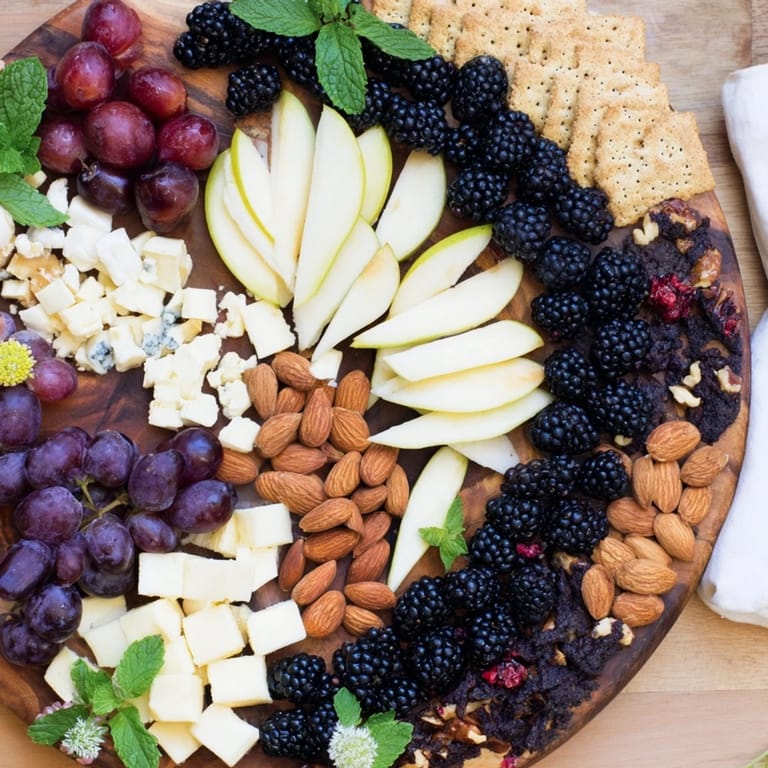
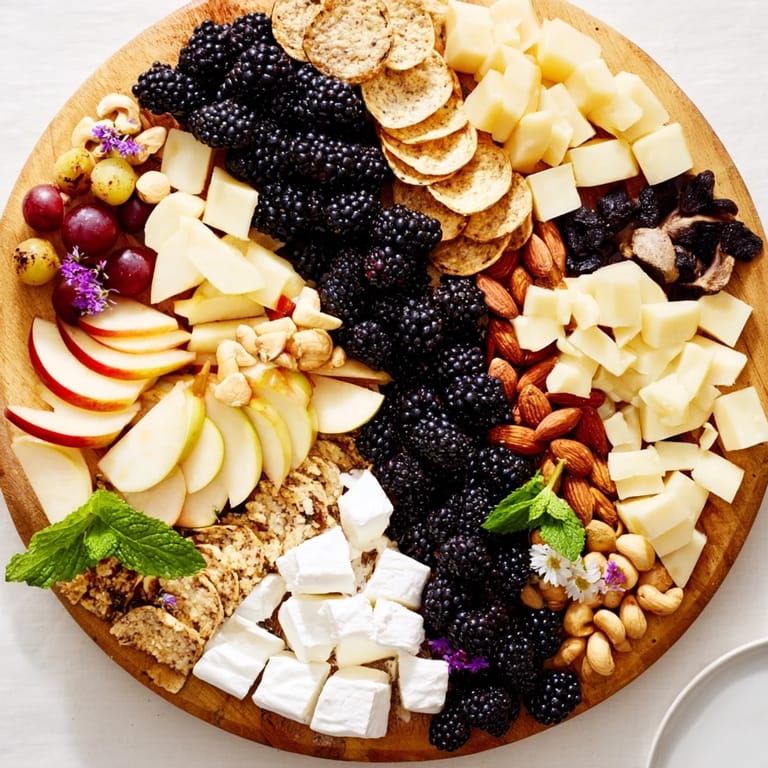
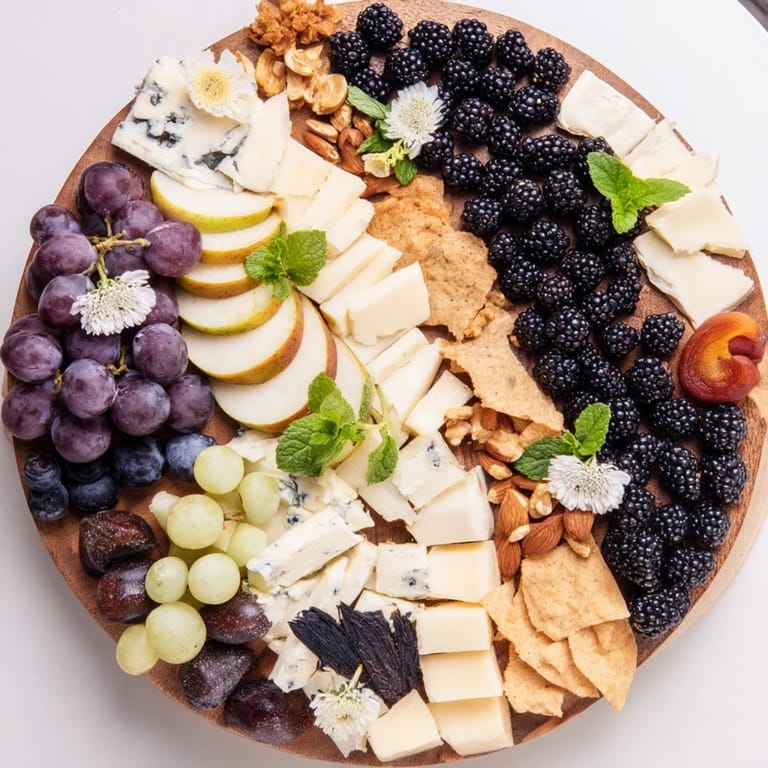
 I discovered the magic of a yin-yang board at a dinner party where everything felt slightly off-balance—too much formality, too little play. Someone arrived with a stunning round platter divided by a curved line of blackberries, light and dark cheeses mirroring each other like a puzzle, and suddenly the whole evening shifted. Guests stopped performing and started actually tasting, comparing, discovering. That night taught me that sometimes the most elegant meals are the ones that invite conversation instead of silence.
I remember my sister asking why I spent so much time arranging a cheese board when "people just grab whatever anyway." Then she watched her toddler trace the blackberry line with her finger, followed by her husband pairing cheeses deliberately, trying to balance light and dark bites. The board became a kind of edible conversation starter, and suddenly arrangement mattered because it changed how people engaged with the food.
Ingredients
- Fresh blackberries (150 g): These form your dividing line—use the firmest ones you can find so they don't roll, and arrange them just before serving to keep them looking jewel-like.
- Goat cheese (100 g): Creamy and tangy, it's the anchor of the light side; let it sit at room temperature for easier spreading.
- Young Manchego or white cheddar (100 g): These add mild sweetness and visual brightness; cube them so guests have bite-sized pieces.
- Pear (1 small): Slice it last and serve immediately to prevent browning; the delicate sweetness bridges light and dark flavors.
- White grapes (50 g): They add juicy contrast to the creamy cheeses and should be the palest ones you can find.
- Raw almonds (30 g): Their subtle earthiness supports the light side without overwhelming it; leave them whole for textural interest.
- Rice crackers or light-colored crackers (30 g): Choose ones that won't shatter and taste good plain, since they're meant to carry cheese, not compete with it.
- Aged blue cheese (100 g): This is where things get bold; its funk and crumble anchor the dark side beautifully.
- Aged Gouda or sharp cheddar (100 g): Deep and nutty, it balances the blue's intensity; cube it so it's easy to taste on its own.
- Black plum (1 small): Its tartness cuts through rich cheeses; slice it thin so the color really registers.
- Red or black grapes (50 g): Use the deepest color you can find to make the visual contrast sing.
- Roasted hazelnuts (30 g): Their toasty depth supports aged cheeses; if you find raw ones, toast them gently in a dry pan first.
- Dark rye crisps or seeded crackers (30 g): These should taste assertive enough to stand beside strong cheese without disappearing.
- Fresh mint leaves: A handful scattered across both sides adds brightness and signals that this isn't just pretty—it's also meant to taste fresh.
- Edible flowers (optional): Pansies, violets, or borage flowers add a final touch of intentionality; skip them if you can't find organic ones.
Tired of Takeout? 🥡
Get 10 meals you can make faster than delivery arrives. Seriously.
One email. No spam. Unsubscribe anytime.
Instructions
- Prepare your canvas:
- Choose a large, round serving board and give it a gentle wipe so there are no crumbs or dust lingering. You want it to feel like a fresh stage for what comes next.
- Draw the line:
- Arrange your blackberries in a graceful S-curve or gentle arc across the center of the board, creating a natural divide. Step back and look at it—the line should feel balanced, not perfectly mathematical.
- Light side flourish:
- Working on one half of the board, arrange goat cheese slices in a loose cluster, then tuck pear slices nearby so their delicate color catches light. Scatter white grapes between them, add a small pile of raw almonds, and lean rice crackers against the cheeses so they're easy to grab.
- Dark side depth:
- Mirror the light side's composition on the opposite half with blue cheese, Gouda or sharp cheddar cubes, plum slices, dark grapes, hazelnuts, and rye crisps. The board should feel symmetrical in spirit even if not perfectly mirrored.
- Final touch:
- Scatter fresh mint leaves across both sides and add edible flowers if you have them, pressing them lightly so they stay put. Serve immediately so everything looks crisp and alive.
 Pin It
 What I love most about this board is that it stops people from eating mindlessly. The yin-yang concept somehow makes people pause, compare, taste deliberately—and that small shift is where the real magic lives. A cheese board can be functional, but one that makes people think about balance? That becomes a memory.
The Psychology of a Divided Board
There's something about visual symmetry that makes people feel like they understand a dish before they taste it. The yin-yang board reads instantly as elegant and intentional, which gives your guests permission to relax—they can see the care you took, and it sets a tone. I've noticed that people often start with the light side, then venture to the dark, then play with combinations. The board becomes less about serving food and more about guiding an exploration, which changes how people actually taste.
Seasonal Swaps and Variations
The beauty of this board is its flexibility—in spring, swap the plum for fresh strawberries and use a softer blue like Cambozola. Summer calls for stone fruits like peaches or apricots on the light side, and maybe a tart cherry on the dark. Fall invites figs, apple slices, and candied hazelnuts, while winter is your moment to add honeycomb, dried apricots, or even a small spoonful of fig jam. I once made this board in December and topped the light side with pomegranate seeds instead of grapes—the festive red caught everyone's eye, and suddenly it felt seasonal without losing its balance.
Pairing and Serving Wisdom
This board whispers for a crisp white wine—Sauvignon Blanc, Riesling, or even Albariño will highlight the freshness of the fruit and cut through the creamy cheeses without fighting the darker flavors. If you lean toward red, a light-bodied Pinot Noir or Beaujolais works beautifully without overwhelming anyone's palate. I learned the hard way that serving this board ice-cold makes the cheeses firm and less flavorful, so I take it out fifteen minutes before guests arrive and let it rest at room temperature. That small window makes a real difference in how the flavors actually register.
- Set out small plates and small knives—people will use them if they're there, and it prevents the board from looking ransacked.
- Arrange cheeses and fruits so guests can see where things are without asking you to point.
- Have extra crackers or bread nearby in case people want more vehicle for cheese than you originally planned.
 Pin It
 This board proves that the simplest recipes sometimes say the most. No cooking, no fuss, just thoughtful arrangement and the confidence to let good ingredients speak for themselves.
Questions & Answers
- → How should the cheeses be arranged on the board?
Place lighter cheeses like goat cheese and Manchego on one side, and stronger, aged varieties such as blue cheese and Gouda on the opposite side, separated by blackberries.
- → Can I substitute the fruits and nuts?
Yes, seasonal or preferred fruits and nuts can be swapped, allowing flexibility while maintaining the balance of flavors and textures.
- → What crackers pair best with this arrangement?
Light-colored rice crackers complement the mild cheeses, while dark rye or seeded crackers pair well with stronger cheeses for contrast.
- → How can I enhance the visual appeal of the board?
Use fresh mint leaves and edible flowers as garnishes to add color and freshness, enhancing the yin-yang visual theme.
- → Is this board suitable for gluten-free diets?
Yes, by choosing gluten-free crackers, the board can accommodate gluten-free dietary needs without compromising flavor.
- → What drinks complement this balance board?
A crisp white wine or a light-bodied red wine pairs beautifully, enhancing the harmonious flavors of the cheeses and fruits.