 Pin It
 A friend once handed me a piece of chocolate bark studded with candied orange peel at a holiday market, and I bit into it expecting something cloyingly sweet. Instead, the bittersweet chocolate hit first, followed by that bright citrus punch that felt almost rebellious against the cocoa. I spent the next three weeks trying to recreate it in my kitchen, burning chocolate, over-sweetening the peel, until finally getting it right. Now this bark sits in a tin on my counter, and I catch myself reaching for pieces more often than I'd like to admit.
I made this bark for my mother's book club last spring, packaging each piece in tissue paper like little gifts. One of the women took a bite and closed her eyes, and I realized that sometimes the simplest things—good chocolate, candied fruit, a few minutes of effort—create those small moments people actually remember.
Ingredients
- High-quality dark chocolate (70% cocoa), 300 g chopped: This is where quality truly matters because there's nowhere to hide in a two-ingredient base. Look for chocolate with a clean snap when you break it and cocoa butter as the second ingredient, not vegetable oil.
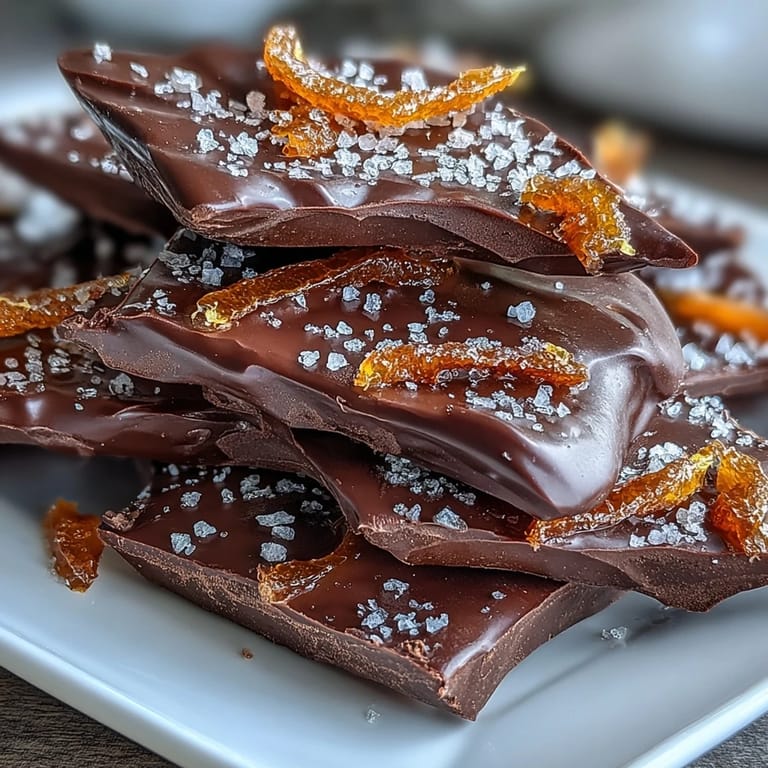
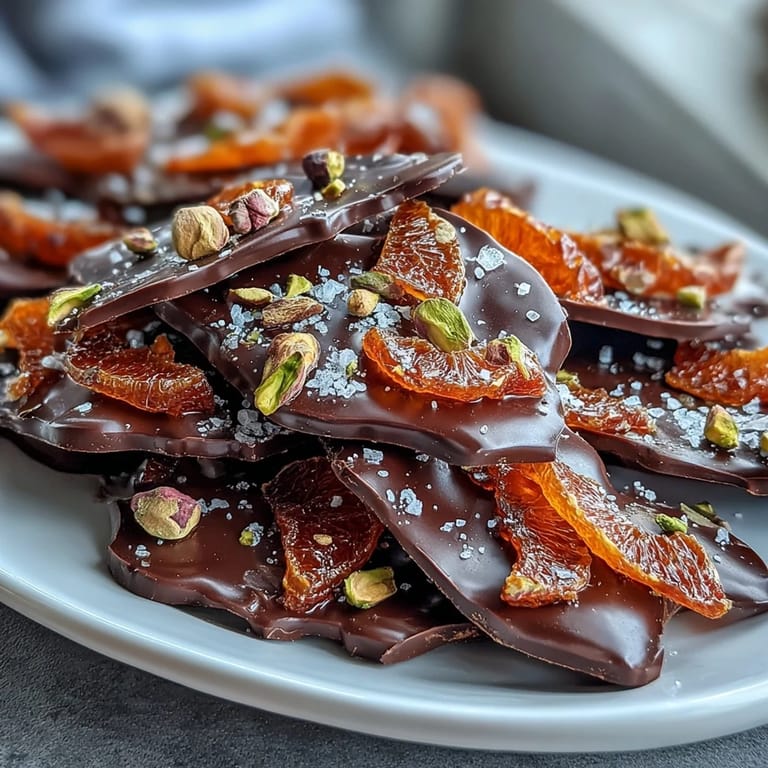
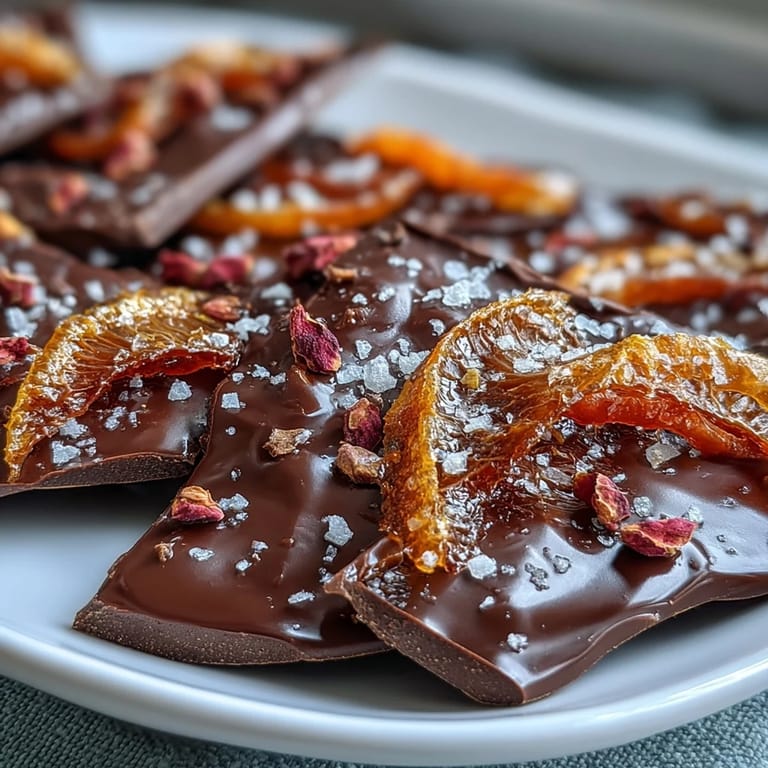
- Candied orange peel, 80 g finely chopped: The vibrant star of this bark, providing brightness and that sophisticated citrus note that makes people pause and ask what the flavor is.
- Roasted pistachios, 2 tbsp chopped (optional): These add a subtle earthiness and gorgeous green flecks that contrast beautifully against the dark chocolate.
- Freeze-dried raspberries, 2 tbsp (optional): They bring a pop of tartness and visual intrigue without adding moisture that could compromise the bark's snap.
- Sea salt flakes, for sprinkling: A tiny pinch elevates everything, making the chocolate taste more chocolatey and the candied peel taste more orange.
Tired of Takeout? 🥡
Get 10 meals you can make faster than delivery arrives. Seriously.
One email. No spam. Unsubscribe anytime.
Instructions
- Set your stage:
- Line a baking sheet with parchment paper or a silicone mat, making sure the edges are secure so nothing shifts when you pour the chocolate. This small step prevents the frustration of chocolate seeping underneath later.
- Melt gently:
- Use a double boiler if you have the patience for it, or microwave the chocolate in 30-second bursts, stirring between each one until it's silky and smooth. The key is never letting it get too hot or it seizes into a grainy mess that can't be saved.
- Spread like an artist:
- Pour the melted chocolate onto your prepared sheet and use an offset spatula to spread it into a thin, even rectangle about 1/4 inch thick. Work quickly but not frantically—the chocolate is forgiving if you stay within the first minute.
- Top while warm:
- Scatter the candied orange peel over the chocolate first, then add pistachios, raspberries, and sea salt flakes if using them. The warmth of the chocolate helps everything stick slightly, so you won't have toppings sliding off later.
- Press gently:
- Using the back of a spoon or your offset spatula, press the toppings into the chocolate just enough so they nestle in and won't fall off when you break the bark apart. You're not trying to embed them deeply, just creating a little anchor.
- Let it set:
- Leave it at room temperature for a full hour, or speed things up by refrigerating for 20 to 30 minutes until the chocolate is completely firm and snaps satisfyingly when you bend it. Patience here is worth it—you'll hear and feel when it's ready.
- Break into pieces:
- Once set, use a sharp knife or simply crack it with your hands into 12 irregular pieces that feel more handmade than uniform. Store in an airtight container at cool room temperature where it will keep beautifully for up to two weeks.
 Pin It
 My neighbor knocked on the door one afternoon with a plate of homemade brownies, apologizing because she'd made a mistake. I gave her two pieces of this bark in exchange, and she came back the next week asking if I'd teach her how to make it. Sometimes the best recipes are the ones that create little threads of connection in your community.
Choosing Your Chocolate Wisely
The chocolate you choose sets the entire tone, so don't treat it as an afterthought. A 70% cocoa chocolate has enough bitterness to stand up to the sweetness of candied peel without tasting harsh, and it melts smoothly without being temperamental. If you go darker to 85%, the bark becomes more serious and sophisticated, better suited for adults who love intense cocoa. Going lighter to 60% softens everything, which isn't bad but shifts the bark from elegant to more dessert-like.
The Magic of Candied Peel
There's something almost meditative about working with candied orange peel because you can taste it as you chop it, making sure it's soft and fresh rather than crystallized hard. I once bought a batch that had turned grainy and stale, and the bark tasted dusty instead of bright, teaching me to always check the sell date and store it properly in an airtight container between uses. The peel should be slightly tacky to the touch, not dried out, and should release that floral citrus scent when you crush a piece between your fingers.
Making It Your Own
This bark is endlessly adaptable once you understand the basic formula of chocolate plus one bright element plus optional texture. You can swap candied orange peel for candied lemon peel if you want something more sharp and astringent, or try crystallized ginger for warmth and spice. I've experimented with dried cranberries, candied rose petals, toasted seeds, and even a tiny sprinkle of lavender, and every variation feels like a small discovery in your own kitchen.
- Nut-free versions work beautifully with sunflower seeds, pumpkin seeds, or just keeping the focus on the fruit and chocolate.
- This pairs wonderfully alongside strong espresso, dessert wine, or even a cup of chamomile tea if you're in a quieter mood.
- Wrap individual pieces in tissue paper or small cellophane bags to create elegant gifts that feel far more personal than store-bought treats.
 Pin It
 There's something deeply satisfying about creating something so visually striking and delicious from just a handful of quality ingredients. Make this for yourself first, taste it, and then decide if it's worth sharing.
Questions & Answers
- → How do I melt dark chocolate without burning it?
Use a double boiler or microwave in short bursts, stirring frequently until fully melted and smooth.
- → Can I substitute candied orange peel with other citrus?
Yes, candied lemon or grapefruit peel can offer a different citrus twist while maintaining sweet and tangy notes.
- → What toppings complement dark chocolate and candied orange best?
Chopped pistachios, freeze-dried raspberries, and a sprinkle of sea salt add texture and enhance flavor.
- → How long should the chocolate bark chill before serving?
Allow it to set at room temperature for about an hour or refrigerate for 20–30 minutes until firm.
- → How should I store the chocolate bark to maintain freshness?
Keep in an airtight container at a cool room temperature, away from humidity, for up to two weeks.