 Pin It
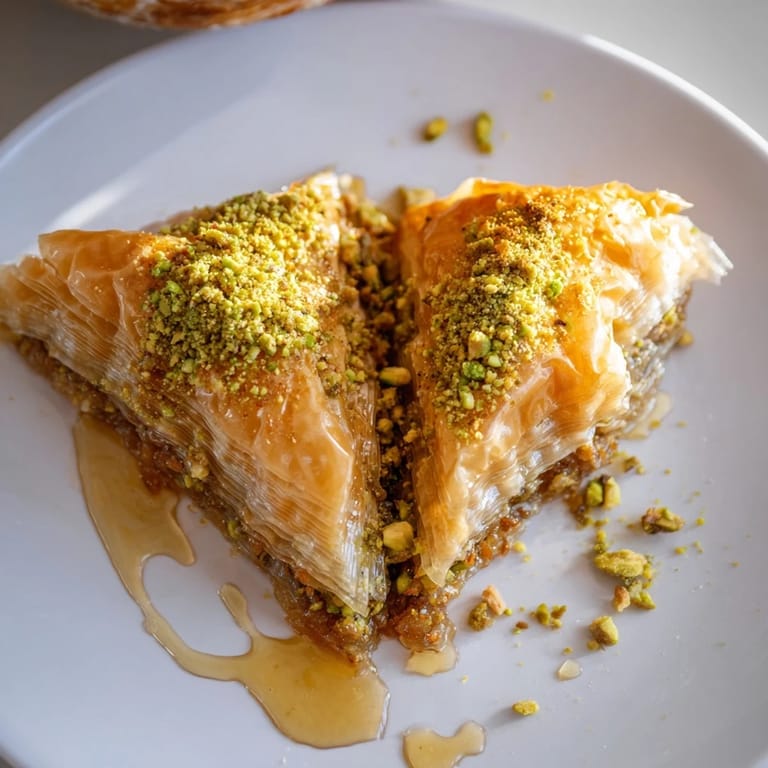
 My first encounter with baklava wasn't in a Istanbul bakery but in my neighbor's kitchen on a humid afternoon, where she showed me that the secret wasn't in any single ingredient but in the patient layering and the theatrical pour of golden syrup over crackling pastry. The sound it made—that sharp hiss as hot honey met hot phyllo—has stayed with me ever since, as has the realization that this wasn't just dessert, it was edible architecture. What struck me most wasn't the sweetness but how the nuts and butter created this almost savory base that the honey merely crowned. That day changed how I thought about building flavors, one delicate sheet at a time.
I made this for a small dinner party last spring, and instead of the polished presentation I'd imagined, I caught myself mid-cut realizing I'd forgotten to chill the pastry first—the pieces shattered everywhere. But something wonderful happened when I poured that syrup anyway: the broken pieces soaked it up even better, and suddenly I had this rustic, crumbly baklava that everyone preferred. It taught me that perfection and deliciousness aren't always the same thing.
Ingredients
- Phyllo dough: Use 16 sheets, thawed at room temperature for at least 2 hours so they become pliable without tearing, and keep them under a barely damp towel while you work to prevent them from drying out.
- Unsalted butter: Melted and used generously between layers—this is what creates those crispy, golden leaves that shatter satisfyingly under your teeth.
- Hazelnuts: Finely chopped so they distribute evenly, and their mild, almost sweet earthiness balances the pistachios beautifully.
- Pistachios: The stars of the filling, slightly brighter and more aromatic than hazelnuts, and worth splurging on if you can find good quality ones.
- Granulated sugar: Whisked together with the nuts to create a cohesive filling that won't shift around as you assemble.
- Ground cinnamon: Optional but essential if you want that warm, familiar hug of spice that makes people say "what is that taste?"
- Honey: The soul of the syrup, and it's worth using the best you have because there's nowhere for it to hide.
- Lemon juice: Just enough to cut through the sweetness and add a whisper of brightness that prevents the whole thing from becoming cloying.
Tired of Takeout? 🥡
Get 10 meals you can make faster than delivery arrives. Seriously.
One email. No spam. Unsubscribe anytime.
Instructions
- Set up your workspace:
- Preheat your oven to 180°C and brush your baking pan thoroughly with melted butter, working into the corners—this prevents sticking and adds flavor to the edges.
- Build the phyllo base:
- Lay down 4 sheets of phyllo, brushing each one with butter as you go, watching how the butter makes them glisten and slightly darken. Work quickly but gently, as phyllo is more forgiving than it seems.
- Layer with nuts:
- Sprinkle one-third of your nut mixture over the phyllo base in an even layer, making sure the pieces reach all the way to the edges so every bite has something to discover.
- Build the middle sections:
- Repeat the phyllo-and-butter dance twice more, layering 4 sheets, then nuts, then 4 sheets, then the final third of nuts, until your baklava reaches about an inch and a half high.
- Seal with a golden crown:
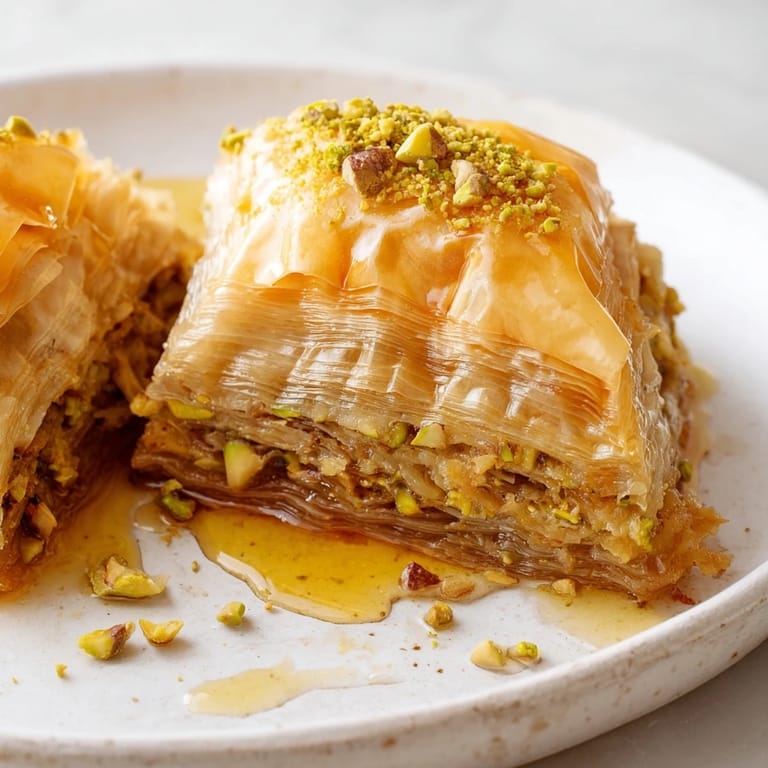
- Top with your last 4 phyllo sheets, buttering each one including the very top, which will turn a deep golden brown and provide that satisfying crunch.
- Score before baking:
- Using a sharp knife and measured pressure, cut through all the layers into diamonds or squares—chill for 15 minutes first if you want cleaner cuts, but honestly, rustic works too.
- Bake to golden perfection:
- Bake for 35–40 minutes, watching for that moment when the edges start to turn caramel-colored and you can smell toasted nuts and butter filling your kitchen. You'll know it's done when the top is crispy enough to tap with a spoon.
- Make the syrup while baking:
- In a saucepan, combine water, honey, sugar, and lemon juice, then bring to a boil before reducing to a gentle simmer for 10 minutes, letting the flavors meld and soften slightly.
- The crucial syrup pour:
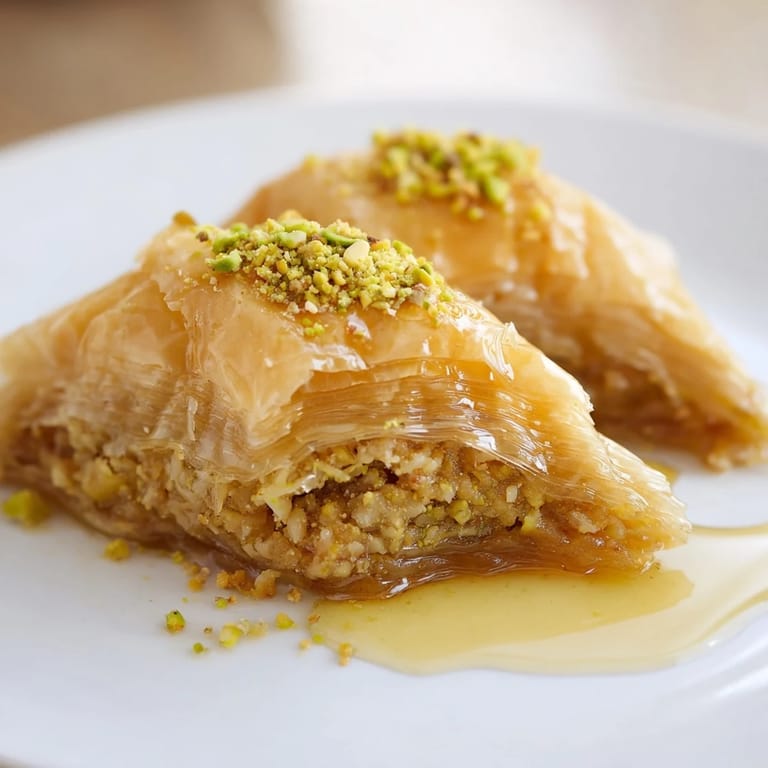
- The moment the baklava emerges from the oven, pour the hot syrup slowly and evenly over the hot pastry—this is when the magic happens, as the phyllo absorbs the sweetness while still crackling slightly. Work methodically so every piece gets its share.
- Let it rest and absorb:
- Cool completely before serving, which takes patience but allows the syrup to soak throughout, turning the whole thing into this glorious, cohesive dessert rather than separate layers.
 Pin It
 I learned something important while helping a friend make baklava for her mother's birthday: she was nervous about getting everything perfect, but her mother took one bite and teared up because it reminded her of home, not because it looked magazine-worthy. That's when I understood that baklava is less about technique and more about showing up with attention and care, one buttered layer at a time.
The Nut Question
The beauty of baklava filling is its flexibility within structure—while hazelnuts and pistachios are traditional and complement each other in a way that feels almost orchestrated, you can absolutely substitute walnuts or almonds if that's what you have or prefer. I've found that mixing nuts is even better than sticking to one type, as it creates this complexity where you catch different flavors in different bites. The ratio matters more than the specific nut, so whatever you choose, make sure you have about 200 grams total of finely chopped kernels.
Syrup Secrets
The honey syrup is where so many baklava recipes diverge, and I've tested enough versions to know that this balance of water, honey, and sugar creates something that's sweet without being aggressive. Some recipes use all honey, but I find that cuts through too intensely—this ratio gives you that golden, balanced sweetness that feels sophisticated rather than heavy. The lemon juice is your quiet hero, brightening everything just enough that you're not overwhelmed.
Storing and Serving
Baklava keeps beautifully at room temperature in an airtight container for up to five days, and honestly, it tastes better on day two once all the flavors have truly married together. If you need to store it longer, it freezes well for up to a month, though I've never managed to keep it that long because it gets eaten.
- Serve it at room temperature or slightly warm, maybe with a small cup of strong coffee or tea.
- If you're making it ahead for an event, bake it the day before and store it covered—the texture actually improves.
- A small piece goes a long way since it's rich, so 16 pieces is genuinely enough to feel generous.
 Pin It
 There's something almost meditative about assembling baklava, the repetitive brushing and layering that lets your mind wander while your hands stay focused. It's one of the few desserts that rewards both precision and a little spontaneity, and that balance is probably why it's endured for centuries.
Questions & Answers
- → What type of nuts are used in this preparation?
Hazelnuts and pistachios are finely chopped and layered evenly between sheets of phyllo dough.
- → How is the honey syrup prepared?
Water, honey, sugar, and lemon juice are combined and simmered to a gentle boil, then poured warm over the baked pastry.
- → What oven temperature and duration are required?
Bake at 180°C (350°F) for 35 to 40 minutes until the pastry turns golden and crisp.
- → Can the nuts be substituted?
Yes, walnuts can replace hazelnuts if preferred without altering the overall texture significantly.
- → How should the finished dish be stored?
Store in an airtight container at room temperature for up to five days to maintain freshness.
- → Why brush each phyllo sheet with melted butter?
Brushing butter helps create delicate layers that bake into a crisp, golden texture.